Lab marker
uACR
Urine albumin-to-creatinine ratio · Microalbuminuria
The other half of CKD staging: KDIGO weighs urinary albumin co-equally with eGFR, and most adults never have it tested.
What it measures
Albumin excretion in urine, normalised to urinary creatinine to correct for urine concentration. Reported in mg/g (US) or mg/mmol (SI). A single spot urine sample is sufficient for most clinical purposes.
Reference context
3 guideline sources
Single elevated readings are common from transient causes (exercise, fever, UTI, menstrual contamination). Confirmation requires 2 of 3 abnormal samples over 3–6 months. Albuminuria added incrementally to eGFR substantially improves prediction of cardiovascular events (Chronic Kidney Disease Prognosis Consortium 2010, n>1 million).
Population context: consult guideline targets below
Mechanism
Why moving this marker matters
Albuminuria reflects glomerular barrier dysfunction. It predicts cardiovascular events and all-cause mortality at least as strongly as eGFR, and the combination predicts better than either alone. The KDIGO 'heat map' staging combines GFR (G1–G5) and albuminuria (A1–A3) on two axes; an adult with normal eGFR but A3 albuminuria is at substantially elevated risk.
Guideline targets
What major guidelines recommend
KDIGO 2024 (A1, normal-to-mildly increased)
<30 mg/g (<3 mg/mmol)
KDIGO 2024 (A2, moderately increased)
30–300 mg/g (3–30 mg/mmol)
KDIGO 2024 (A3, severely increased)
>300 mg/g (>30 mg/mmol)
How to measure
The test, where to get it, when to repeat
Method
Single spot urine sample, preferably first-morning. Albumin and creatinine measured in the same sample; ratio computed automatically.
Where
GP request; often overlooked. Private labs increasingly include in 'kidney panels'.
Typical cost
€15–30 private.
Fasting
Not required
When to test
KDIGO 2024
40+Annual for adults with diabetes, hypertension, cardiovascular disease, or family history of CKD. Reasonable every 2–3 years for healthy adults from age 40.
ADA 2024
Annual measurement in all adults with type 2 diabetes from diagnosis; annual in type 1 from 5 years post-diagnosis.
Where to test
Independent labs offering this test
No direct-to-consumer lab currently in our directory for this marker. Your GP can request it on a standard panel.
Context
Reading the numbers
Single elevated readings are common from transient causes (exercise, fever, UTI, menstrual contamination). Confirmation requires 2 of 3 abnormal samples over 3–6 months. Albuminuria added incrementally to eGFR substantially improves prediction of cardiovascular events (Chronic Kidney Disease Prognosis Consortium 2010, n>1 million).
Caveats
Vigorous exercise in the preceding 24 hours, urinary infection, and menstrual contamination all transiently elevate albuminuria. Repeat under standard conditions before clinical action.
Practices
What's been shown to influence this marker
DASH-style dietary patterns reduce albuminuria in adults with hypertension or diabetes, driven through BP and glycaemic control rather than direct renal effects.
Mediterranean pattern lowers BP and improves glycaemia, both of which secondarily reduce albuminuria progression in cohort data.
 Habit
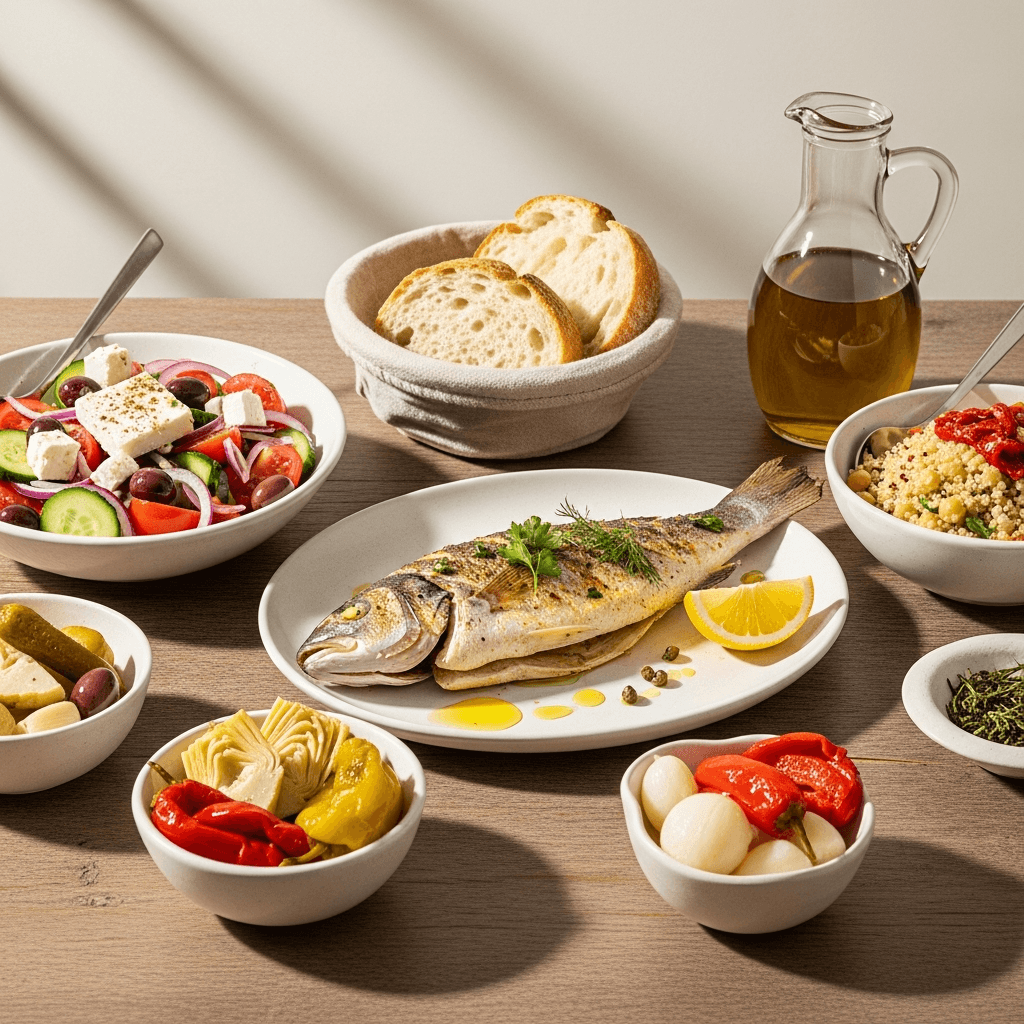
HabitMediterranean dietary pattern
Olive oil, fish, nuts, legumes, plants. The most-studied diet for cardiovascular and cognitive longevity.
Why
The Mediterranean pattern, heavy on plants, olive oil, fish, nuts, legumes; moderate fish and dairy; light on red meat, has the strongest evidence base of any specific diet for long-term cardiovascular and cognitive outcomes. PREDIMED, the largest trial, showed ~30% reduction in major cardiovascular events vs. low-fat control.
Slot in your day
How to do it
How
Olive oil as the primary fat. Plants at every meal. Fish 2–3× per week. Nuts daily (small handful). Red meat once a week or less. Wine optional, with food.
Sticking with it
Stock the kitchen for one week's pattern. Decisions live in the shopping list, not at mealtime.
Markers this may influence
Evidence
PREDIMED (Estruch 2018 NEJM, n=7,447, 4.8-y follow-up): a Mediterranean diet plus extra-virgin olive oil or mixed nuts vs. a low-fat control diet, ~30% reduction in major cardiovascular events (MI, stroke, CVD death). Sofi 2014 updated meta-analysis (n>4M) confirms a dose-response association with all-cause and cardiovascular mortality.
 Habit
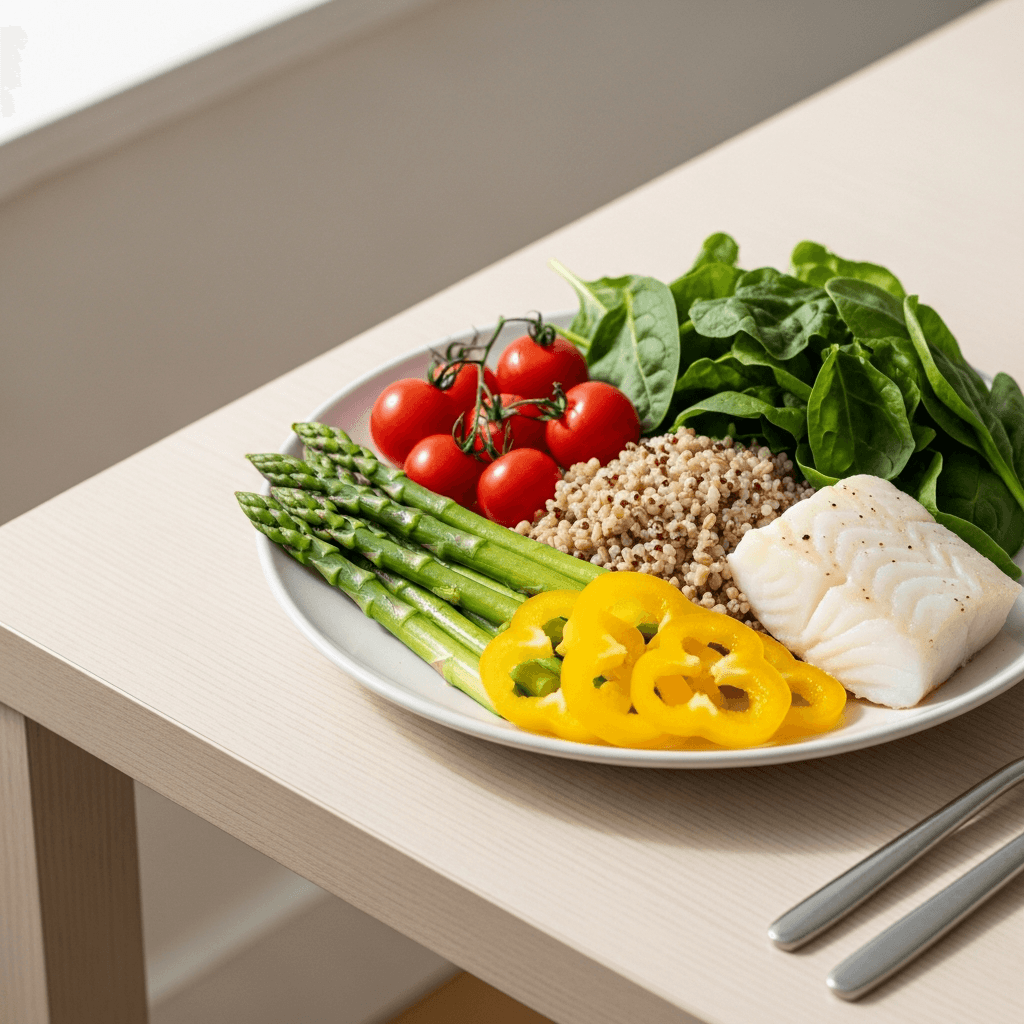
HabitDASH dietary pattern
Dietary Approaches to Stop Hypertension. Strongest dietary RCT evidence for blood pressure reduction.
Why
DASH emphasises vegetables, fruits, whole grains, low-fat dairy, lean protein, and limited sodium, sweets, and saturated fat. The landmark NEJM trial (Sacks 2001, n=412) showed clinically meaningful BP reduction comparable to single-drug antihypertensive therapy in people with elevated BP. Combining DASH with sodium reduction is more effective than either alone.
Slot in your day
How to do it
How
Vegetables and fruits at every meal (~4-5 servings each per day). Whole grains over refined. Limit red meat, sweets, and sugar-sweetened drinks. Cap sodium at ~1,500-2,300 mg/day. Two weeks of consistent eating typically shows BP changes.
Ideal for
People with elevated or borderline blood pressure; cardiovascular prevention generally.
Markers this may influence
Evidence
Sacks 2001 NEJM DASH-Sodium RCT (n=412): DASH plus low sodium (~1,500 mg/day) lowered systolic BP by 11.5 mmHg in hypertensives and 7.1 mmHg in normotensives vs the high-sodium control diet, comparable in magnitude to single-drug antihypertensive therapy. Soltani 2020 meta-analysis (17 cohorts, n>1.2M) shows dose-response associations with all-cause and CVD mortality.
 Habit
HabitZone 2 cardio
Conversational-pace cardio, 150+ minutes per week. Mitochondrial backbone of healthspan.
Why
Zone 2 is the intensity at which you can still hold a conversation but a song would be a stretch, roughly 60–70% of max heart rate. Sustained Zone 2 work increases mitochondrial density, improves fat oxidation, and is the single most consistently associated exercise input with all-cause mortality reduction in cohort studies.
Slot in your day
How to do it
How
Brisk walk, easy bike, slow jog. 30 minutes × 5 days, or 45–60 min × 3 days. The 'talk test' is the simplest gauge.
Ideal for
Anyone over 30; especially valuable as the foundation before adding higher-intensity work.
Sticking with it
Schedule it like a meeting. The session you 'fit in if there's time' is the session that doesn't happen.
Markers this may influence
Evidence
Lee 2012 Lancet Physical Activity Series (population-attributable risk analysis across >50 cohorts): physical inactivity caused ~9% of premature mortality worldwide, comparable to smoking and obesity. Kelly 2014 meta-analysis of walking and cycling (n=280,000 + n=187,000): each ~11 MET-h/week of either activity was associated with ~10–11% lower all-cause mortality.
 CautionHabit
Limit alcohol intake
Lancet pooled analysis (n=599,912): lowest mortality risk threshold is ~100 g/week, about 5-6 standard drinks total.
Why
Wood et al. 2018 Lancet combined individual-participant data from 83 prospective studies (n=599,912 current drinkers in 19 high-income countries). Above ~100 g/week (about 5-6 UK standard units), all-cause mortality climbs in a dose-response manner. Below that threshold the curve is roughly flat, there is no protective effect. Reductions from heavier intake to ≤100 g/week could add up to 2 years of life expectancy at age 40.
How to do it
How
Track intake honestly for one week. If above threshold, set a weekly cap rather than a daily one (avoids the 'I'll catch up' trap). Several alcohol-free days per week is the simplest pattern. Sleep quality typically improves within 1-2 weeks of reduced intake.
Ideal for
Anyone currently drinking above ~100 g/week (≈one bottle of wine, six pints of beer, or a half-bottle of spirits).
Markers this may influence
Evidence
Wood 2018 Lancet pooled analysis (83 prospective studies, n=599,912 current drinkers across 19 high-income countries): the threshold for lowest all-cause mortality was ~100 g alcohol/week (≈5–6 UK units). Above that, intake is linearly associated with mortality and reduces life expectancy by 1–2 years at age 40 for 200–350 g/week drinkers.
 Habit
HabitReduce ultra-processed food
UPF intake correlates with mortality independent of total calories. The category, not just the calories, matters.
Why
Foods classified as ultra-processed (NOVA group 4), packaged snacks, sweetened drinks, reformulated meats, ready meals, predict cardiovascular and all-cause mortality even after adjusting for total calories and macronutrient profile. Mechanisms include altered satiety signalling, additive effects, and displacement of whole foods.
Slot in your day
How to do it
How
Aim for the bulk of the diet to be foods you'd recognise in a kitchen 100 years ago. Convenience foods are fine occasionally; the issue is when they become the default.
Sticking with it
Don't fight cravings in front of the cupboard, fight them at the supermarket.
Markers this may influence
Evidence
Lane 2024 BMJ umbrella review (45 meta-analyses across ~10 million participants): higher ultra-processed food intake was convincingly associated with all-cause mortality, cardiovascular mortality, type 2 diabetes, and common mental disorders, effects persisting after adjusting for total calories and macronutrient profile. The category, not just the calories, predicts risk.
See also
Related markers
Take to your physician
Worth discussing
- Whether your uACR, paired with eGFR, places you in a higher CKD risk category than eGFR alone would suggest.
- If A2 or A3 is confirmed, whether ACE inhibitor / ARB / SGLT2 inhibitor therapy is appropriate.
- How tight blood pressure control should be given your albuminuria stage.
Sources
Cited literature
- [1]KDIGO 2024 Clinical Practice Guideline for the Evaluation and Management of CKD(2024)
- [2]Chronic Kidney Disease Prognosis Consortium, Association of estimated glomerular filtration rate and albuminuria with all-cause and cardiovascular mortality (Lancet)(2010)
- [3]ADA Standards of Care in Diabetes 2024(2024)
- [4]Diaz-Lopez et al., PREDIMED: Effect of a Mediterranean diet on the incidence of CKD: a randomized trial(2019)
Last reviewed May 2026
Keep reading