Lab marker
hsCRP
high-sensitivity C-reactive protein · hs-CRP
A sensitive readout of low-grade systemic inflammation, an independent predictor of cardiovascular events.
What it measures
C-reactive protein is an acute-phase protein synthesised by the liver in response to interleukin-6. The high-sensitivity assay detects concentrations from 0.1 mg/L upward, making it useful for chronic low-grade inflammation rather than acute infection.
Reference context
3 guideline sources
Values fluctuate with acute illness, recent injury, intense exercise (24–48h), and high body fat. A single elevated reading deserves a repeat 2 weeks later, fasting, before action. Values >10 mg/L suggest acute inflammation rather than baseline cardiovascular risk and warrant clinical workup.
Population context: consult guideline targets below
Mechanism
Why moving this marker matters
Persistent low-grade inflammation contributes to endothelial dysfunction, plaque destabilisation, and insulin resistance. The CANTOS trial established a causal role for IL-1β/IL-6/CRP pathway inflammation in cardiovascular events independent of LDL.
Guideline targets
What major guidelines recommend
AHA/CDC 2003
<1.0 mg/L (low CV risk)
AHA/CDC 2003
1.0–3.0 mg/L (average CV risk)
AHA/CDC 2003
>3.0 mg/L (high CV risk)
How to measure
The test, where to get it, when to repeat
Method
Standard blood draw. Fasting not required. Use the high-sensitivity assay (hsCRP): the standard CRP assay is too coarse for risk stratification.
Where
GP request or private lab. Often bundled into 'longevity panels' and standard preventive bloodwork.
Typical cost
€10–25 private.
Fasting
Not required
When to test
AHA/CDC 2003
Optional addition to global risk assessment in intermediate-risk adults; repeat fasting if elevated to rule out transient cause.
ESC 2021
May be used to refine risk in adults at borderline 10-year ASCVD risk.
Where to test
Independent labs offering this test
Healicus refers you to independent laboratories. You order from the lab; they take the sample, run it, and return your result on their own platform. Healicus never sees your value.
Randox Health
UK · EU · INTLClinic-based premium panels — wider biomarker breadth than home-test brands.
Visit Randox Health
Synlab
DE · EU · INTLEurope-wide medical lab network — referrals via partner GPs and direct-to-consumer programmes where offered.
Visit Synlab
Medichecks
UKUKAS-accredited home blood-test panels with GP-equivalent biomarker coverage.
Visit Medichecks
Thriva
UKApp-first subscription home testing, capillary draw, clinician-reviewed reports.
Visit Thriva
Healicus is not the provider. Your contract for the service is with whoever you choose. Links labelled Sponsored are paid affiliate relationships; unlabelled links are editorial reference only. See our disclosure for the full policy.
Context
Reading the numbers
Values fluctuate with acute illness, recent injury, intense exercise (24–48h), and high body fat. A single elevated reading deserves a repeat 2 weeks later, fasting, before action. Values >10 mg/L suggest acute inflammation rather than baseline cardiovascular risk and warrant clinical workup.
Caveats
BMI strongly influences hsCRP: excess adipose tissue is itself an IL-6 source. Hormonal contraception can elevate values.
Practices
What's been shown to influence this marker
PREDIMED and meta-analyses show 0.5–1.0 mg/L reductions with sustained Mediterranean pattern adherence.
EPA/DHA supplementation produces modest reductions; effect more consistent at higher doses (>2g/day).
 Habit
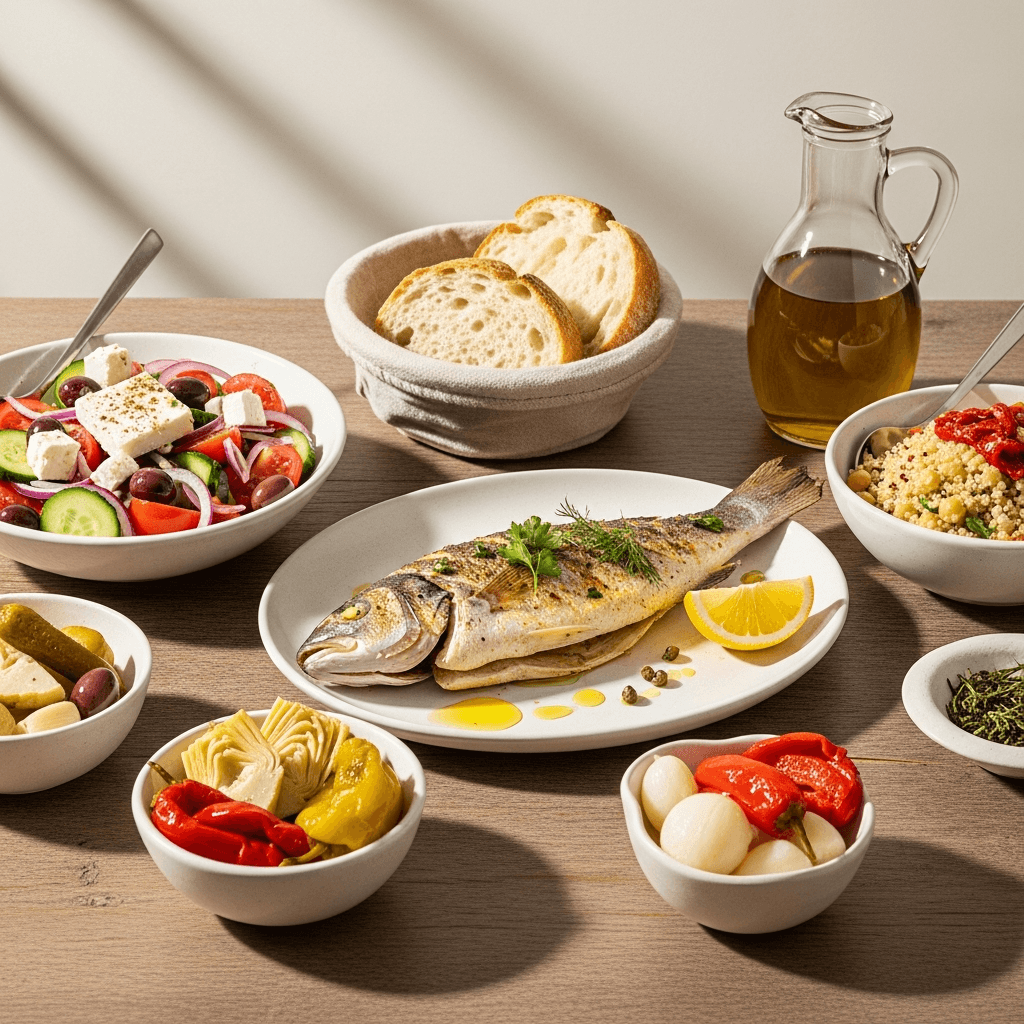
HabitMediterranean dietary pattern
Olive oil, fish, nuts, legumes, plants. The most-studied diet for cardiovascular and cognitive longevity.
Why
The Mediterranean pattern, heavy on plants, olive oil, fish, nuts, legumes; moderate fish and dairy; light on red meat, has the strongest evidence base of any specific diet for long-term cardiovascular and cognitive outcomes. PREDIMED, the largest trial, showed ~30% reduction in major cardiovascular events vs. low-fat control.
Slot in your day
How to do it
How
Olive oil as the primary fat. Plants at every meal. Fish 2–3× per week. Nuts daily (small handful). Red meat once a week or less. Wine optional, with food.
Sticking with it
Stock the kitchen for one week's pattern. Decisions live in the shopping list, not at mealtime.
Markers this may influence
Evidence
PREDIMED (Estruch 2018 NEJM, n=7,447, 4.8-y follow-up): a Mediterranean diet plus extra-virgin olive oil or mixed nuts vs. a low-fat control diet, ~30% reduction in major cardiovascular events (MI, stroke, CVD death). Sofi 2014 updated meta-analysis (n>4M) confirms a dose-response association with all-cause and cardiovascular mortality.
 Supplement
Omega-3 (EPA + DHA)
Cardiovascular and cognitive benefits at 1–2g combined EPA+DHA. Skip if you eat 2+ servings of fatty fish weekly.
Why
EPA and DHA are long-chain omega-3 fatty acids primarily from fatty fish. They reduce triglycerides, support cell membrane function, and are concentrated in brain tissue. Supplementation is most useful for people who don't eat fatty fish regularly. Algae-derived versions exist for vegetarians.
How it works
Incorporated into cell membranes; competes with arachidonic acid in eicosanoid synthesis, shifting inflammatory signalling toward resolution.
Expected onset · ~12 weeks for steady-state membrane uptake
How to take
Dosage
1–2g combined EPA+DHA daily (check the label, total fish oil weight is misleading).
Timing
With a meal containing fat
On the label
Look for combined EPA+DHA per serving on the label, not just 'fish oil 1000mg'. Third-party tested for purity (IFOS, USP).
Ideal for
Anyone who eats fatty fish less than twice per week.
Safety
Markers this may influence
Evidence
EFSA Reg 432/2012 authorised the health claim that EPA and DHA contribute to normal heart function at a combined intake of ≥250 mg/day, a cause-and-effect relationship established from pooled human trial data. Most useful for adults eating fatty fish less than twice per week; algae-derived sources are equivalent for vegetarians.
Where to get it
Shop Omega-3 (EPA + DHA) on AmazonSponsored · As an Amazon Associate, Healicus earns from qualifying purchases.
See also
Related markers
Take to your physician
Worth discussing
- Whether your hsCRP reflects measurable lifestyle factors (excess weight, smoking) before considering pharmacotherapy.
- If two consecutive readings exceed 3 mg/L, whether further workup is warranted.
- Whether your reading meaningfully changes your absolute CV risk estimate.
Sources
Cited literature
- [1]Pearson et al., AHA/CDC scientific statement: Markers of inflammation and cardiovascular disease(2003)
- [2]ESC 2021 Guidelines on cardiovascular disease prevention(2021)
- [3]Estruch et al., PREDIMED: anti-inflammatory effects of a Mediterranean diet(2006)
- [4]Calder PC. Omega-3 fatty acids and inflammatory processes: from molecules to man.(2017)
Keep reading