Wearable metric
Blood pressure
BP · Home BP monitoring · Hypertension screening
The single most modifiable cardiovascular risk factor. Home monitoring is more informative than the occasional office reading.
What it measures
The pressure of arterial blood against vessel walls during systole (peak) and diastole (trough), reported in mmHg. Office, home, and 24-hour ambulatory monitoring each capture slightly different signals; home and ambulatory generally outperform office measurement for risk prediction.
Reference context
6 guideline sources
Office vs home thresholds differ: 140/90 office ≈ 135/85 home/ambulatory daytime average. SPRINT used research-grade unattended automated office BP, which reads ~5–10 mmHg lower than standard office BP. Apparent target discrepancies (US 130 vs EU 140) partly reflect measurement-protocol differences.
Population context: consult guideline targets below
Mechanism
Why moving this marker matters
Sustained elevated blood pressure drives endothelial damage, vascular remodelling, and target-organ injury (heart, brain, kidney, retina). It is the single largest modifiable contributor to cardiovascular disease burden globally. SPRINT (2015, n=9,361) demonstrated that intensive systolic targets (<120 mmHg) vs standard (<140 mmHg) reduced major cardiovascular events by 25% and all-cause mortality by 27% in non-diabetic adults at elevated risk.
Guideline targets
What major guidelines recommend
ESC/ESH 2018 (optimal)
<120 / <80 mmHg
ESC/ESH 2018 (normal)
120–129 / 80–84 mmHg
ESC/ESH 2018 (high–normal)
130–139 / 85–89 mmHg
ESC/ESH 2018 (Grade 1 hypertension)
140–159 / 90–99 mmHg, treatment threshold per ESC
ACC/AHA 2017
Hypertension threshold revised down to ≥130 / 80 mmHg
ESC 2024 update
Intensive systolic target <120 mmHg considered in selected high-CV-risk adults (Class IIa)
How to measure
The test, where to get it, when to repeat
Method
Validated upper-arm oscillometric cuff (Omron, Withings BPM Core, Boso, A&D). Seated, back supported, feet flat, arm at heart level, after 5 minutes of rest, no caffeine/exercise/smoking in the prior 30 minutes. Take two readings 1 minute apart, twice daily (morning + evening) for 7 days; average days 2–7.
Where
Home monitor (€40–120 for a validated device), GP office, pharmacy, or via 24-hour ambulatory cuff arranged through a clinician.
Typical cost
€40–120 for a home device; free at most pharmacies and GP visits. 24-hour ambulatory monitoring €80–200 private.
Fasting
Not required
When to test
USPSTF 2021
18+Annual screening for adults 40+; every 3–5 years for adults 18–39 at low risk. Home or ambulatory confirmation before diagnosing hypertension.
ESC/ESH 2018
18+Annual screening from age 18 (more frequent if elevated). Out-of-office readings recommended for diagnostic confirmation.
ACC/AHA 2017 (Whelton)
Routine screening; emphasis on out-of-office measurement and team-based care.
NICE NG136 (UK)
Ambulatory or home BP monitoring required to confirm hypertension if office reading is 140/90 or higher.
How to track
Devices and apps that measure this
These consumer wearables and connected devices report this metric. Healicus is not connected to your device. Your data lives in the maker's app and never reaches us.
Withings
INTLConnected health-device catalogue — CE-marked blood-pressure cuffs, sleep mats, and body-composition scales.
Visit Withings
Omron Healthcare
INTLClinically-validated home blood-pressure monitors — the brand most cardiology guidelines reference by name.
Visit Omron Healthcare
Healicus is not the provider. Your contract for the service is with whoever you choose. Links labelled Sponsored are paid affiliate relationships; unlabelled links are editorial reference only. See our disclosure for the full policy.
Context
Reading the numbers
Office vs home thresholds differ: 140/90 office ≈ 135/85 home/ambulatory daytime average. SPRINT used research-grade unattended automated office BP, which reads ~5–10 mmHg lower than standard office BP. Apparent target discrepancies (US 130 vs EU 140) partly reflect measurement-protocol differences.
Caveats
White-coat effect (artificially elevated office readings) and masked hypertension (normal office, elevated home) are both common. Out-of-office confirmation is essential before lifelong treatment decisions. Cuff size matters: undersized cuffs over-read by 5–10 mmHg.
Practices
What's been shown to influence this marker
DASH-Sodium RCT (n=412): clinically meaningful systolic reductions (~6–11 mmHg in hypertensive participants), comparable to first-line monotherapy.
PREDIMED-derived analyses showed modest BP reductions; effect sizes smaller than DASH but with broader cardiovascular endpoints.
Aerobic exercise reduces resting systolic BP by ~5–8 mmHg in hypertensive adults and ~2–4 mmHg in normotensive adults (meta-analyses).
Each standard drink per day above ~1 raises systolic BP by ~1 mmHg; reduction reverses this dose-dependently.
 Habit
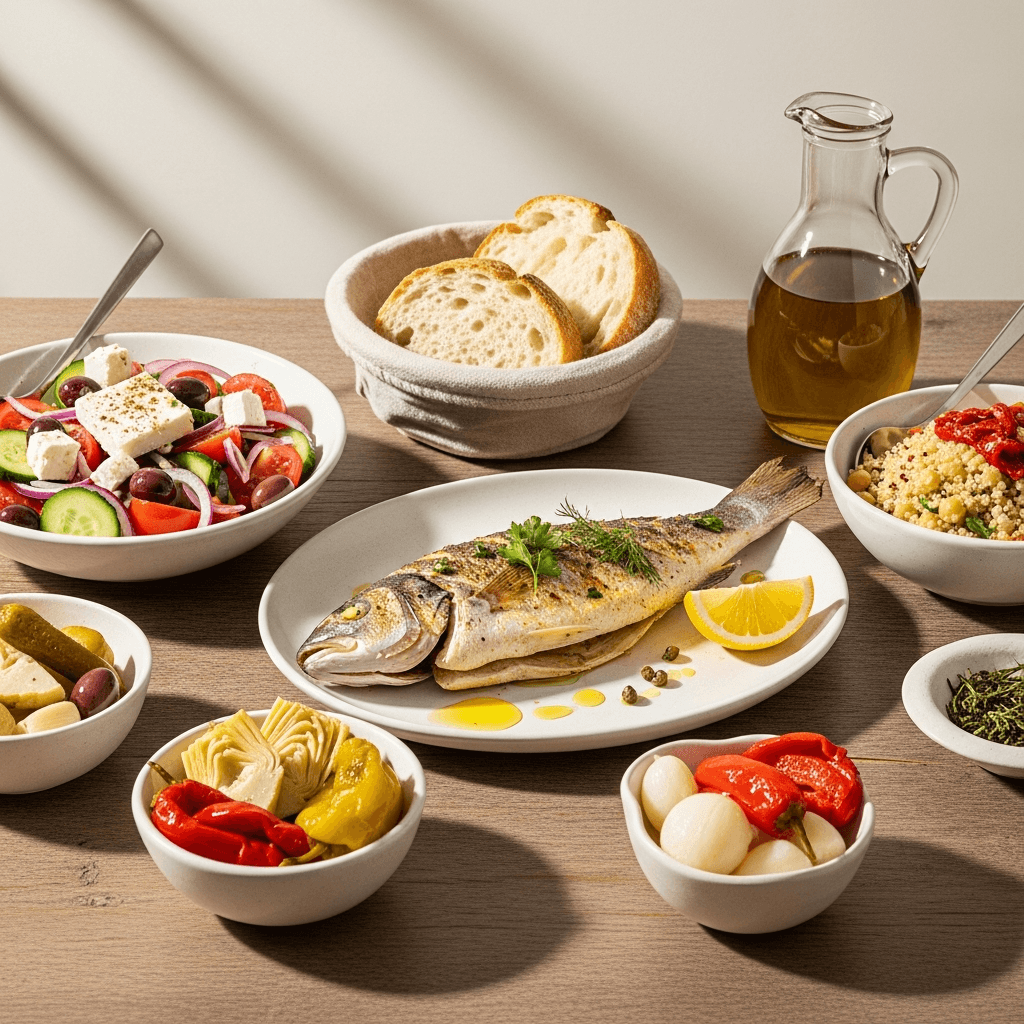
HabitMediterranean dietary pattern
Olive oil, fish, nuts, legumes, plants. The most-studied diet for cardiovascular and cognitive longevity.
Why
The Mediterranean pattern, heavy on plants, olive oil, fish, nuts, legumes; moderate fish and dairy; light on red meat, has the strongest evidence base of any specific diet for long-term cardiovascular and cognitive outcomes. PREDIMED, the largest trial, showed ~30% reduction in major cardiovascular events vs. low-fat control.
Slot in your day
How to do it
How
Olive oil as the primary fat. Plants at every meal. Fish 2–3× per week. Nuts daily (small handful). Red meat once a week or less. Wine optional, with food.
Sticking with it
Stock the kitchen for one week's pattern. Decisions live in the shopping list, not at mealtime.
Markers this may influence
Evidence
PREDIMED (Estruch 2018 NEJM, n=7,447, 4.8-y follow-up): a Mediterranean diet plus extra-virgin olive oil or mixed nuts vs. a low-fat control diet, ~30% reduction in major cardiovascular events (MI, stroke, CVD death). Sofi 2014 updated meta-analysis (n>4M) confirms a dose-response association with all-cause and cardiovascular mortality.
 Habit
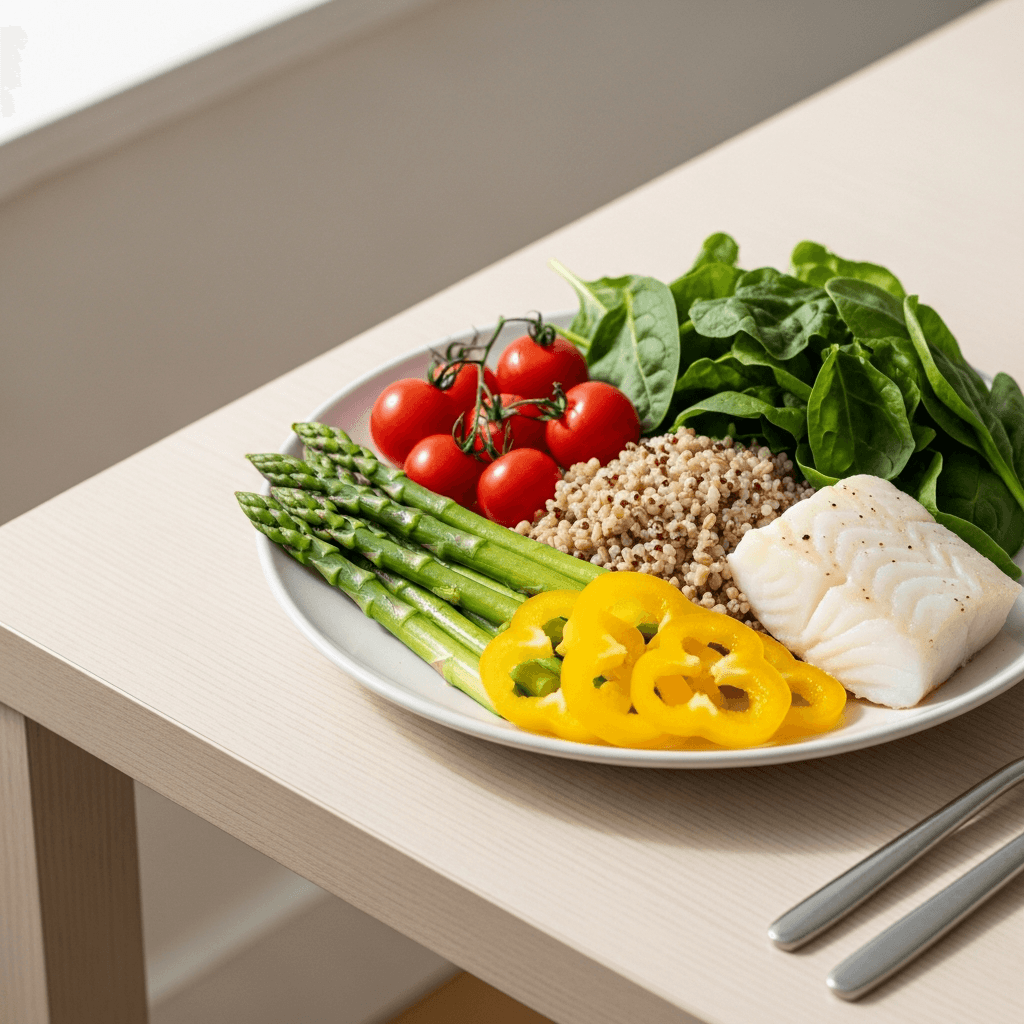
HabitDASH dietary pattern
Dietary Approaches to Stop Hypertension. Strongest dietary RCT evidence for blood pressure reduction.
Why
DASH emphasises vegetables, fruits, whole grains, low-fat dairy, lean protein, and limited sodium, sweets, and saturated fat. The landmark NEJM trial (Sacks 2001, n=412) showed clinically meaningful BP reduction comparable to single-drug antihypertensive therapy in people with elevated BP. Combining DASH with sodium reduction is more effective than either alone.
Slot in your day
How to do it
How
Vegetables and fruits at every meal (~4-5 servings each per day). Whole grains over refined. Limit red meat, sweets, and sugar-sweetened drinks. Cap sodium at ~1,500-2,300 mg/day. Two weeks of consistent eating typically shows BP changes.
Ideal for
People with elevated or borderline blood pressure; cardiovascular prevention generally.
Markers this may influence
Evidence
Sacks 2001 NEJM DASH-Sodium RCT (n=412): DASH plus low sodium (~1,500 mg/day) lowered systolic BP by 11.5 mmHg in hypertensives and 7.1 mmHg in normotensives vs the high-sodium control diet, comparable in magnitude to single-drug antihypertensive therapy. Soltani 2020 meta-analysis (17 cohorts, n>1.2M) shows dose-response associations with all-cause and CVD mortality.
 Habit
HabitZone 2 cardio
Conversational-pace cardio, 150+ minutes per week. Mitochondrial backbone of healthspan.
Why
Zone 2 is the intensity at which you can still hold a conversation but a song would be a stretch, roughly 60–70% of max heart rate. Sustained Zone 2 work increases mitochondrial density, improves fat oxidation, and is the single most consistently associated exercise input with all-cause mortality reduction in cohort studies.
Slot in your day
How to do it
How
Brisk walk, easy bike, slow jog. 30 minutes × 5 days, or 45–60 min × 3 days. The 'talk test' is the simplest gauge.
Ideal for
Anyone over 30; especially valuable as the foundation before adding higher-intensity work.
Sticking with it
Schedule it like a meeting. The session you 'fit in if there's time' is the session that doesn't happen.
Markers this may influence
Evidence
Lee 2012 Lancet Physical Activity Series (population-attributable risk analysis across >50 cohorts): physical inactivity caused ~9% of premature mortality worldwide, comparable to smoking and obesity. Kelly 2014 meta-analysis of walking and cycling (n=280,000 + n=187,000): each ~11 MET-h/week of either activity was associated with ~10–11% lower all-cause mortality.
 CautionHabit
Limit alcohol intake
Lancet pooled analysis (n=599,912): lowest mortality risk threshold is ~100 g/week, about 5-6 standard drinks total.
Why
Wood et al. 2018 Lancet combined individual-participant data from 83 prospective studies (n=599,912 current drinkers in 19 high-income countries). Above ~100 g/week (about 5-6 UK standard units), all-cause mortality climbs in a dose-response manner. Below that threshold the curve is roughly flat, there is no protective effect. Reductions from heavier intake to ≤100 g/week could add up to 2 years of life expectancy at age 40.
How to do it
How
Track intake honestly for one week. If above threshold, set a weekly cap rather than a daily one (avoids the 'I'll catch up' trap). Several alcohol-free days per week is the simplest pattern. Sleep quality typically improves within 1-2 weeks of reduced intake.
Ideal for
Anyone currently drinking above ~100 g/week (≈one bottle of wine, six pints of beer, or a half-bottle of spirits).
Markers this may influence
Evidence
Wood 2018 Lancet pooled analysis (83 prospective studies, n=599,912 current drinkers across 19 high-income countries): the threshold for lowest all-cause mortality was ~100 g alcohol/week (≈5–6 UK units). Above that, intake is linearly associated with mortality and reduces life expectancy by 1–2 years at age 40 for 200–350 g/week drinkers.
 Habit
HabitReduce ultra-processed food
UPF intake correlates with mortality independent of total calories. The category, not just the calories, matters.
Why
Foods classified as ultra-processed (NOVA group 4), packaged snacks, sweetened drinks, reformulated meats, ready meals, predict cardiovascular and all-cause mortality even after adjusting for total calories and macronutrient profile. Mechanisms include altered satiety signalling, additive effects, and displacement of whole foods.
Slot in your day
How to do it
How
Aim for the bulk of the diet to be foods you'd recognise in a kitchen 100 years ago. Convenience foods are fine occasionally; the issue is when they become the default.
Sticking with it
Don't fight cravings in front of the cupboard, fight them at the supermarket.
Markers this may influence
Evidence
Lane 2024 BMJ umbrella review (45 meta-analyses across ~10 million participants): higher ultra-processed food intake was convincingly associated with all-cause mortality, cardiovascular mortality, type 2 diabetes, and common mental disorders, effects persisting after adjusting for total calories and macronutrient profile. The category, not just the calories, predicts risk.
See also
Related markers
Take to your physician
Worth discussing
- Whether your home-monitoring pattern reflects sustained hypertension vs white-coat effect vs masked hypertension.
- Which BP target applies given your CV risk (ESC 140/90 vs ACC/AHA 130/80 vs intensive 120 for selected high-risk adults).
- If you're already on antihypertensive therapy, whether the medication class (ACEi/ARB/CCB/thiazide) fits your other conditions and side-effect tolerance.
- Whether you should be checked for secondary causes (primary aldosteronism, OSA, renal artery stenosis) if BP is treatment-resistant.
Sources
Cited literature
- [1]USPSTF 2021, Screening for hypertension in adults(2021)
- [2]Williams et al., ESC/ESH 2018 Guidelines for the management of arterial hypertension(2018)
- [3]Whelton et al., 2017 ACC/AHA/AAPA/ABC/ACPM/AGS/APhA/ASH/ASPC/NMA/PCNA Guideline for the prevention, detection, evaluation, and management of high BP in adults(2018)
- [4]NICE NG136, Hypertension in adults: diagnosis and management(2022)
- [5]SPRINT Research Group / Wright JT et al., A randomized trial of intensive versus standard blood-pressure control (NEJM)(2015)
- [6]McEvoy et al., 2024 ESC Guidelines for the management of elevated blood pressure and hypertension(2024)
- [7]Sacks et al., DASH-Sodium trial: effects on blood pressure of reduced dietary sodium and DASH diet (NEJM)(2001)
- [8]Estruch et al., PREDIMED trial: primary prevention of cardiovascular disease with a Mediterranean diet (NEJM)(2018)
- [9]Cornelissen & Smart, Exercise training for blood pressure: a systematic review and meta-analysis (J Am Heart Assoc)(2013)
- [10]Roerecke et al., The effect of a reduction in alcohol consumption on blood pressure: a systematic review and meta-analysis (Lancet Public Health)(2017)
Last reviewed May 2026
Keep reading