Lab marker
Homocysteine
Hcy · Total plasma homocysteine
An amino acid that accumulates when B12/folate methylation pathways slow. Modestly informative for cardiovascular and cognitive risk.
What it measures
Total plasma homocysteine, a sulfur amino acid produced during methionine metabolism. Elevation reflects insufficient B12, folate, or B6 (cofactors for remethylation/transsulfuration), MTHFR gene variants, or renal impairment.
Reference context
3 guideline sources
Treatable causes (B12 deficiency, folate deficiency, hypothyroidism, renal impairment) explain most elevations. Supplementation in absence of deficiency has not consistently shown clinical benefit in CV endpoints, though stroke evidence is modestly positive.
Population context: consult guideline targets below
Mechanism
Why moving this marker matters
Hyperhomocysteinaemia damages vascular endothelium and is associated with thrombotic events and cognitive decline. Causality has been debated: large RCTs (VITATOPS, HOPE-2) showed B-vitamin lowering of homocysteine reduces stroke but not myocardial infarction.
Guideline targets
What major guidelines recommend
Common reference (normal)
<10 μmol/L
Common reference (intermediate)
10–15 μmol/L
Common reference (elevated)
>15 μmol/L, investigate B12/folate/renal function
How to measure
The test, where to get it, when to repeat
Method
Fasting blood draw, sample processed promptly (homocysteine is unstable at room temperature).
Where
GP request or private lab. Less commonly bundled into standard panels.
Typical cost
€15–30 private.
Fasting
Required
When to test
B-vitamin guideline consensus
Reasonable to measure once as part of an extended cardiovascular workup; repeat if intervening on B12/folate.
Where to test
Independent labs offering this test
Healicus refers you to independent laboratories. You order from the lab; they take the sample, run it, and return your result on their own platform. Healicus never sees your value.
Randox Health
UK · EU · INTLClinic-based premium panels — wider biomarker breadth than home-test brands.
Visit Randox Health
Synlab
DE · EU · INTLEurope-wide medical lab network — referrals via partner GPs and direct-to-consumer programmes where offered.
Visit Synlab
Medichecks
UKUKAS-accredited home blood-test panels with GP-equivalent biomarker coverage.
Visit Medichecks
Thriva
UKApp-first subscription home testing, capillary draw, clinician-reviewed reports.
Visit Thriva
Healicus is not the provider. Your contract for the service is with whoever you choose. Links labelled Sponsored are paid affiliate relationships; unlabelled links are editorial reference only. See our disclosure for the full policy.
Context
Reading the numbers
Treatable causes (B12 deficiency, folate deficiency, hypothyroidism, renal impairment) explain most elevations. Supplementation in absence of deficiency has not consistently shown clinical benefit in CV endpoints, though stroke evidence is modestly positive.
Caveats
Renal impairment elevates homocysteine independently of vitamin status; pair with creatinine/eGFR. Hypothyroidism also elevates levels.
Practices
What's been shown to influence this marker
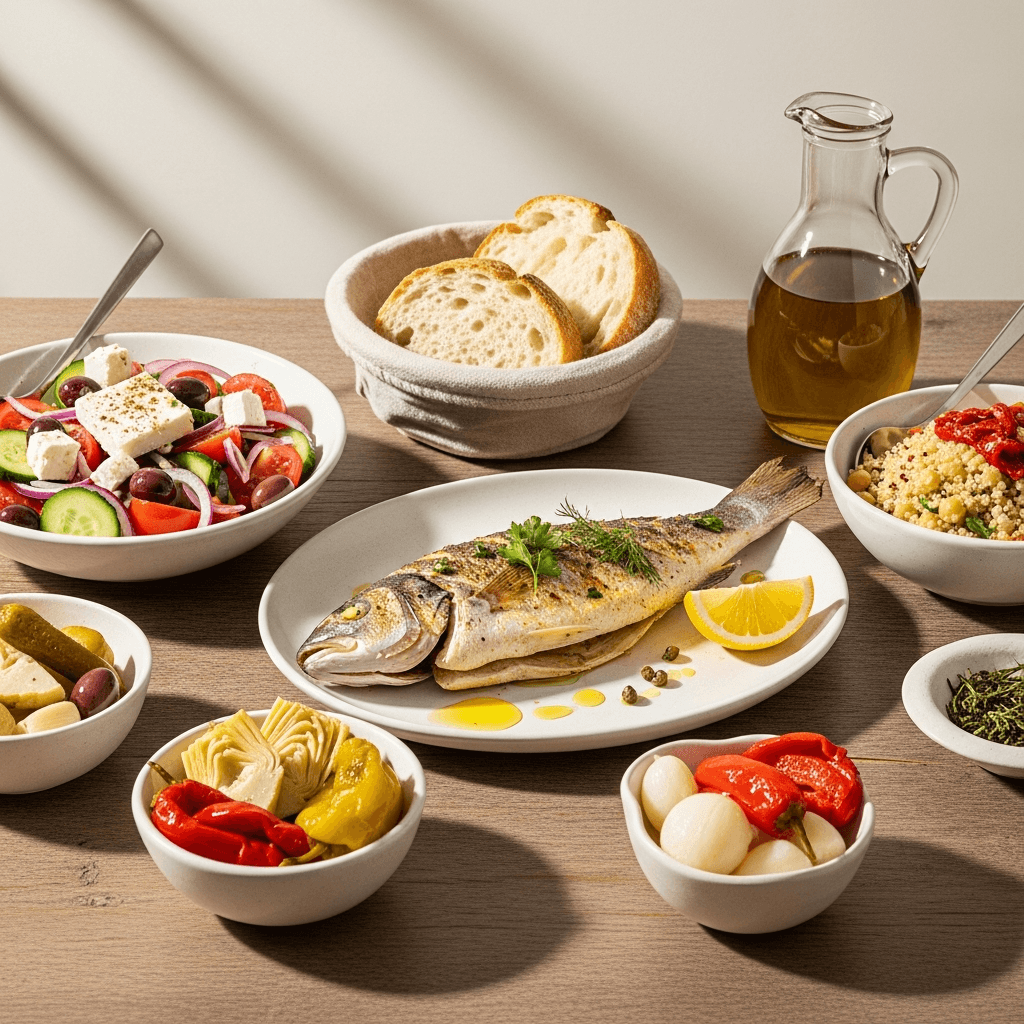
Adequate folate and B12 from the Mediterranean pattern's leafy greens, legumes, fish, and dairy keeps homocysteine in a normal range absent renal or autoimmune drivers.
 Habit
HabitMediterranean dietary pattern
Olive oil, fish, nuts, legumes, plants. The most-studied diet for cardiovascular and cognitive longevity.
Why
The Mediterranean pattern, heavy on plants, olive oil, fish, nuts, legumes; moderate fish and dairy; light on red meat, has the strongest evidence base of any specific diet for long-term cardiovascular and cognitive outcomes. PREDIMED, the largest trial, showed ~30% reduction in major cardiovascular events vs. low-fat control.
Slot in your day
How to do it
How
Olive oil as the primary fat. Plants at every meal. Fish 2–3× per week. Nuts daily (small handful). Red meat once a week or less. Wine optional, with food.
Sticking with it
Stock the kitchen for one week's pattern. Decisions live in the shopping list, not at mealtime.
Markers this may influence
Evidence
PREDIMED (Estruch 2018 NEJM, n=7,447, 4.8-y follow-up): a Mediterranean diet plus extra-virgin olive oil or mixed nuts vs. a low-fat control diet, ~30% reduction in major cardiovascular events (MI, stroke, CVD death). Sofi 2014 updated meta-analysis (n>4M) confirms a dose-response association with all-cause and cardiovascular mortality.
See also
Related markers
Take to your physician
Worth discussing
- If elevated, whether B12, folate, B6, and TSH levels explain the finding.
- Whether MTHFR genotype testing is worth pursuing (most experts say no; the functional readout is homocysteine itself).
- Whether stroke history or family stroke history changes the threshold for action.
Sources
Cited literature
Last reviewed May 2026
Keep reading