Lab marker
Haemoglobin & CBC
Hb · Hgb · Complete blood count · Full blood count · FBC
The most-ordered blood test in medicine: anaemia, white-cell pattern, and platelets in a single panel.
What it measures
Haemoglobin (oxygen-carrying protein concentration), haematocrit, red cell indices (MCV, MCH, MCHC, RDW), white cell count with differential (neutrophils, lymphocytes, monocytes, eosinophils, basophils), and platelets. Reported together as the CBC / FBC.
Reference context
5 guideline sources
WHO anaemia cut-offs were defined in 1968 and remain widely used despite acknowledged limitations. Population reference ranges vary slightly by age, sex, altitude, and ethnicity. MCV characterises the anaemia: microcytic (<80 fL, typical of iron deficiency), normocytic (chronic disease, acute blood loss), macrocytic (>100 fL, typical of B12/folate deficiency, hypothyroidism, liver disease).
Population context: consult guideline targets below
Mechanism
Why moving this marker matters
Anaemia (low Hb) reduces oxygen delivery and is associated with fatigue, reduced exercise capacity, and, in older adults, elevated mortality risk. Elevated red cell distribution width (RDW), even within the normal Hb range, has emerged as an independent mortality predictor across multiple cohorts (Patel 2010, Felker 2007). Platelets and white cells flag clotting risk and inflammation/infection.
Guideline targets
What major guidelines recommend
WHO anaemia (men)
Hb <130 g/L (<13.0 g/dL)
WHO anaemia (non-pregnant women)
Hb <120 g/L (<12.0 g/dL)
Common reference (MCV)
80–100 fL
Common reference (platelets)
150–400 × 10⁹/L
Common reference (WBC)
4–11 × 10⁹/L
How to measure
The test, where to get it, when to repeat
Method
Standard EDTA-anticoagulated blood sample; results within 1 hour at most labs.
Where
Standard panel everywhere; included in routine bloods.
Typical cost
Bundled; €10–15 standalone.
Fasting
Not required
When to test
Standard panel inclusion
Reviewed at any routine blood draw. Trend matters more than single-point values.
Where to test
Independent labs offering this test
Healicus refers you to independent laboratories. You order from the lab; they take the sample, run it, and return your result on their own platform. Healicus never sees your value.
Randox Health
UK · EU · INTLClinic-based premium panels — wider biomarker breadth than home-test brands.
Visit Randox Health
Synlab
DE · EU · INTLEurope-wide medical lab network — referrals via partner GPs and direct-to-consumer programmes where offered.
Visit Synlab
Medichecks
UKUKAS-accredited home blood-test panels with GP-equivalent biomarker coverage.
Visit Medichecks
Thriva
UKApp-first subscription home testing, capillary draw, clinician-reviewed reports.
Visit Thriva
Healicus is not the provider. Your contract for the service is with whoever you choose. Links labelled Sponsored are paid affiliate relationships; unlabelled links are editorial reference only. See our disclosure for the full policy.
Context
Reading the numbers
WHO anaemia cut-offs were defined in 1968 and remain widely used despite acknowledged limitations. Population reference ranges vary slightly by age, sex, altitude, and ethnicity. MCV characterises the anaemia: microcytic (<80 fL, typical of iron deficiency), normocytic (chronic disease, acute blood loss), macrocytic (>100 fL, typical of B12/folate deficiency, hypothyroidism, liver disease).
Caveats
A single mildly abnormal CBC value in an asymptomatic adult often deserves repeating rather than immediate workup. Smoking elevates WBC chronically. Recent intense exercise can elevate both WBC and platelets briefly.
Practices
What's been shown to influence this marker
Adequate dietary intake of iron, B12, and folate from the Mediterranean pattern supports normal erythropoiesis. Most nutritional anaemia in well-fed populations reflects malabsorption or blood loss rather than dietary insufficiency.
 Habit
HabitMediterranean dietary pattern
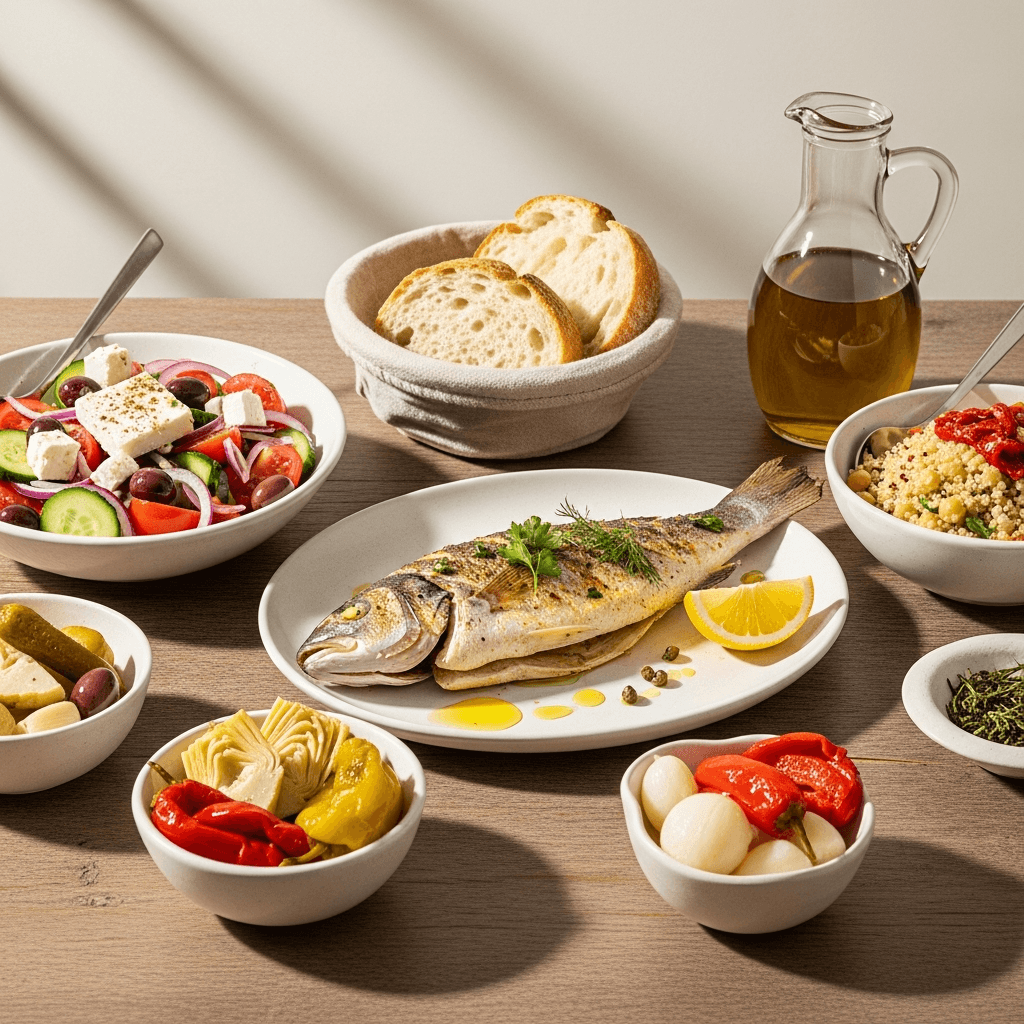
Olive oil, fish, nuts, legumes, plants. The most-studied diet for cardiovascular and cognitive longevity.
Why
The Mediterranean pattern, heavy on plants, olive oil, fish, nuts, legumes; moderate fish and dairy; light on red meat, has the strongest evidence base of any specific diet for long-term cardiovascular and cognitive outcomes. PREDIMED, the largest trial, showed ~30% reduction in major cardiovascular events vs. low-fat control.
Slot in your day
How to do it
How
Olive oil as the primary fat. Plants at every meal. Fish 2–3× per week. Nuts daily (small handful). Red meat once a week or less. Wine optional, with food.
Sticking with it
Stock the kitchen for one week's pattern. Decisions live in the shopping list, not at mealtime.
Markers this may influence
Evidence
PREDIMED (Estruch 2018 NEJM, n=7,447, 4.8-y follow-up): a Mediterranean diet plus extra-virgin olive oil or mixed nuts vs. a low-fat control diet, ~30% reduction in major cardiovascular events (MI, stroke, CVD death). Sofi 2014 updated meta-analysis (n>4M) confirms a dose-response association with all-cause and cardiovascular mortality.
 CautionHabit
Limit alcohol intake
Lancet pooled analysis (n=599,912): lowest mortality risk threshold is ~100 g/week, about 5-6 standard drinks total.
Why
Wood et al. 2018 Lancet combined individual-participant data from 83 prospective studies (n=599,912 current drinkers in 19 high-income countries). Above ~100 g/week (about 5-6 UK standard units), all-cause mortality climbs in a dose-response manner. Below that threshold the curve is roughly flat, there is no protective effect. Reductions from heavier intake to ≤100 g/week could add up to 2 years of life expectancy at age 40.
How to do it
How
Track intake honestly for one week. If above threshold, set a weekly cap rather than a daily one (avoids the 'I'll catch up' trap). Several alcohol-free days per week is the simplest pattern. Sleep quality typically improves within 1-2 weeks of reduced intake.
Ideal for
Anyone currently drinking above ~100 g/week (≈one bottle of wine, six pints of beer, or a half-bottle of spirits).
Markers this may influence
Evidence
Wood 2018 Lancet pooled analysis (83 prospective studies, n=599,912 current drinkers across 19 high-income countries): the threshold for lowest all-cause mortality was ~100 g alcohol/week (≈5–6 UK units). Above that, intake is linearly associated with mortality and reduces life expectancy by 1–2 years at age 40 for 200–350 g/week drinkers.
See also
Related markers
Take to your physician
Worth discussing
- If you have anaemia, the likely cause (iron deficiency, B12/folate, chronic disease, blood loss) and appropriate workup.
- If MCV is high or low, what pattern of further testing the result suggests.
- Whether platelet or WBC findings warrant follow-up.
Sources
Cited literature
Last reviewed May 2026
Keep reading