Lab marker
ALT
Alanine aminotransferase · SGPT
The most informative liver enzyme, sensitive to hepatocellular injury, often the first marker to move in MASLD.
What it measures
An intracellular enzyme released into circulation when hepatocytes are injured. More liver-specific than AST. Reported in U/L. Modern guidelines argue the historical 'normal' upper limit was too generous because it was derived from populations that included subclinical liver disease.
Reference context
2 guideline sources
Lab reference ranges typically extend to 40–55 U/L (men) and 30–35 U/L (women), but Prati 2002 and subsequent work demonstrated these were derived from cohorts including undiagnosed MASLD and hepatitis C. Modern healthy thresholds are lower. A 'normal lab' ALT in a person with metabolic syndrome can still mean meaningful liver fat.
Population context: consult guideline targets below
Mechanism
Why moving this marker matters
Hepatocyte injury, from metabolic-associated steatotic liver disease (MASLD, previously NAFLD), alcohol, viral hepatitis, medication injury, releases ALT into circulation. In adults without infectious or pharmacological cause, persistently elevated ALT increasingly reflects MASLD prevalence, which now affects ~30% of adults globally.
Guideline targets
What major guidelines recommend
Prati 2002 (updated healthy ranges)
Men ≤30 U/L; women ≤19 U/L (revised down from historical 40–55 U/L)
AASLD 2017 (action threshold)
Persistently elevated above lab ULN → workup. Even high-normal values should prompt context review when metabolic risk factors are present.
How to measure
The test, where to get it, when to repeat
Method
Standard liver panel as part of routine bloods. Fasting not strictly required but reduces meal-related variability.
Where
Standard GP panel everywhere.
Typical cost
Bundled with liver function tests; €5–15 standalone.
Fasting
Not required
When to test
AASLD 2017 (Kwo)
Evaluate persistently elevated ALT regardless of magnitude; investigate metabolic, alcohol, viral, and drug causes.
EASL 2024 (MASLD)
Screen adults with metabolic risk factors (obesity, T2D, dyslipidaemia) for steatotic liver disease.
Where to test
Independent labs offering this test
Healicus refers you to independent laboratories. You order from the lab; they take the sample, run it, and return your result on their own platform. Healicus never sees your value.
Randox Health
UK · EU · INTLClinic-based premium panels — wider biomarker breadth than home-test brands.
Visit Randox Health
Synlab
DE · EU · INTLEurope-wide medical lab network — referrals via partner GPs and direct-to-consumer programmes where offered.
Visit Synlab
Medichecks
UKUKAS-accredited home blood-test panels with GP-equivalent biomarker coverage.
Visit Medichecks
Thriva
UKApp-first subscription home testing, capillary draw, clinician-reviewed reports.
Visit Thriva
Healicus is not the provider. Your contract for the service is with whoever you choose. Links labelled Sponsored are paid affiliate relationships; unlabelled links are editorial reference only. See our disclosure for the full policy.
Context
Reading the numbers
Lab reference ranges typically extend to 40–55 U/L (men) and 30–35 U/L (women), but Prati 2002 and subsequent work demonstrated these were derived from cohorts including undiagnosed MASLD and hepatitis C. Modern healthy thresholds are lower. A 'normal lab' ALT in a person with metabolic syndrome can still mean meaningful liver fat.
Caveats
Acute hepatitis can elevate ALT 10–100× ULN. Mild persistent elevation in an asymptomatic adult is most commonly MASLD or excess alcohol intake. ALT may be normal in advanced cirrhosis as functioning hepatocytes are depleted; normal ALT does not exclude liver disease in someone with risk factors.
Practices
What's been shown to influence this marker
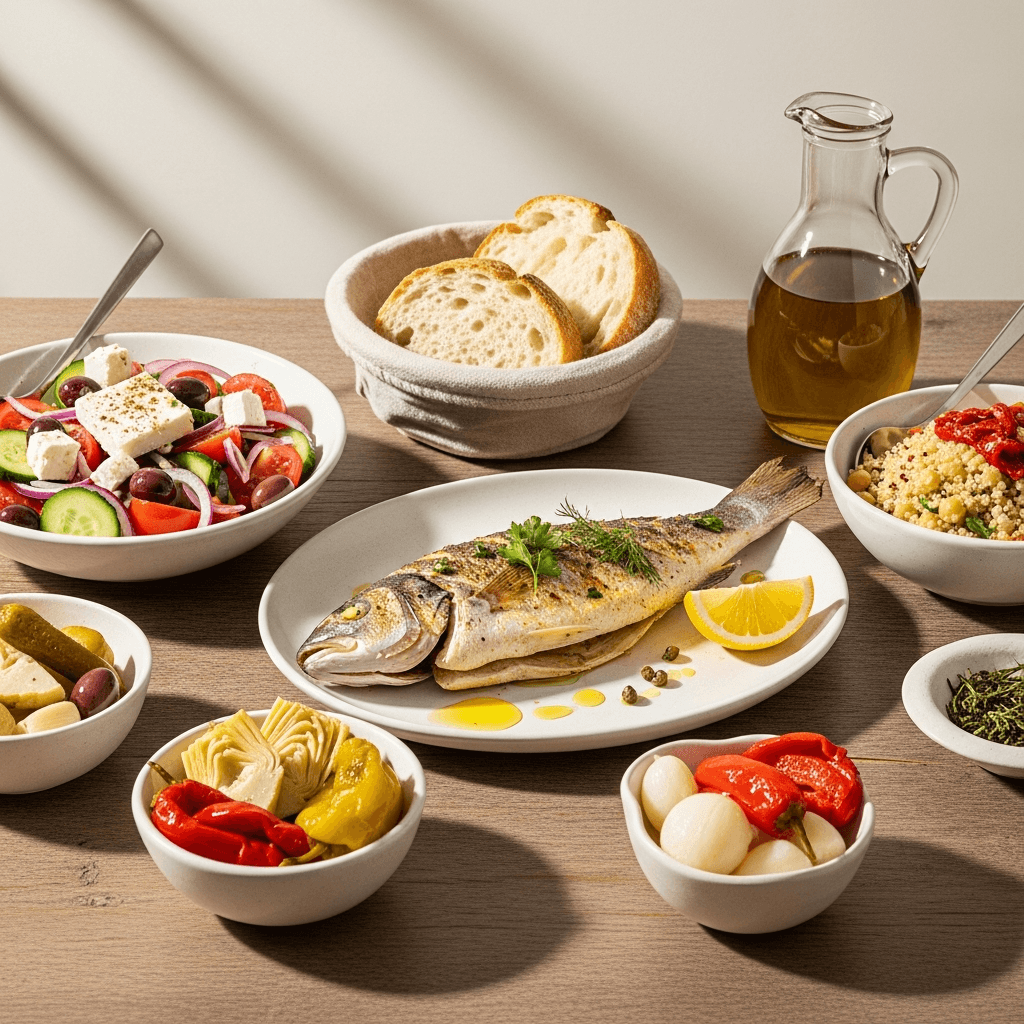
Mediterranean pattern reduces hepatic steatosis on MRI and lowers ALT in adults with MASLD over 6–12 months in RCT data.
 Habit
HabitMediterranean dietary pattern
Olive oil, fish, nuts, legumes, plants. The most-studied diet for cardiovascular and cognitive longevity.
Why
The Mediterranean pattern, heavy on plants, olive oil, fish, nuts, legumes; moderate fish and dairy; light on red meat, has the strongest evidence base of any specific diet for long-term cardiovascular and cognitive outcomes. PREDIMED, the largest trial, showed ~30% reduction in major cardiovascular events vs. low-fat control.
Slot in your day
How to do it
How
Olive oil as the primary fat. Plants at every meal. Fish 2–3× per week. Nuts daily (small handful). Red meat once a week or less. Wine optional, with food.
Sticking with it
Stock the kitchen for one week's pattern. Decisions live in the shopping list, not at mealtime.
Markers this may influence
Evidence
PREDIMED (Estruch 2018 NEJM, n=7,447, 4.8-y follow-up): a Mediterranean diet plus extra-virgin olive oil or mixed nuts vs. a low-fat control diet, ~30% reduction in major cardiovascular events (MI, stroke, CVD death). Sofi 2014 updated meta-analysis (n>4M) confirms a dose-response association with all-cause and cardiovascular mortality.
 CautionHabit
Limit alcohol intake
Lancet pooled analysis (n=599,912): lowest mortality risk threshold is ~100 g/week, about 5-6 standard drinks total.
Why
Wood et al. 2018 Lancet combined individual-participant data from 83 prospective studies (n=599,912 current drinkers in 19 high-income countries). Above ~100 g/week (about 5-6 UK standard units), all-cause mortality climbs in a dose-response manner. Below that threshold the curve is roughly flat, there is no protective effect. Reductions from heavier intake to ≤100 g/week could add up to 2 years of life expectancy at age 40.
How to do it
How
Track intake honestly for one week. If above threshold, set a weekly cap rather than a daily one (avoids the 'I'll catch up' trap). Several alcohol-free days per week is the simplest pattern. Sleep quality typically improves within 1-2 weeks of reduced intake.
Ideal for
Anyone currently drinking above ~100 g/week (≈one bottle of wine, six pints of beer, or a half-bottle of spirits).
Markers this may influence
Evidence
Wood 2018 Lancet pooled analysis (83 prospective studies, n=599,912 current drinkers across 19 high-income countries): the threshold for lowest all-cause mortality was ~100 g alcohol/week (≈5–6 UK units). Above that, intake is linearly associated with mortality and reduces life expectancy by 1–2 years at age 40 for 200–350 g/week drinkers.
 Habit
HabitReduce ultra-processed food
UPF intake correlates with mortality independent of total calories. The category, not just the calories, matters.
Why
Foods classified as ultra-processed (NOVA group 4), packaged snacks, sweetened drinks, reformulated meats, ready meals, predict cardiovascular and all-cause mortality even after adjusting for total calories and macronutrient profile. Mechanisms include altered satiety signalling, additive effects, and displacement of whole foods.
Slot in your day
How to do it
How
Aim for the bulk of the diet to be foods you'd recognise in a kitchen 100 years ago. Convenience foods are fine occasionally; the issue is when they become the default.
Sticking with it
Don't fight cravings in front of the cupboard, fight them at the supermarket.
Markers this may influence
Evidence
Lane 2024 BMJ umbrella review (45 meta-analyses across ~10 million participants): higher ultra-processed food intake was convincingly associated with all-cause mortality, cardiovascular mortality, type 2 diabetes, and common mental disorders, effects persisting after adjusting for total calories and macronutrient profile. The category, not just the calories, predicts risk.
 Habit
HabitZone 2 cardio
Conversational-pace cardio, 150+ minutes per week. Mitochondrial backbone of healthspan.
Why
Zone 2 is the intensity at which you can still hold a conversation but a song would be a stretch, roughly 60–70% of max heart rate. Sustained Zone 2 work increases mitochondrial density, improves fat oxidation, and is the single most consistently associated exercise input with all-cause mortality reduction in cohort studies.
Slot in your day
How to do it
How
Brisk walk, easy bike, slow jog. 30 minutes × 5 days, or 45–60 min × 3 days. The 'talk test' is the simplest gauge.
Ideal for
Anyone over 30; especially valuable as the foundation before adding higher-intensity work.
Sticking with it
Schedule it like a meeting. The session you 'fit in if there's time' is the session that doesn't happen.
Markers this may influence
Evidence
Lee 2012 Lancet Physical Activity Series (population-attributable risk analysis across >50 cohorts): physical inactivity caused ~9% of premature mortality worldwide, comparable to smoking and obesity. Kelly 2014 meta-analysis of walking and cycling (n=280,000 + n=187,000): each ~11 MET-h/week of either activity was associated with ~10–11% lower all-cause mortality.
See also
Related markers
Take to your physician
Worth discussing
- Whether your value reflects metabolic-associated steatotic liver disease, excess alcohol, medication effect, or something else.
- If persistently elevated, whether FIB-4 score, FibroScan, or imaging (ultrasound, MRI-PDFF) is indicated.
- If MASLD is confirmed, the targeted lifestyle intervention and follow-up cadence.
Sources
Cited literature
- [1]Kwo et al., ACG Clinical Guideline: Evaluation of abnormal liver chemistries (AASLD-endorsed)(2017)
- [2]Prati et al., Updated definitions of healthy ranges for serum alanine aminotransferase levels (Ann Intern Med)(2002)
- [3]EASL-EASD-EASO Clinical Practice Guidelines on the management of MASLD(2024)
- [4]Ryan et al., The Mediterranean diet improves hepatic steatosis and insulin sensitivity in individuals with non-alcoholic fatty liver disease (J Hepatol)(2013)
Last reviewed May 2026
Keep reading