Functional test
Push-up capacity
Push-up test · Max push-ups
How many push-ups you can do without resting, a free 60-second test with a strong prospective cardiovascular signal.
What it measures
The maximum number of full-range push-ups performed without pausing, at a metronome-set cadence of ~80 beats per minute (one push-up per beat). Captures combined upper-body strength, muscular endurance, core stability, and indirectly cardiovascular fitness.
Reference context
4 guideline sources
The Yang 2019 cohort was middle-aged active men (firefighters); the magnitude of the relative-risk reduction at 40+ push-ups is striking but should be interpreted as 'a strong correlate of overall fitness in this population' rather than a personal target. Women-specific prospective cohort data are thinner.
Population context: consult guideline targets below
Mechanism
Why moving this marker matters
Push-up capacity correlates with overall muscular fitness and integrates several physiological systems. Yang et al. 2019 (JAMA Network Open, n=1,104 active adult men, 10-year follow-up) found that men able to complete ≥40 push-ups had a 96% reduction in cardiovascular events compared with those completing ≤10. The relationship persisted after adjusting for age, BMI, and other risk factors, and was stronger than the submaximal treadmill test as a CV predictor in this cohort.
Guideline targets
What major guidelines recommend
Yang 2019 (CV risk threshold, men)
≥40 push-ups in cadence, strongest association with reduced CV events
Yang 2019 (elevated risk, men)
≤10 push-ups in cadence, substantially elevated CV event risk over 10 years
ACSM age norms (men)
Roughly: 30s ≥22; 40s ≥17; 50s ≥13; 60s ≥10 (population averages, not optimal targets)
ACSM age norms (women, modified)
30s ≥19; 40s ≥14; 50s ≥10; 60s ≥8 (modified push-ups)
How to measure
The test, where to get it, when to repeat
Method
Standard push-up form: hands shoulder-width, body straight from head to heel, lower until upper arms are parallel to the floor, return to extended. Cadence ~80 bpm (one push-up per beat) using a metronome. Continue until form fails, fatigue stops you, or you fall more than 3 cadence beats behind. Count completed push-ups. Modified form (knees down) is acceptable when standard form is not feasible; record which version.
Where
Free at home or any gym floor.
Typical cost
Free.
Fasting
Not required
When to test
ACSM 2022
30+Reasonable annual self-tracking from age 30. Cohort evidence is strongest in middle-aged adults.
How to test
Doing this test
This is a self-test, no equipment needed. A timer or tape measure is usually enough. Your GP can confirm the protocol if you want validation.
Context
Reading the numbers
The Yang 2019 cohort was middle-aged active men (firefighters); the magnitude of the relative-risk reduction at 40+ push-ups is striking but should be interpreted as 'a strong correlate of overall fitness in this population' rather than a personal target. Women-specific prospective cohort data are thinner.
Caveats
Recent upper-body or shoulder injury invalidates the test. Form fails before fatigue in many adults. Accept the lower-form-failure number as your honest score and rebuild from there.
Practices
What's been shown to influence this marker
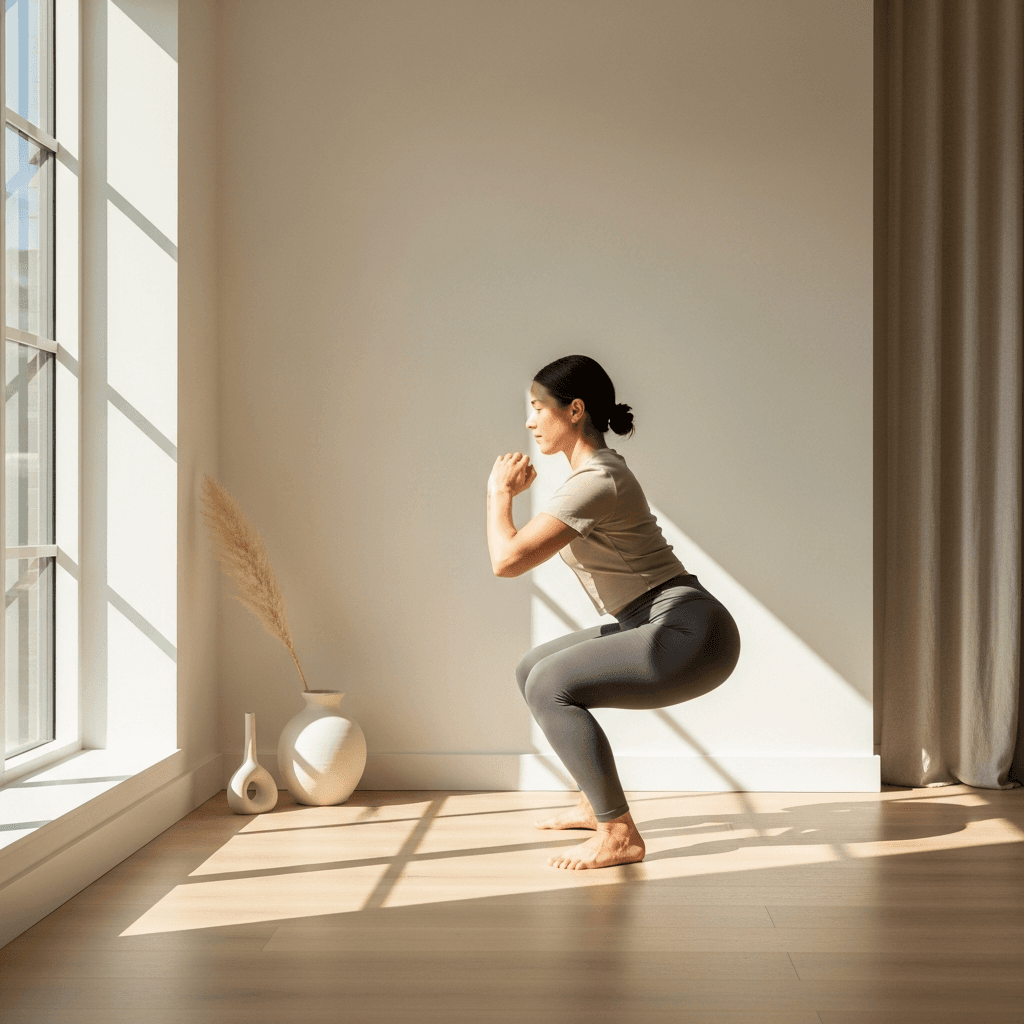 Habit
HabitResistance training
2 sessions/week. Preserves muscle mass: the marker that tracks functional independence in your eighties.
Why
Sarcopenia (age-related muscle loss) starts in the third decade and accelerates from 50. Resistance training is the only intervention shown to reverse it. Two sessions per week of full-body work is enough to maintain mass; three is enough to build it. Critical for fall prevention, bone density, and insulin sensitivity in older age.
Slot in your day
How to do it
How
Six compound movements (squat, hinge, push, pull, carry, rotate), 2–3 sets each, 2× per week. Bodyweight is fine to start; progress to weighted as form solidifies.
Ideal for
Everyone, especially those over 40; the cost of starting late is much higher than starting early.
Sticking with it
Two fixed weekday slots beat 'three sessions whenever'. The schedule is the programme.
Markers this may influence
Evidence
Westcott 2012 Curr Sports Med Rep review: 2–3 weekly sessions of resistance training in older adults produced ~1.4 kg of muscle gain and ~1.8 kg fat loss over 10 weeks, with parallel gains in resting metabolic rate and glucose handling. The only intervention shown to reverse age-related sarcopenia, which begins in the third decade and accelerates after 50.
 Habit
HabitZone 2 cardio
Conversational-pace cardio, 150+ minutes per week. Mitochondrial backbone of healthspan.
Why
Zone 2 is the intensity at which you can still hold a conversation but a song would be a stretch, roughly 60–70% of max heart rate. Sustained Zone 2 work increases mitochondrial density, improves fat oxidation, and is the single most consistently associated exercise input with all-cause mortality reduction in cohort studies.
Slot in your day
How to do it
How
Brisk walk, easy bike, slow jog. 30 minutes × 5 days, or 45–60 min × 3 days. The 'talk test' is the simplest gauge.
Ideal for
Anyone over 30; especially valuable as the foundation before adding higher-intensity work.
Sticking with it
Schedule it like a meeting. The session you 'fit in if there's time' is the session that doesn't happen.
Markers this may influence
Evidence
Lee 2012 Lancet Physical Activity Series (population-attributable risk analysis across >50 cohorts): physical inactivity caused ~9% of premature mortality worldwide, comparable to smoking and obesity. Kelly 2014 meta-analysis of walking and cycling (n=280,000 + n=187,000): each ~11 MET-h/week of either activity was associated with ~10–11% lower all-cause mortality.
See also
Related markers
Take to your physician
Worth discussing
- If your number is markedly low for your age, whether structured strength training plus aerobic work is appropriate to add.
- Whether form-limiting issues (shoulder, wrist, back) need physiotherapy assessment before you can train this capacity safely.
Sources
Cited literature
Last reviewed May 2026
Keep reading
← Previous
Functional test
6-minute walk test
Distance walked in six minutes, a submaximal exercise tolerance measure useful when full VO₂max testing isn't feasible.
Next →
Functional test
Comprehensive stool microbiome
Sequencing the bacteria in a stool sample to profile your gut ecosystem. Fascinating science, but not yet a validated clinical test, and commercial reports often overreach.