 CautionSupplement
Psyllium husk
EFSA-authorised soluble fibre, strongest plant-based evidence for cholesterol, regularity, and IBS symptoms.
Why
Psyllium husk (Plantago ovata) is the most-evidenced soluble fibre in routine clinical use. It holds an EFSA authorised health claim for cholesterol maintenance, Cochrane-level evidence for chronic constipation, and meta-analysis support for global IBS symptom improvement. Used routinely in primary-care gastroenterology guidelines for both constipation-predominant and diarrhoea-predominant IBS.
How it works
Soluble fibre that forms a viscous gel in the gut, slowing carbohydrate absorption, binding bile acids (lowering LDL via increased hepatic cholesterol-to-bile conversion), normalising stool form, and feeding short-chain-fatty-acid-producing colonic bacteria.
Expected onset · Stool form effects within 1–3 days; cholesterol effects emerge over 4–8 weeks
How to take
Dosage
3.5–10 g of psyllium husk per dose, 1–3 times daily, always with 250 ml water or more per dose. For cholesterol, 7 g/day or more is the EFSA-cited threshold.
Timing
With or between meals; cholesterol effect requires taking before or with meals
On the label
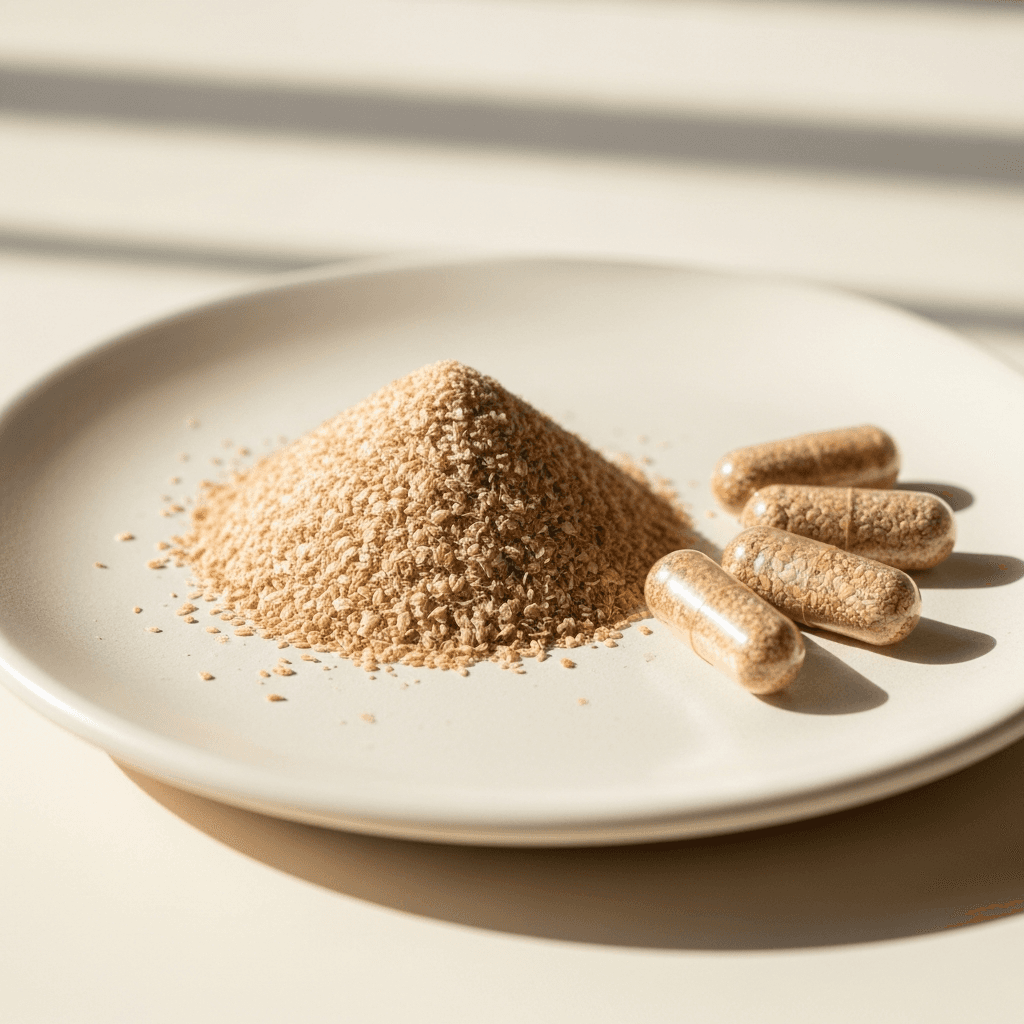
'Psyllium husk' or 'ispaghula husk', pure husk, not seed flour. Granules and capsules both work; ensure adequate water either way.
Ideal for
Adults with chronic constipation, IBS (either subtype), or elevated LDL cholesterol; people aiming to raise dietary fibre.
Safety
Evidence
EFSA authorised the claim that psyllium contributes to maintenance of normal blood cholesterol (≥7 g/day), the highest regulatory tier in EU food law. Moayyedi 2014 Am J Gastroenterol meta-analysis: psyllium gave the most consistent IBS symptom benefit of any soluble fibre, NNT=7. Christodoulides 2016 systematic review confirmed benefit for chronic constipation across stool frequency, consistency, and straining.
- EFSA authorised health claim, 'Psyllium husk contributes to the maintenance of normal blood cholesterol concentrations' (Reg 432/2012)
- Christodoulides et al., Aliment Pharmacol Ther 2016, systematic review of psyllium for chronic constipation
- Moayyedi et al., Am J Gastroenterol 2014, fibre for IBS systematic review (psyllium NNT=7)
Where to get it
Shop Psyllium husk on AmazonSponsored · As an Amazon Associate, Healicus earns from qualifying purchases.