Lab marker
HbA1c
Glycated haemoglobin · Haemoglobin A1c
A two-to-three-month moving average of blood glucose. The most stable single marker of glycaemic regulation.
What it measures
Glucose binds non-enzymatically to haemoglobin in red blood cells. Because red cells live ~120 days, HbA1c reflects average glucose exposure across the prior 8–12 weeks. Reported as % (NGSP) or mmol/mol (IFCC).
Reference context
3 guideline sources
Lab 'normal' ranges typically end at 6.0–6.4%. Observational data suggest cardiovascular risk begins rising above ~5.6%, though this is associative and not a treatment target. Recent data on continuous glucose monitoring complement HbA1c by exposing post-meal excursions that the average can hide.
Population context: consult guideline targets below
Mechanism
Why moving this marker matters
Hyperglycaemia drives glycation of structural proteins (advanced glycation end-products), endothelial dysfunction, microvascular damage, and accelerated atherosclerosis. Each 1% increase in HbA1c above 5.5% is associated with stepwise increases in cardiovascular and all-cause mortality in prospective cohorts.
Guideline targets
What major guidelines recommend
ADA 2024 (normal)
<5.7% (<39 mmol/mol)
ADA 2024 (prediabetes)
5.7–6.4% (39–46 mmol/mol)
ADA 2024 (diabetes)
≥6.5% (≥48 mmol/mol)
How to measure
The test, where to get it, when to repeat
Method
Standard blood draw. Fasting not required (advantage over fasting glucose).
Where
GP standard preventive panel or private lab.
Typical cost
€10–20 private.
Fasting
Not required
When to test
USPSTF 2021
35–70Screen for prediabetes/diabetes in adults 35–70 who are overweight or obese; every 3 years if normal.
ADA 2024
35+Universal screening from age 35; every 3 years if normal, annually if prediabetic.
NICE NG28
Risk-stratified screening from age 40 (or 25 in some South Asian populations).
Where to test
Independent labs offering this test
Healicus refers you to independent laboratories. You order from the lab; they take the sample, run it, and return your result on their own platform. Healicus never sees your value.
Randox Health
UK · EU · INTLClinic-based premium panels — wider biomarker breadth than home-test brands.
Visit Randox Health
Synlab
DE · EU · INTLEurope-wide medical lab network — referrals via partner GPs and direct-to-consumer programmes where offered.
Visit Synlab
Cerascreen
DE · EUEstablished German home-test catalogue — ISO-certified labs, German-language reports.
Visit Cerascreen
Medichecks
UKUKAS-accredited home blood-test panels with GP-equivalent biomarker coverage.
Visit Medichecks
Healicus is not the provider. Your contract for the service is with whoever you choose. Links labelled Sponsored are paid affiliate relationships; unlabelled links are editorial reference only. See our disclosure for the full policy.
Context
Reading the numbers
Lab 'normal' ranges typically end at 6.0–6.4%. Observational data suggest cardiovascular risk begins rising above ~5.6%, though this is associative and not a treatment target. Recent data on continuous glucose monitoring complement HbA1c by exposing post-meal excursions that the average can hide.
Caveats
Conditions affecting red cell turnover (anaemia, haemoglobinopathies, recent transfusion, pregnancy) make HbA1c unreliable; use fasting glucose or OGTT instead.
Practices
What's been shown to influence this marker
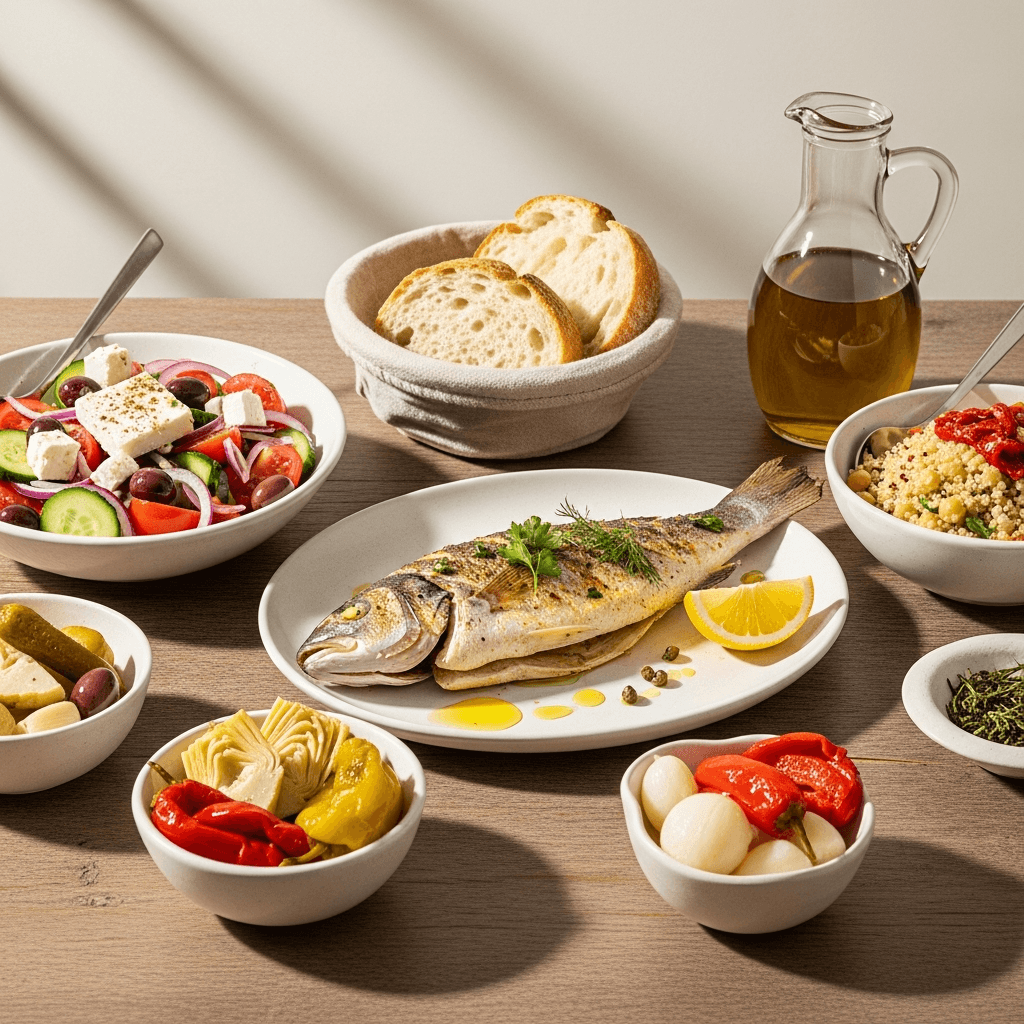
Mediterranean dietary pattern reduces HbA1c modestly (~0.3–0.5%) and prevents progression from prediabetes to diabetes in PREDIMED and follow-up studies.
 Habit
HabitMediterranean dietary pattern
Olive oil, fish, nuts, legumes, plants. The most-studied diet for cardiovascular and cognitive longevity.
Why
The Mediterranean pattern, heavy on plants, olive oil, fish, nuts, legumes; moderate fish and dairy; light on red meat, has the strongest evidence base of any specific diet for long-term cardiovascular and cognitive outcomes. PREDIMED, the largest trial, showed ~30% reduction in major cardiovascular events vs. low-fat control.
Slot in your day
How to do it
How
Olive oil as the primary fat. Plants at every meal. Fish 2–3× per week. Nuts daily (small handful). Red meat once a week or less. Wine optional, with food.
Sticking with it
Stock the kitchen for one week's pattern. Decisions live in the shopping list, not at mealtime.
Markers this may influence
Evidence
PREDIMED (Estruch 2018 NEJM, n=7,447, 4.8-y follow-up): a Mediterranean diet plus extra-virgin olive oil or mixed nuts vs. a low-fat control diet, ~30% reduction in major cardiovascular events (MI, stroke, CVD death). Sofi 2014 updated meta-analysis (n>4M) confirms a dose-response association with all-cause and cardiovascular mortality.
See also
Related markers
Take to your physician
Worth discussing
- Whether your HbA1c, fasting glucose, and clinical picture warrant further workup (OGTT, insulin, HOMA-IR).
- If you're in the 5.7–6.4% range, what lifestyle changes have the best evidence in your situation.
- Whether anaemia or other red-cell conditions might be making your HbA1c unreliable.
Sources
Cited literature
- [1]USPSTF 2021, Screening for prediabetes and type 2 diabetes in adults(2021)
- [2]ADA Standards of Care in Diabetes 2024(2024)
- [3]NICE NG28, Type 2 diabetes in adults: management(2022)
- [4]Salas-Salvadó et al., PREDIMED: prevention of diabetes with a Mediterranean diet(2014)
- [5]Knowler et al., Diabetes Prevention Program: Reduction in the incidence of type 2 diabetes with lifestyle intervention or metformin(2002)
- [6]Look AHEAD Research Group: Cardiovascular effects of intensive lifestyle intervention in type 2 diabetes(2013)
Last reviewed May 2026
Keep reading