Lab marker
Fasting insulin
Fasting plasma insulin
An early marker of insulin resistance, often elevated for years before HbA1c moves.
What it measures
Plasma insulin concentration after an 8–12 hour fast. Reflects basal pancreatic insulin secretion and tissue sensitivity. Elevated fasting insulin in the presence of normal fasting glucose indicates compensated insulin resistance.
Reference context
2 guideline sources
Lab 'normal' ranges go up to ~25 μU/mL based on population distribution, but observational data suggest meaningful cardiometabolic risk begins above ~10 μU/mL. Optimal range is contested; trend matters more than single value.
Population context: consult guideline targets below
Mechanism
Why moving this marker matters
Insulin resistance, peripheral tissues failing to respond to insulin, drives compensatory hyperinsulinaemia long before fasting glucose or HbA1c rises. Detecting this early offers a long window for lifestyle intervention before frank glycaemic deterioration.
Guideline targets
What major guidelines recommend
Common reference (normal)
<10 μU/mL (~60 pmol/L)
Common reference (elevated)
>10 μU/mL, investigate insulin resistance
How to measure
The test, where to get it, when to repeat
Method
Fasting blood draw (8–12 hours). Often paired with fasting glucose for HOMA-IR calculation.
Where
GP on request (not always standard) or private lab.
Typical cost
€15–30 private.
Fasting
Required
When to test
Endocrine consensus
Consider when family history of T2D, PCOS, NAFLD, or abdominal obesity, particularly if HbA1c is still normal.
Where to test
Independent labs offering this test
Healicus refers you to independent laboratories. You order from the lab; they take the sample, run it, and return your result on their own platform. Healicus never sees your value.
Randox Health
UK · EU · INTLClinic-based premium panels — wider biomarker breadth than home-test brands.
Visit Randox Health
Synlab
DE · EU · INTLEurope-wide medical lab network — referrals via partner GPs and direct-to-consumer programmes where offered.
Visit Synlab
Medichecks
UKUKAS-accredited home blood-test panels with GP-equivalent biomarker coverage.
Visit Medichecks
Thriva
UKApp-first subscription home testing, capillary draw, clinician-reviewed reports.
Visit Thriva
Healicus is not the provider. Your contract for the service is with whoever you choose. Links labelled Sponsored are paid affiliate relationships; unlabelled links are editorial reference only. See our disclosure for the full policy.
Context
Reading the numbers
Lab 'normal' ranges go up to ~25 μU/mL based on population distribution, but observational data suggest meaningful cardiometabolic risk begins above ~10 μU/mL. Optimal range is contested; trend matters more than single value.
Caveats
Assay variability between labs is significant; track on the same lab/assay. Recent intense exercise can suppress insulin acutely; recent illness can elevate it.
Practices
What's been shown to influence this marker
Mediterranean dietary pattern improves insulin sensitivity within weeks; PREDIMED-derived analyses showed reductions in fasting insulin and HOMA-IR in adults with metabolic syndrome.
Time-restricted eating reduces fasting insulin in adults with prediabetes / metabolic syndrome; Wilkinson 2020 (Cell Metab) showed improvements over 12 weeks of a 10-hour eating window even without weight change.
Aerobic exercise reliably improves insulin sensitivity; effect emerges within 4–8 weeks and is independent of weight loss.
 Habit
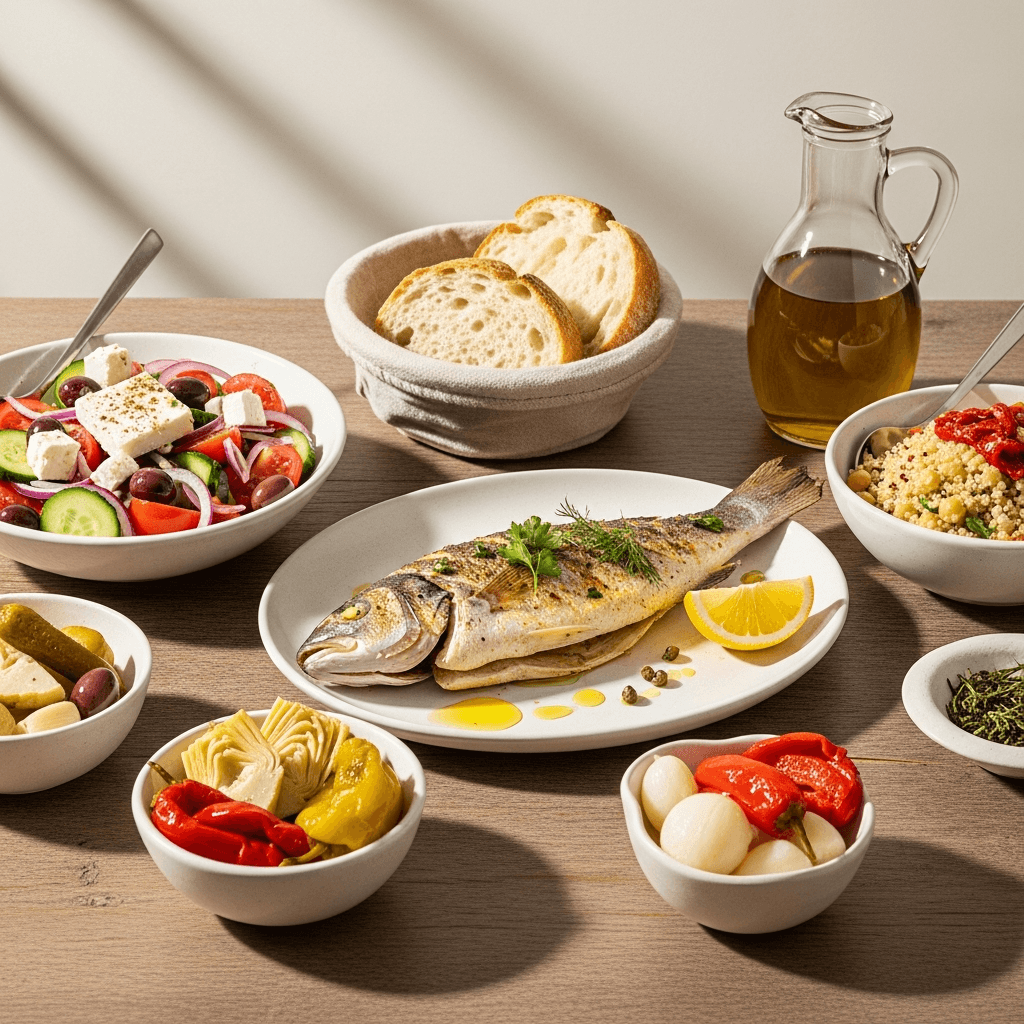
HabitMediterranean dietary pattern
Olive oil, fish, nuts, legumes, plants. The most-studied diet for cardiovascular and cognitive longevity.
Why
The Mediterranean pattern, heavy on plants, olive oil, fish, nuts, legumes; moderate fish and dairy; light on red meat, has the strongest evidence base of any specific diet for long-term cardiovascular and cognitive outcomes. PREDIMED, the largest trial, showed ~30% reduction in major cardiovascular events vs. low-fat control.
Slot in your day
How to do it
How
Olive oil as the primary fat. Plants at every meal. Fish 2–3× per week. Nuts daily (small handful). Red meat once a week or less. Wine optional, with food.
Sticking with it
Stock the kitchen for one week's pattern. Decisions live in the shopping list, not at mealtime.
Markers this may influence
Evidence
PREDIMED (Estruch 2018 NEJM, n=7,447, 4.8-y follow-up): a Mediterranean diet plus extra-virgin olive oil or mixed nuts vs. a low-fat control diet, ~30% reduction in major cardiovascular events (MI, stroke, CVD death). Sofi 2014 updated meta-analysis (n>4M) confirms a dose-response association with all-cause and cardiovascular mortality.
 CautionHabit
16:8 intermittent fasting
16-hour overnight fast, 8-hour eating window. Not new, monastic traditions have done it for centuries.
Why
A daily eating window of about 8 hours (e.g., noon to 8pm) with the rest of the day fasted. Often improves insulin sensitivity and reduces visceral fat in trials, though the mechanism is largely the spontaneous calorie reduction it produces rather than fasting per se. Easy entry-level intervention.
Slot in your day
How to do it
How
Skip breakfast or skip dinner. Black coffee, tea, water during the fast. No special protocol needed; consistency over weeks matters more than perfection on any one day.
Ideal for
People with metabolic syndrome, insulin resistance, or who tend to graze.
Sticking with it
Decide your eating window for the week, not the day. Drift is the failure mode.
Markers this may influence
Evidence
Patikorn 2021 JAMA Network Open umbrella review (11 meta-analyses): intermittent-fasting protocols (including 16:8 time-restricted eating) produced modest reductions in body weight, fasting glucose, and LDL-C vs control diets, the effect is largely mediated by the spontaneous calorie reduction the eating window produces. No clear superiority over conventional caloric restriction.
 Habit
HabitZone 2 cardio
Conversational-pace cardio, 150+ minutes per week. Mitochondrial backbone of healthspan.
Why
Zone 2 is the intensity at which you can still hold a conversation but a song would be a stretch, roughly 60–70% of max heart rate. Sustained Zone 2 work increases mitochondrial density, improves fat oxidation, and is the single most consistently associated exercise input with all-cause mortality reduction in cohort studies.
Slot in your day
How to do it
How
Brisk walk, easy bike, slow jog. 30 minutes × 5 days, or 45–60 min × 3 days. The 'talk test' is the simplest gauge.
Ideal for
Anyone over 30; especially valuable as the foundation before adding higher-intensity work.
Sticking with it
Schedule it like a meeting. The session you 'fit in if there's time' is the session that doesn't happen.
Markers this may influence
Evidence
Lee 2012 Lancet Physical Activity Series (population-attributable risk analysis across >50 cohorts): physical inactivity caused ~9% of premature mortality worldwide, comparable to smoking and obesity. Kelly 2014 meta-analysis of walking and cycling (n=280,000 + n=187,000): each ~11 MET-h/week of either activity was associated with ~10–11% lower all-cause mortality.
 Habit
HabitPost-meal walking
10–15 minute walk after meals blunts the post-prandial glucose spike.
Why
Light walking activates muscle glucose uptake without insulin signalling: the muscles pull glucose out of the blood directly. Short post-meal walks measurably reduce the glycemic peak vs. sitting after eating. Especially useful for those with prediabetes, insulin resistance, or after carb-heavy meals.
Slot in your day
How to do it
How
Walk 10–15 minutes within 30 minutes of finishing a meal. Slow pace is fine. Doesn't need to be every meal; the largest carb meal of the day is the highest-leverage one.
Sticking with it
Pair with the largest carb meal of the day: biggest leverage, easiest to remember.
Markers this may influence
Evidence
Buffey 2022 Sports Med meta-analysis (7 RCTs) of light walking after meals: short (2–5 min) post-meal walks attenuated postprandial glucose and insulin spikes vs sitting, meaningful for prediabetes and insulin resistance. The largest carb meal of the day is the highest-leverage one to pair this habit with.
 Habit
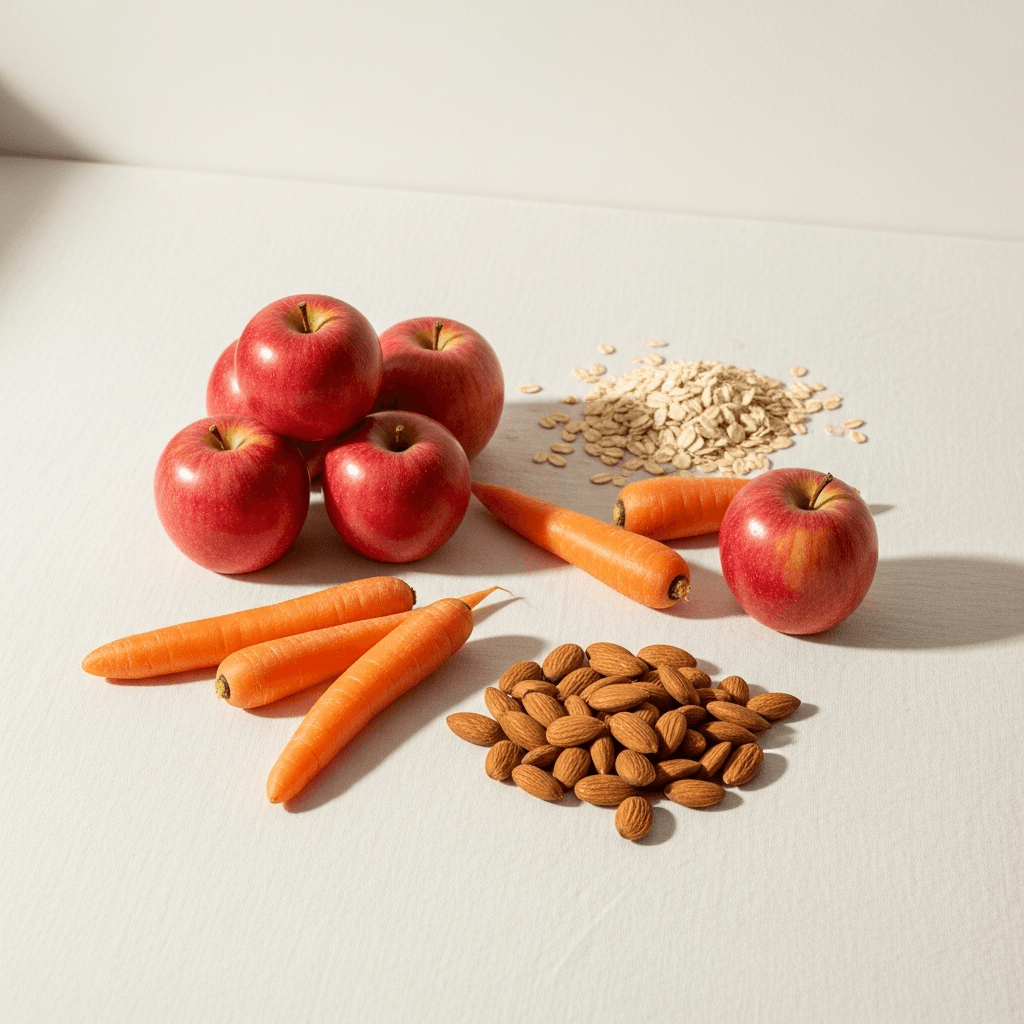
HabitReduce ultra-processed food
UPF intake correlates with mortality independent of total calories. The category, not just the calories, matters.
Why
Foods classified as ultra-processed (NOVA group 4), packaged snacks, sweetened drinks, reformulated meats, ready meals, predict cardiovascular and all-cause mortality even after adjusting for total calories and macronutrient profile. Mechanisms include altered satiety signalling, additive effects, and displacement of whole foods.
Slot in your day
How to do it
How
Aim for the bulk of the diet to be foods you'd recognise in a kitchen 100 years ago. Convenience foods are fine occasionally; the issue is when they become the default.
Sticking with it
Don't fight cravings in front of the cupboard, fight them at the supermarket.
Markers this may influence
Evidence
Lane 2024 BMJ umbrella review (45 meta-analyses across ~10 million participants): higher ultra-processed food intake was convincingly associated with all-cause mortality, cardiovascular mortality, type 2 diabetes, and common mental disorders, effects persisting after adjusting for total calories and macronutrient profile. The category, not just the calories, predicts risk.
See also
Related markers
Take to your physician
Worth discussing
- Whether your level, paired with fasting glucose, supports starting lifestyle intervention before HbA1c moves.
- If you have PCOS, NAFLD, or family history of diabetes, whether earlier or more aggressive workup is warranted.
- Whether HOMA-IR or an OGTT would add useful information.
Sources
Cited literature
- [1]ADA, Insulin resistance and pre-diabetes(2024)
- [2]Salas-Salvadó et al., PREDIMED: prevention of diabetes with a Mediterranean diet(2014)
- [3]Wilkinson et al., Ten-hour time-restricted eating reduces weight, blood pressure, and atherogenic lipids in patients with metabolic syndrome (Cell Metabolism)(2020)
- [4]Boulé et al., Effects of exercise on glycemic control and body mass in type 2 diabetes mellitus: a meta-analysis (JAMA)(2001)
Last reviewed May 2026
Keep reading
← Previous
Lab marker
Homocysteine
An amino acid that accumulates when B12/folate methylation pathways slow. Modestly informative for cardiovascular and cognitive risk.
Next →
Lab marker
HOMA-IR
A simple ratio of fasting insulin and glucose, the most widely used surrogate for insulin resistance outside of research settings.