Lab marker
Vitamin D (25-OH)
25-hydroxyvitamin D · 25(OH)D · Calcidiol
The storage form of vitamin D, the best indicator of overall vitamin D status.
What it measures
25-hydroxyvitamin D is the major circulating form, reflecting total intake from sunlight, food, and supplements over the prior several weeks. The active form (1,25-OH₂D) is tightly hormonally regulated and not a useful status marker for most clinical purposes.
Reference context
3 guideline sources
Northern European populations commonly run 15–25 ng/mL in winter without symptoms. Optimal range is contested: the Endocrine Society and IOM use different cut-offs. RCT evidence supports treating clear deficiency (<20 ng/mL) but not pursuing supraphysiological levels.
Population context: consult guideline targets below
Mechanism
Why moving this marker matters
Vitamin D regulates calcium homeostasis, bone mineralisation, and skeletal muscle function. Receptor expression is widespread; observational associations with cardiovascular, immune, and cognitive outcomes are reported but causal data from large RCTs (VITAL, D2d) have been mixed.
Guideline targets
What major guidelines recommend
Endocrine Society 2024 (sufficient)
≥30 ng/mL (≥75 nmol/L)
Endocrine Society 2024 (insufficient)
20–29 ng/mL (50–74 nmol/L)
IOM 2011 (deficient)
<20 ng/mL (<50 nmol/L)
How to measure
The test, where to get it, when to repeat
Method
Standard blood draw. Order specifically the 25-OH-D assay (sometimes labelled 'vitamin D total').
Where
GP, especially after winter; private lab otherwise.
Typical cost
€15–40 private.
Fasting
Not required
When to test
Endocrine Society 2024
Routine screening of healthy adults not recommended; test those with risk factors (limited sun exposure, malabsorption, dark skin in high-latitude climates, osteoporosis).
DGE (DE)
Screening considered after low-sun-exposure months; supplementation 800 IU/day if no testing planned.
Where to test
Independent labs offering this test
Healicus refers you to independent laboratories. You order from the lab; they take the sample, run it, and return your result on their own platform. Healicus never sees your value.
Randox Health
UK · EU · INTLClinic-based premium panels — wider biomarker breadth than home-test brands.
Visit Randox Health
Synlab
DE · EU · INTLEurope-wide medical lab network — referrals via partner GPs and direct-to-consumer programmes where offered.
Visit Synlab
Cerascreen
DE · EUEstablished German home-test catalogue — ISO-certified labs, German-language reports.
Visit Cerascreen
Medichecks
UKUKAS-accredited home blood-test panels with GP-equivalent biomarker coverage.
Visit Medichecks
Healicus is not the provider. Your contract for the service is with whoever you choose. Links labelled Sponsored are paid affiliate relationships; unlabelled links are editorial reference only. See our disclosure for the full policy.
Context
Reading the numbers
Northern European populations commonly run 15–25 ng/mL in winter without symptoms. Optimal range is contested: the Endocrine Society and IOM use different cut-offs. RCT evidence supports treating clear deficiency (<20 ng/mL) but not pursuing supraphysiological levels.
Caveats
Assay variability between labs is meaningful (10–15%); recheck with the same lab/assay for trend monitoring.
Practices
What's been shown to influence this marker
Cholecalciferol (D3) supplementation reliably raises 25(OH)D within 6–12 weeks; the response is dose-dependent (~10 ng/mL rise per 1000 IU/day at deficient baseline). Sunlight and oily fish contribute but rarely close large deficits alone in northern-latitude adults.
 Supplement
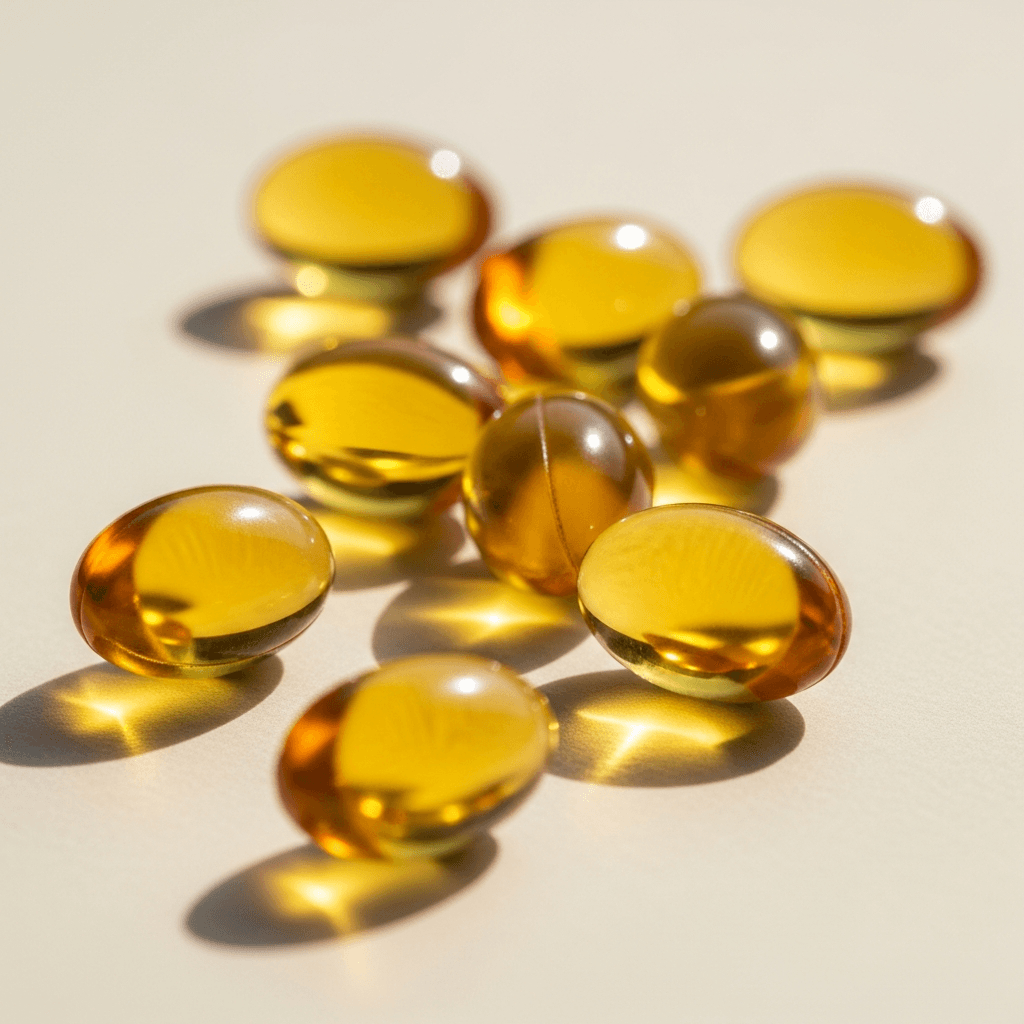
Vitamin D3 supplementation
Most adults are deficient. Linked to muscle function, bone health, fall prevention, and immune function.
Why
Vitamin D3 (cholecalciferol) is involved in calcium metabolism, neuromuscular function, and immune signalling. Northern-latitude residents and indoor workers are commonly deficient. Supplementation modestly reduces fall risk in older adults and improves muscle strength when starting from low baseline.
How it works
Hydroxylated to calcitriol, the active hormone that regulates calcium absorption, neuromuscular signalling, and ~200 immune-related genes.
Expected onset · 6–8 weeks; retest 25(OH)D after 8 weeks of consistent dosing
How to take
Dosage
1,000–2,000 IU daily for maintenance; higher doses (4,000+ IU) for documented deficiency under medical guidance.
Timing
With a fat-containing meal
On the label
D3 (cholecalciferol), not D2. Pair with K2 (MK-7) for calcium routing.
Safety
Markers this may influence
Evidence
Bischoff-Ferrari 2009 BMJ meta-analysis (8 RCTs, n=2,426 older adults): supplemental vitamin D 700–1000 IU/day reduced fall risk by ~19% (pooled RR 0.81). EFSA Reg 432/2012 authorises the claim that vitamin D contributes to normal muscle function and bones. Most adults at northern latitudes are deficient in winter.
Where to get it
Shop Vitamin D3 supplementation on AmazonSponsored · As an Amazon Associate, Healicus earns from qualifying purchases.
Take to your physician
Worth discussing
- Whether you need testing at all, given your sun exposure, diet, and latitude.
- If deficient, an appropriate replacement regimen (typical: 1000–4000 IU/day cholecalciferol).
- When to retest after starting supplementation (typically 3 months).
Sources
Cited literature
Keep reading