Habits
Recurring lifestyle practices that compound over time: yoga, tai chi, sauna, journaling.
Habits are activities you do regularly, daily or weekly, as part of your routine. The longevity literature consistently points at recurring practice over one-off interventions. We surface habits where the evidence base is at the same standard as the rest of the catalogue: Cochrane reviews, large prospective cohorts, or major-journal RCTs.
Habits catalogue
39 evidence-anchored habits, strongest evidence first.
 Habit
Habit30g fiber/day
Most adults eat half what they need. Strong dose-response with all-cause mortality.
Why
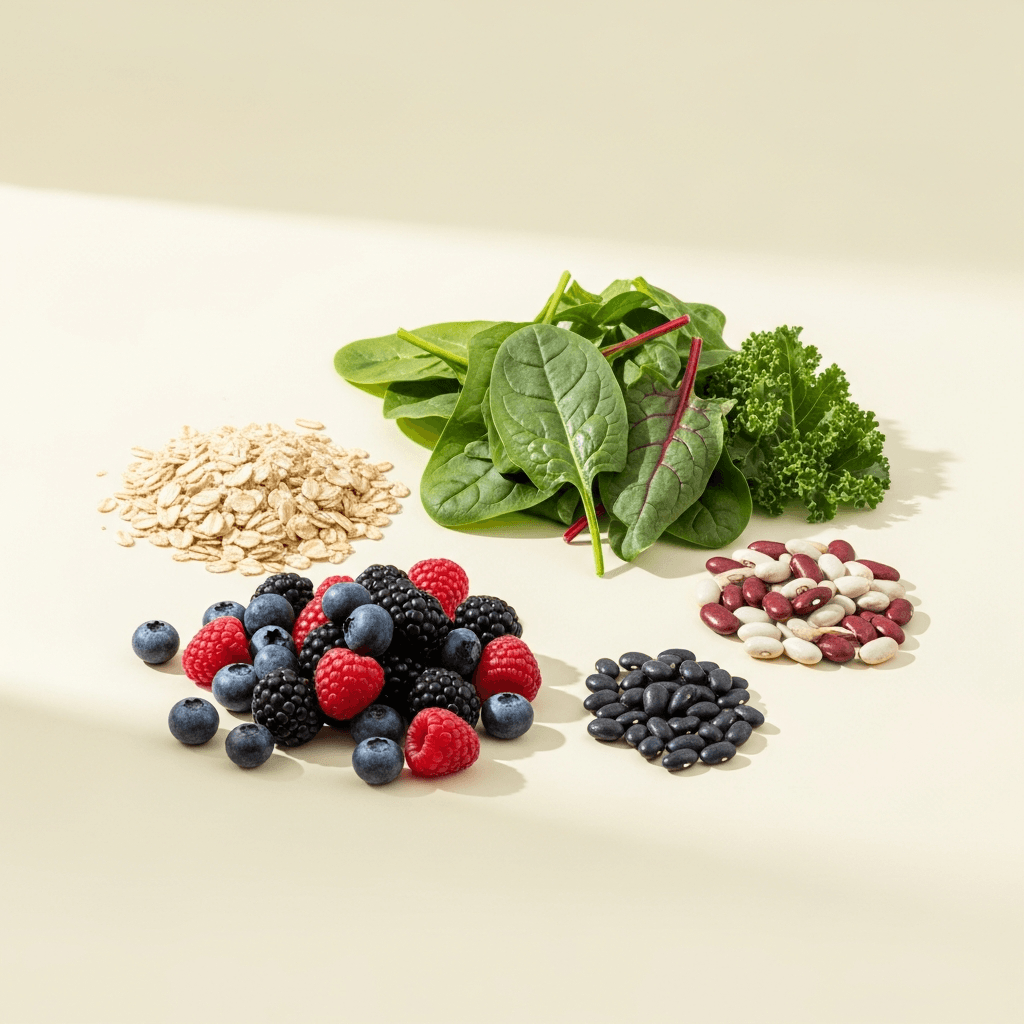
Fiber feeds gut microbiota, slows glucose absorption, supports cardiovascular health, and predicts mortality independent of other dietary factors. Most adults consume 12–15g/day; the target for cardiovascular benefit is 25–30g+. Whole foods (legumes, vegetables, oats, berries) are better sources than supplements.
Slot in your day
How to do it
How
Add a serving of beans/lentils most days. Berries with breakfast. Vegetables at lunch and dinner. Tracked once for a week, the gap to 30g becomes obvious.
Markers this may influence
Evidence
Reynolds 2019 Lancet meta-analysis (185 prospective studies and 58 RCTs, commissioned by WHO): highest vs lowest fibre consumers had 15–30% lower all-cause and cardiovascular mortality, with the steepest risk reduction at 25–29 g/day intake. Dose-response suggests further benefit above 30 g/day. Most adults consume 12–15 g.
 Habit
Habit7,000+ daily steps
Most of the longevity benefit caps at 7–10k steps. The 10k target is a marketing number, not a research one.
Why
Cohort studies show steep mortality-risk reduction from sedentary up to about 7,000 steps per day. Past 10,000 the curve flattens: additional steps are fine but the marginal benefit is small. Walking distributed throughout the day (especially after meals) is more useful than one big walk plus a sedentary day.
Slot in your day
How to do it
How
7,000 minimum; 10,000 if convenient. Distribute throughout the day. Post-meal walks count double.
Markers this may influence
Evidence
Paluch 2022 Lancet Public Health meta-analysis (15 international cohorts, n=47,471): vs ~3,500 steps/day, mortality dropped progressively through ~6,000–8,000 steps/day in adults ≥60 and ~8,000–10,000 in younger adults; the curve flattens past those targets. The 10,000-step number is marketing folklore; the cohort signal anchors most of the benefit around 7,000.
 Habit
HabitActive commuting (cycling)
UK Biobank (n=263,450): cycling commute associated with 41% lower all-cause mortality risk.
Why
Active commuting integrates exercise into a daily fixed routine, removing the willpower-cost of fitting workouts in. Celis-Morales 2017 BMJ analysis of 263,450 UK Biobank participants showed cycling commuters had 41% lower all-cause mortality, 52% lower cardiovascular mortality, and 40% lower cancer mortality vs. non-active commuters, over 5 years of follow-up. Walking commuters showed smaller but still meaningful effects.
How to do it
How
Replace one or more weekly car/transit commutes with cycling or walking. Build gradually. E-bikes count and reduce the barrier for longer or hilly routes.
Ideal for
Anyone with a feasible cycling distance (typically <15 km / <45 min one-way).
Markers this may influence
Evidence
Celis-Morales 2017 BMJ (UK Biobank, n=263,450, 5-y median follow-up): cycle commuting vs non-active commuting was associated with 41% lower all-cause mortality (HR 0.59) and 52% lower CVD mortality (HR 0.48). Walking commuting showed smaller but still meaningful effects. Observational, but the dose-response curve is steep and the cohort exhaustive.
 Habit
HabitAdequate protein (1.2–1.6 g/kg)
Most adults eat too little protein for muscle preservation through ageing. Aim 1.2–1.6 g/kg body weight.
Why
RDA (0.8 g/kg) is enough to prevent deficiency but not enough to maintain muscle in older age. Studies in adults over 60 consistently show 1.2–1.6 g/kg supports muscle preservation, especially when combined with resistance training. Distribute across meals; ~30g per meal is the upper bound for one-shot synthesis.
Slot in your day
How to do it
How
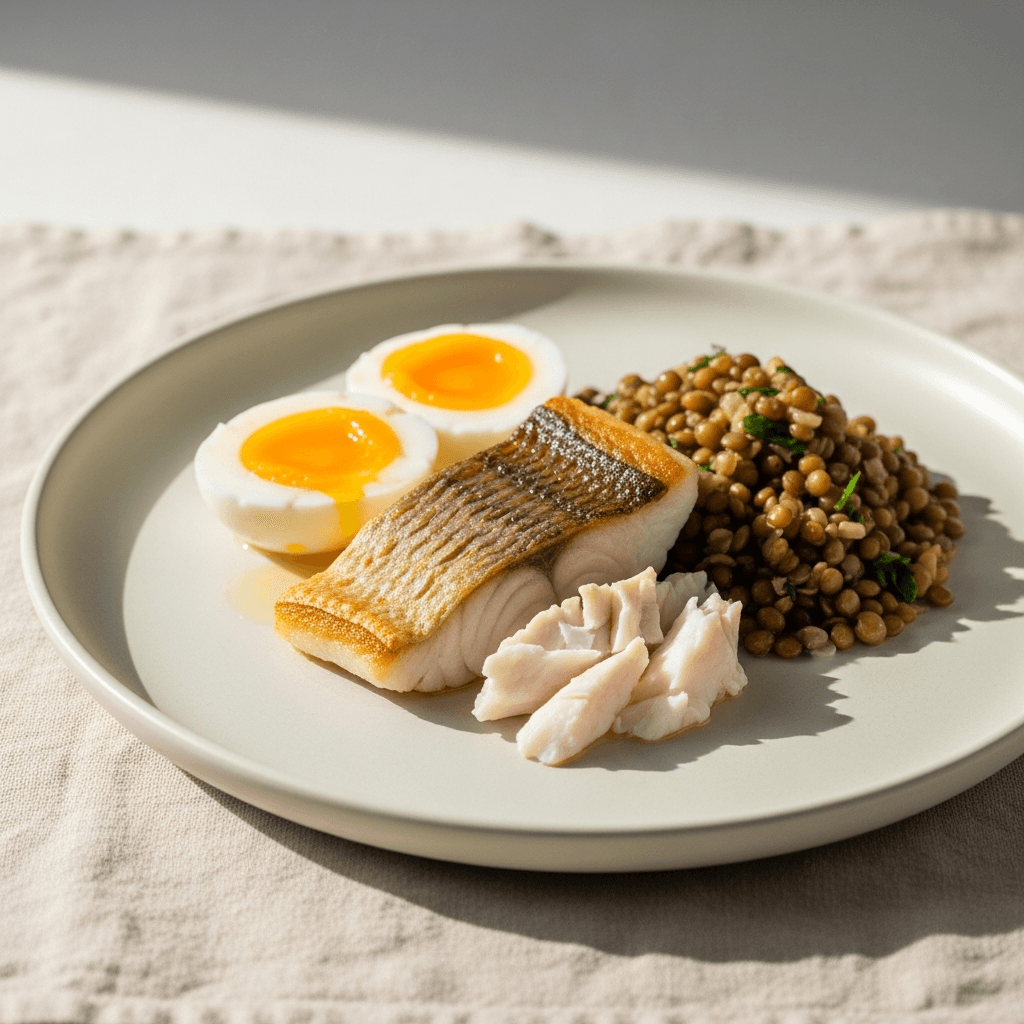
Calculate target. Track for a week to see baseline. Add eggs, fish, dairy, legumes, or whey to meals to close the gap.
Sticking with it
Anchor 30g of protein at breakfast. It's the meal most people miss.
Markers this may influence
Evidence
Bauer 2013 J Am Med Dir Assoc (PROT-AGE consensus): healthy older adults need 1.0–1.2 g/kg/day protein, and ≥1.2–1.5 g/kg/day in those with acute or chronic disease, to preserve muscle and function. The RDA of 0.8 g/kg is enough to prevent deficiency but not enough to maintain muscle in older age, especially without resistance training as a stimulus.
 Habit
HabitAfternoon caffeine cutoff
No caffeine after 2pm: half-life is 5–7 hours, longer in slow metabolisers.
Why
Caffeine blocks adenosine receptors that signal sleep pressure. With a half-life of 5–7 hours (longer in some genotypes), an afternoon coffee can leave a quarter of the dose still active at bedtime. Effect on sleep architecture (less deep sleep) is measurable even when subjective sleep feels fine.
Slot in your day
How to do it
How
Last caffeine by 2pm if you sleep around 11pm. Adjust earlier if you metabolise slowly (genetic variation in CYP1A2). Switch to decaf or herbal alternatives in the afternoon.
Sticking with it
Pre-stage a tasty afternoon non-caffeine drink. Removing without replacing fails.
Markers this may influence
Evidence
Drake 2013 J Clin Sleep Med (within-subject lab study): 400 mg caffeine taken 6 hours before bed still measurably disrupted polysomnography-assessed sleep: total sleep time fell by ~1 hour vs placebo, even when taken hours before bedtime. The 5–7 hour half-life puts a meaningful fraction of an afternoon dose into the sleep window.
 CautionHabit
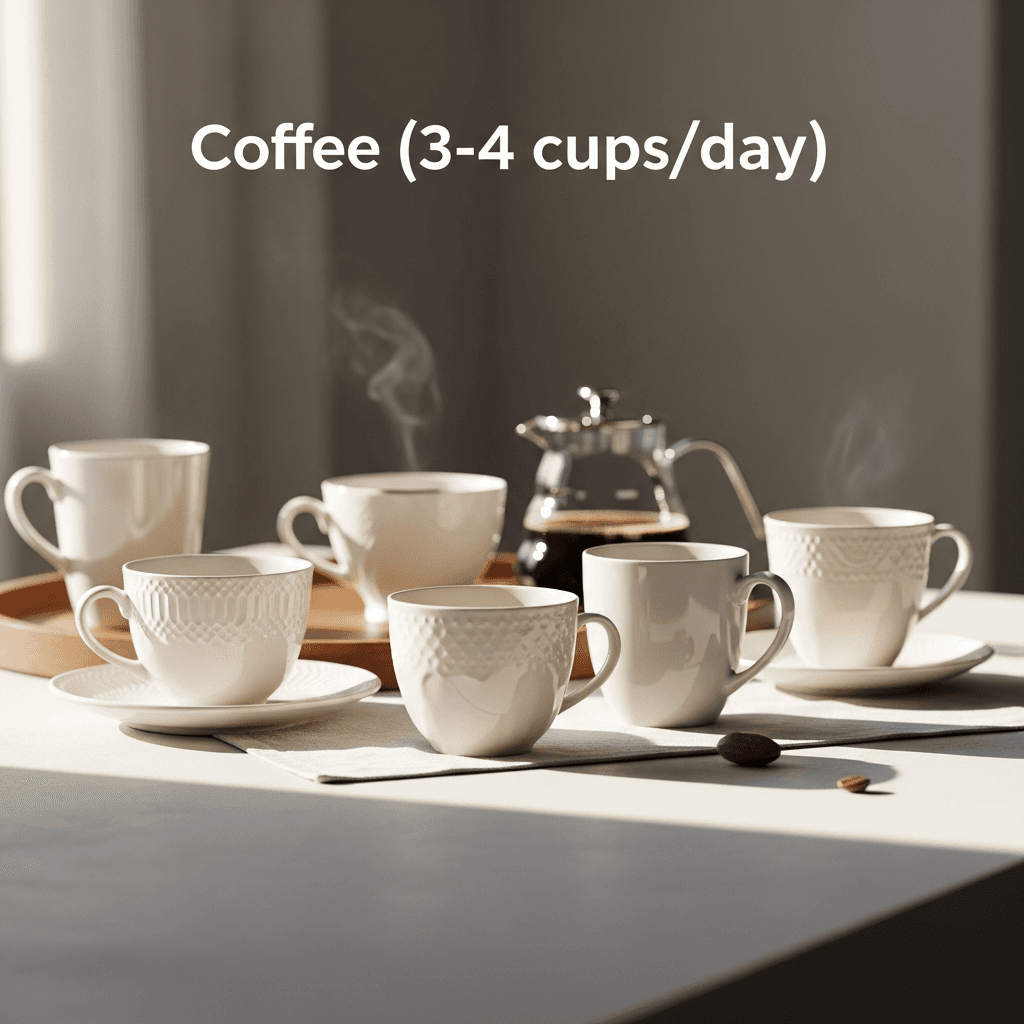
Coffee (3-4 cups/day)
BMJ umbrella review: 3-4 cups/day associated with lowest all-cause and cardiovascular mortality.
Why
Poole et al. 2017 BMJ umbrella review synthesised 201 observational meta-analyses and 17 trial meta-analyses. Three to four cups per day was associated with the largest relative risk reduction across all-cause mortality, cardiovascular mortality, and CVD incidence. Decaffeinated coffee shows similar (though smaller) effects. Beneficial effects are dose-response up to ~4 cups; harms emerge mostly at higher intakes or in pregnancy.
How to do it
How
Black, no/low sugar. Spread across the morning. Last cup by ~2pm to protect sleep (caffeine half-life is 5-7 hours).
Ideal for
Adults already drinking coffee or considering it; not a recommendation to start drinking coffee if you don't want to.
Markers this may influence
Evidence
Poole 2017 BMJ umbrella review (201 meta-analyses of observational research): 3–4 cups/day showed the largest relative-risk reductions, RR 0.83 for all-cause mortality, RR 0.81 for cardiovascular mortality, RR 0.85 for cardiovascular disease incidence vs non-drinkers. Benefits plateau or attenuate above 4 cups; harms emerge mostly at higher intakes or in pregnancy.
 Habit
HabitCultural engagement (theatre, museums, concerts)
BMJ ELSA cohort (n=6,710, 14-year follow-up): frequent receptive arts engagement → 31% lower mortality.
Why
Fancourt & Steptoe 2019 BMJ analysed 14-year mortality outcomes in 6,710 English Longitudinal Study of Ageing participants aged ≥50. Frequent attenders of theatre, concerts, opera, museums, and galleries had 31% lower all-cause mortality vs. never-attenders, with infrequent attendance showing a 14% reduction. Effect persisted after adjusting for socioeconomic status, social engagement, mobility, and health behaviours.
How to do it
How
Aim for monthly+ visits to museums, galleries, concerts, theatre, or cultural events. Combine with friends or family to layer the social effect. Many institutions offer free or reduced-price weekday entry.
Ideal for
Anyone over 50; pairs naturally with the third-place and weekly-call practices.
Evidence
Fancourt & Steptoe 2019 BMJ (ELSA cohort, n=6,710 adults ≥50, 14-y follow-up): frequent attenders of theatre, concerts, museums, opera, and galleries had 31% lower all-cause mortality vs never-attenders; infrequent attenders had 14% lower mortality. Effect persisted after adjusting for SES, mobility, social engagement, and health behaviours.
- Fancourt & Steptoe, BMJ 2019, ELSA cohort (n=6,710, 14-year follow-up) on receptive arts engagement and mortality
- Bygren et al., BMJ 1996, cultural event attendance, reading, choir singing as determinants of survival
- Fancourt & Steptoe, BMJ 2019, cultural engagement and incident dementia in older adults
 Habit
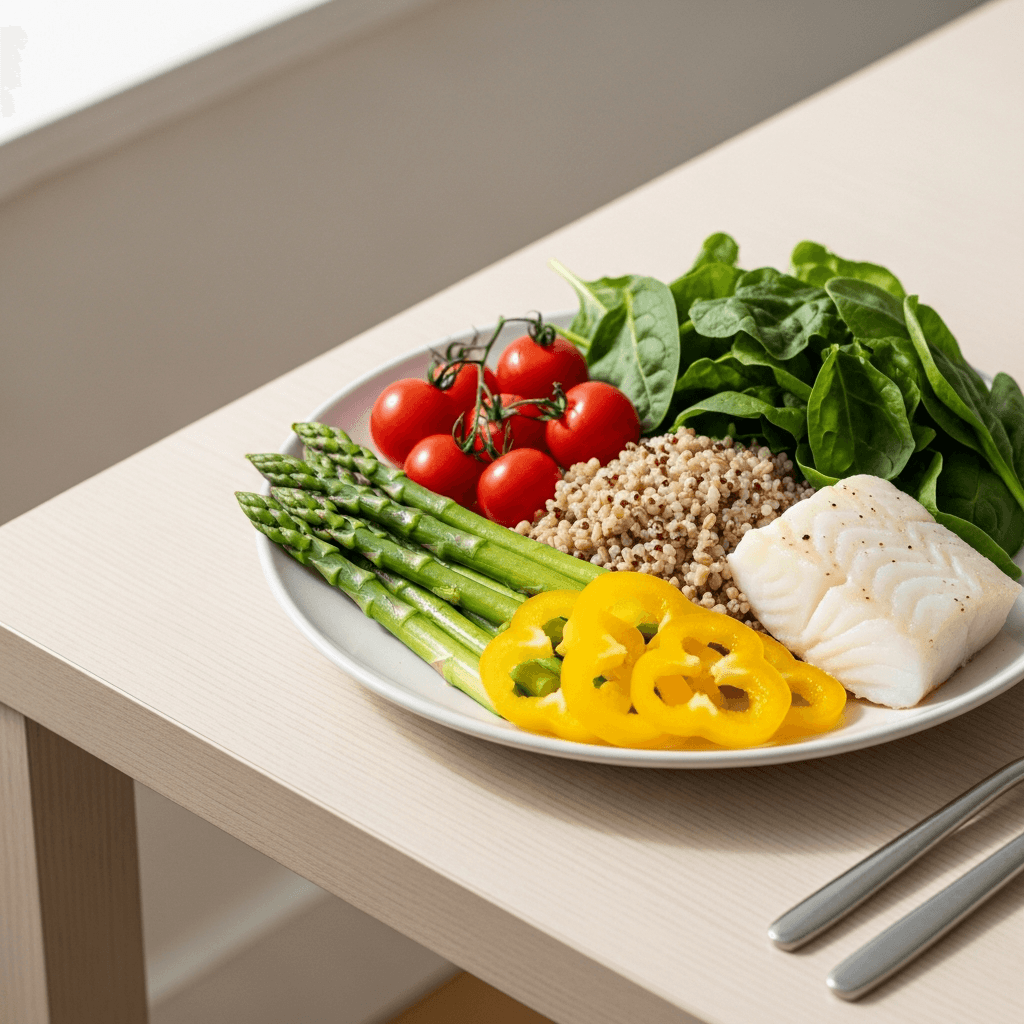
HabitDASH dietary pattern
Dietary Approaches to Stop Hypertension. Strongest dietary RCT evidence for blood pressure reduction.
Why
DASH emphasises vegetables, fruits, whole grains, low-fat dairy, lean protein, and limited sodium, sweets, and saturated fat. The landmark NEJM trial (Sacks 2001, n=412) showed clinically meaningful BP reduction comparable to single-drug antihypertensive therapy in people with elevated BP. Combining DASH with sodium reduction is more effective than either alone.
Slot in your day
How to do it
How
Vegetables and fruits at every meal (~4-5 servings each per day). Whole grains over refined. Limit red meat, sweets, and sugar-sweetened drinks. Cap sodium at ~1,500-2,300 mg/day. Two weeks of consistent eating typically shows BP changes.
Ideal for
People with elevated or borderline blood pressure; cardiovascular prevention generally.
Markers this may influence
Evidence
Sacks 2001 NEJM DASH-Sodium RCT (n=412): DASH plus low sodium (~1,500 mg/day) lowered systolic BP by 11.5 mmHg in hypertensives and 7.1 mmHg in normotensives vs the high-sodium control diet, comparable in magnitude to single-drug antihypertensive therapy. Soltani 2020 meta-analysis (17 cohorts, n>1.2M) shows dose-response associations with all-cause and CVD mortality.
 Habit
HabitDog ownership / daily dog walking
Swedish nationwide cohort (n=3.4M): dog ownership associated with lower cardiovascular and all-cause mortality.
Why
Mubanga et al. linked the Swedish national dog and patient registers, following 3.4 million adults for up to 12 years. Dog owners, especially single-person households, had lower risk of death and cardiovascular death than non-owners. Mechanisms likely include daily activity (dog walking), social contact, and reduced loneliness. Observational, not an intervention trial, but the effect size is large and the cohort exhaustive.
How to do it
How
If you're already considering it: a daily 30-60 minute walk routine is the active ingredient. If you can't own one, regular dog-sitting or volunteer dog-walking shows similar activity benefits.
Ideal for
People who can commit to 10-15 years of daily care and exercise; not a recommended longevity intervention if you don't actually want a dog.
Evidence
Mubanga 2017 Sci Rep (Swedish national registers, n=3,432,153, up to 12-y follow-up): dog ownership in single-person households was associated with 33% lower all-cause mortality (HR 0.67) and 36% lower CVD mortality (HR 0.64). Smaller but still meaningful effects in multi-person households. Observational, but the cohort is exhaustive and the dose-response coherent.
 Habit
HabitExtra-virgin olive oil
The fat with the strongest cardiovascular evidence. 2–4 tablespoons/day in PREDIMED.
Why
EVOO is the dominant fat in the Mediterranean pattern. Polyphenols (especially oleocanthal) have anti-inflammatory effects. PREDIMED used 4 tablespoons/day and showed cardiovascular event reduction even vs. nut-supplemented Mediterranean diet. Cooking degrades polyphenols somewhat but the fatty-acid profile remains beneficial.
Slot in your day
How to do it
How
Use as primary cooking fat and salad dressing. Look for harvest date within the last year. Real EVOO has a peppery throat catch when tasted neat. That's the polyphenols.
Markers this may influence
Evidence
Guasch-Ferré 2022 J Am Coll Cardiol (Nurses' Health Study + Health Professionals Follow-up, n=92,383, 28-y follow-up): >½ tablespoon/day olive oil consumers vs never/rarely had 19% lower all-cause and CVD mortality and 29% lower neurodegenerative mortality. PREDIMED used ~4 tablespoons/day with a ~30% major-CVD-event reduction.
 Habit
HabitGroup singing / choir
Br J Psychiatry RCT: community singing improves mental health-related quality of life in older adults.
Why
Coulton et al. 2015 BJP randomised 258 community-dwelling adults aged ≥60 to weekly community singing groups vs. usual activity. The singing arm showed significantly better mental-health-related quality of life and lower anxiety/depression scores at 6 months. Effect persists with continued attendance. Mechanisms include synchronised breathing, vagal-tone effects of vocalisation, and the social-tie component shared with other group activities.
How to do it
How
Find a local community choir, church choir, or amateur singing group. Weekly attendance. No prior musical training required; most groups welcome beginners.
Ideal for
Older adults; anyone seeking a low-cost, low-bar group practice with both social and physiological components.
Markers this may influence
Evidence
Coulton 2015 Br J Psychiatry pragmatic RCT (n=258 community-dwelling adults ≥60): weekly community-singing groups for 14 weeks improved mental-health-related quality of life (SF-12 mental score: mean difference 2.35, 95% CI 0.06–4.76 at 6 months) vs usual activity, alongside lower anxiety and depression. Pairs social-tie effects with the vocal-vagal mechanism.
 CautionHabit
Limit alcohol intake
Lancet pooled analysis (n=599,912): lowest mortality risk threshold is ~100 g/week, about 5-6 standard drinks total.
Why
Wood et al. 2018 Lancet combined individual-participant data from 83 prospective studies (n=599,912 current drinkers in 19 high-income countries). Above ~100 g/week (about 5-6 UK standard units), all-cause mortality climbs in a dose-response manner. Below that threshold the curve is roughly flat, there is no protective effect. Reductions from heavier intake to ≤100 g/week could add up to 2 years of life expectancy at age 40.
How to do it
How
Track intake honestly for one week. If above threshold, set a weekly cap rather than a daily one (avoids the 'I'll catch up' trap). Several alcohol-free days per week is the simplest pattern. Sleep quality typically improves within 1-2 weeks of reduced intake.
Ideal for
Anyone currently drinking above ~100 g/week (≈one bottle of wine, six pints of beer, or a half-bottle of spirits).
Markers this may influence
Evidence
Wood 2018 Lancet pooled analysis (83 prospective studies, n=599,912 current drinkers across 19 high-income countries): the threshold for lowest all-cause mortality was ~100 g alcohol/week (≈5–6 UK units). Above that, intake is linearly associated with mortality and reduces life expectancy by 1–2 years at age 40 for 200–350 g/week drinkers.
 Habit
HabitMediterranean dietary pattern
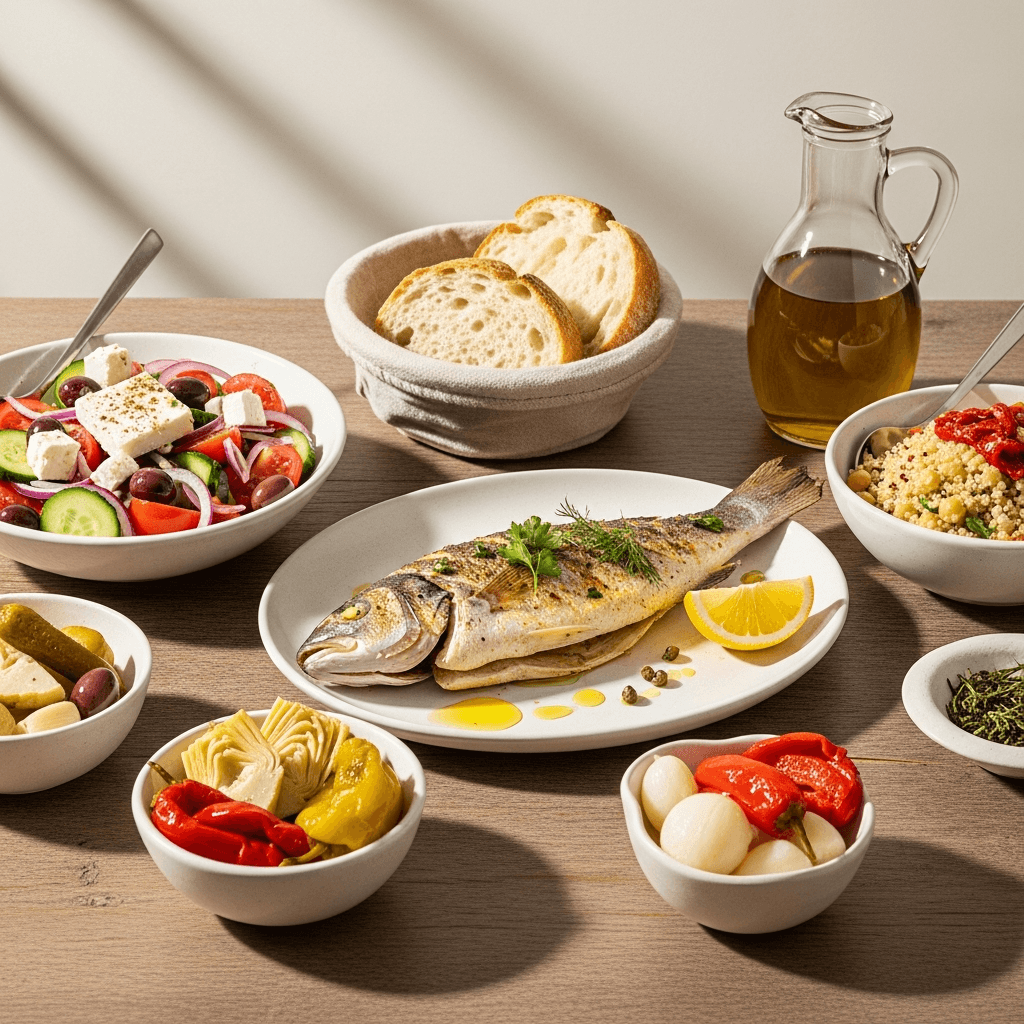
Olive oil, fish, nuts, legumes, plants. The most-studied diet for cardiovascular and cognitive longevity.
Why
The Mediterranean pattern, heavy on plants, olive oil, fish, nuts, legumes; moderate fish and dairy; light on red meat, has the strongest evidence base of any specific diet for long-term cardiovascular and cognitive outcomes. PREDIMED, the largest trial, showed ~30% reduction in major cardiovascular events vs. low-fat control.
Slot in your day
How to do it
How
Olive oil as the primary fat. Plants at every meal. Fish 2–3× per week. Nuts daily (small handful). Red meat once a week or less. Wine optional, with food.
Sticking with it
Stock the kitchen for one week's pattern. Decisions live in the shopping list, not at mealtime.
Markers this may influence
Evidence
PREDIMED (Estruch 2018 NEJM, n=7,447, 4.8-y follow-up): a Mediterranean diet plus extra-virgin olive oil or mixed nuts vs. a low-fat control diet, ~30% reduction in major cardiovascular events (MI, stroke, CVD death). Sofi 2014 updated meta-analysis (n>4M) confirms a dose-response association with all-cause and cardiovascular mortality.
 Habit
HabitReduce sedentary time
Long uninterrupted sitting predicts mortality independently of formal exercise. Break it up.
Why
Accelerometer-based meta-analyses show a clear dose-response between sedentary time and all-cause mortality, with the steepest risk increase in people who exercise least. Roughly 30-40 minutes of moderate-vigorous activity per day attenuates the sitting-mortality association, but breaking up long sits also matters independent of total daily activity.
Slot in your day
How to do it
How
Stand or walk for ~5 minutes every 30-60 minutes during long sedentary blocks. Set a timer. Pair with walking calls or a sit-stand desk. The point isn't more exercise; it's avoiding hours of unbroken sitting.
Sticking with it
A standing-up cue every 45 minutes (timer, kettle, ad break) builds the habit faster than a step target.
Markers this may influence
Evidence
Ekelund 2019 BMJ accelerometer-based meta-analysis (n=36,383): a clear dose-response between sedentary time and all-cause mortality, steepest in people who exercise least. Roughly 30–40 min/day of moderate-vigorous activity attenuates the sitting-mortality association, but breaking up long sits matters independent of total daily activity.
 Habit
HabitReduce ultra-processed food
UPF intake correlates with mortality independent of total calories. The category, not just the calories, matters.
Why
Foods classified as ultra-processed (NOVA group 4), packaged snacks, sweetened drinks, reformulated meats, ready meals, predict cardiovascular and all-cause mortality even after adjusting for total calories and macronutrient profile. Mechanisms include altered satiety signalling, additive effects, and displacement of whole foods.
Slot in your day
How to do it
How
Aim for the bulk of the diet to be foods you'd recognise in a kitchen 100 years ago. Convenience foods are fine occasionally; the issue is when they become the default.
Sticking with it
Don't fight cravings in front of the cupboard, fight them at the supermarket.
Markers this may influence
Evidence
Lane 2024 BMJ umbrella review (45 meta-analyses across ~10 million participants): higher ultra-processed food intake was convincingly associated with all-cause mortality, cardiovascular mortality, type 2 diabetes, and common mental disorders, effects persisting after adjusting for total calories and macronutrient profile. The category, not just the calories, predicts risk.
 Habit
HabitReligious / spiritual community participation
Nurses' Health Study (n=74,534, 16-year follow-up): weekly attendance associated with substantially lower mortality.
Why
Li, VanderWeele and colleagues tracked 74,534 women in the Nurses' Health Study for 16 years. Attending religious services more than once per week was associated with 33% lower all-cause mortality vs. never attending. Effect persisted after adjusting for diet, exercise, smoking, and social integration. The active ingredient appears to be regular communal practice: what tradition is less critical than that there is one.
How to do it
How
Find a community with weekly cadence and shared practice. The prospective effect appears strongest at weekly+ attendance.
Ideal for
Anyone who finds meaning in or around a faith tradition; secular equivalents (humanist communities, meditation sanghas, philosophical fellowships) likely capture some of the same effect.
Evidence
Li 2016 JAMA Intern Med (Nurses' Health Study, n=74,534 women, 16-y follow-up): attending religious services more than once weekly was associated with 33% lower all-cause mortality (HR 0.67) vs never-attenders, with social support mediating ~23% of the effect, smoking ~22%, and lower depression ~11%. Effect persisted after adjusting for diet, exercise, and smoking.
 Habit
HabitResistance training
2 sessions/week. Preserves muscle mass: the marker that tracks functional independence in your eighties.
Why
Sarcopenia (age-related muscle loss) starts in the third decade and accelerates from 50. Resistance training is the only intervention shown to reverse it. Two sessions per week of full-body work is enough to maintain mass; three is enough to build it. Critical for fall prevention, bone density, and insulin sensitivity in older age.
Slot in your day
How to do it
How
Six compound movements (squat, hinge, push, pull, carry, rotate), 2–3 sets each, 2× per week. Bodyweight is fine to start; progress to weighted as form solidifies.
Ideal for
Everyone, especially those over 40; the cost of starting late is much higher than starting early.
Sticking with it
Two fixed weekday slots beat 'three sessions whenever'. The schedule is the programme.
Markers this may influence
Evidence
Westcott 2012 Curr Sports Med Rep review: 2–3 weekly sessions of resistance training in older adults produced ~1.4 kg of muscle gain and ~1.8 kg fat loss over 10 weeks, with parallel gains in resting metabolic rate and glucose handling. The only intervention shown to reverse age-related sarcopenia, which begins in the third decade and accelerates after 50.
 CautionHabit
Sauna bathing
Finnish cohort: 4-7 saunas/week associated with markedly lower cardiovascular and all-cause mortality.
Why
Sauna use combines passive heat stress with parasympathetic recovery. The Finnish KIHD cohort followed 2,315 men for ~21 years; 4-7 sessions per week was associated with a 63% reduction in sudden cardiac death and 40% reduction in all-cause mortality vs. one session per week. Effects scale with frequency and duration. Mechanisms likely include endothelial conditioning, blood-pressure reduction, and HSP-mediated repair.
Slot in your day
How to do it
How
Traditional Finnish-style dry sauna at 80-100°C for 15-20 minutes per session. 2-3+ sessions per week ideal. Hydrate well. Cool-down period after.
Ideal for
Anyone with regular sauna access; cardiovascular conditioning where exercise tolerance is limited.
Markers this may influence
Evidence
Laukkanen 2015 JAMA Intern Med (Finnish KIHD cohort, n=2,315 middle-aged men, ~21 y follow-up): 4–7 sauna sessions/week vs once/week: hazard ratio 0.37 for sudden cardiac death (95% CI 0.18–0.75) and 0.60 for all-cause mortality. Observational, but dose-response and consistent across the FINSAUNA cohort.
 Habit
HabitSleep regularity
Hit the same bedtime within a 30-minute envelope. Stronger mortality signal than total hours slept.
Why
Cohort studies of older adults consistently show that going to bed and waking at consistent times, within a roughly 30-minute window, predicts mortality risk independent of how many hours someone sleeps. The body's circadian system entrains to expected timing; irregularity creates a low-grade jet-lag effect day after day.
Slot in your day
How to do it
How
Pick a target bedtime. Hold it within ±30 minutes, including weekends, for 4 weeks. Pair with morning sunlight within an hour of waking.
Ideal for
Anyone with shifting work hours or weekend social rhythms.
Sticking with it
Pick the bedtime that's actually possible 6 nights a week, not the aspirational one.
Markers this may influence
Evidence
Windred 2024 Sleep (UK Biobank, n=60,977, mean 6.3-y follow-up): higher Sleep Regularity Index was associated with 20–48% lower all-cause mortality across the top four quintiles vs. the most irregular. Notably, sleep regularity outperformed total sleep duration as a mortality predictor.
Tai chi
Slow-motion strength, balance, and attention in one practice. One of the best-evidenced fall-prevention exercises in older adults.
Why
Tai chi trains balance, leg strength, and weight-shift control through continuous slow movement — which is precisely the cluster that prevents falls. The Cochrane exercise-for-fall-prevention review (which includes tai chi trials) found exercise reduces the rate of falls in community-dwelling older adults by around a quarter, with tai chi among the effective formats. The meditative pacing carries a stress benefit land squats never will.
Slot in your day
How to do it
How
Learn from an instructor — Yang-style short forms (8–24 movements) are the standard entry. 2–3 sessions weekly, 30–60 minutes; home practice between classes.
Ideal for
Adults 60+ or anyone with shaky single-leg balance; people who want movement and a calm block in the same half hour.
Sticking with it
Group classes carry this habit — the social hook is half the adherence.
Evidence
Cochrane 2019, 108 trials (n=23,407) — exercise programmes reduced the rate of falls in older adults by ~23%, high-certainty evidence; balance-and-function training including tai chi is among the effective formats. Tradition: classical Chinese yang sheng practice — the evidence above stands without that.
 Habit
HabitWeekly long-form call
One 30+ minute conversation per week with someone you trust. Texts don't substitute.
Why
Loneliness and weak social ties show up in mortality data with effect sizes comparable to smoking. Quality matters more than quantity: five close relationships predict more healthspan than fifty acquaintances. Long-form spoken conversation (in person or by call) carries more signal than text or social media.
Slot in your day
How to do it
How
Schedule one 30–60 minute call per week with someone whose company restores you. Block it like a meeting. Voice or video over text.
Sticking with it
Block it like a meeting. A standing weekly slot survives a busy week; an open invitation doesn't.
Markers this may influence
Evidence
Holt-Lunstad 2010 PLOS Medicine meta-analysis (148 studies, n=308,849, 7.5-y mean follow-up): stronger social relationships were associated with a 50% increased likelihood of survival (OR 1.50, 95% CI 1.42–1.59), an effect size comparable to quitting smoking and exceeding many established risk factors. The 2015 update extended the signal to loneliness and living alone.
 Habit
HabitZone 2 cardio
Conversational-pace cardio, 150+ minutes per week. Mitochondrial backbone of healthspan.
Why
Zone 2 is the intensity at which you can still hold a conversation but a song would be a stretch, roughly 60–70% of max heart rate. Sustained Zone 2 work increases mitochondrial density, improves fat oxidation, and is the single most consistently associated exercise input with all-cause mortality reduction in cohort studies.
Slot in your day
How to do it
How
Brisk walk, easy bike, slow jog. 30 minutes × 5 days, or 45–60 min × 3 days. The 'talk test' is the simplest gauge.
Ideal for
Anyone over 30; especially valuable as the foundation before adding higher-intensity work.
Sticking with it
Schedule it like a meeting. The session you 'fit in if there's time' is the session that doesn't happen.
Markers this may influence
Evidence
Lee 2012 Lancet Physical Activity Series (population-attributable risk analysis across >50 cohorts): physical inactivity caused ~9% of premature mortality worldwide, comparable to smoking and obesity. Kelly 2014 meta-analysis of walking and cycling (n=280,000 + n=187,000): each ~11 MET-h/week of either activity was associated with ~10–11% lower all-cause mortality.
 CautionHabit
16:8 intermittent fasting
16-hour overnight fast, 8-hour eating window. Not new, monastic traditions have done it for centuries.
Why
A daily eating window of about 8 hours (e.g., noon to 8pm) with the rest of the day fasted. Often improves insulin sensitivity and reduces visceral fat in trials, though the mechanism is largely the spontaneous calorie reduction it produces rather than fasting per se. Easy entry-level intervention.
Slot in your day
How to do it
How
Skip breakfast or skip dinner. Black coffee, tea, water during the fast. No special protocol needed; consistency over weeks matters more than perfection on any one day.
Ideal for
People with metabolic syndrome, insulin resistance, or who tend to graze.
Sticking with it
Decide your eating window for the week, not the day. Drift is the failure mode.
Markers this may influence
Evidence
Patikorn 2021 JAMA Network Open umbrella review (11 meta-analyses): intermittent-fasting protocols (including 16:8 time-restricted eating) produced modest reductions in body weight, fasting glucose, and LDL-C vs control diets, the effect is largely mediated by the spontaneous calorie reduction the eating window produces. No clear superiority over conventional caloric restriction.
 Habit
HabitAdequate hydration
Mild chronic dehydration is common; 'pale yellow urine' is the simplest gauge.
Why
Mild chronic dehydration is associated with worse cognitive performance and faster cognitive decline. The 8-glass rule is folklore; actual needs vary by climate, body size, and activity. Urine colour is the simplest marker, pale straw to pale yellow is fine.
Slot in your day
How to do it
How
Drink to thirst plus a glass on waking. Pale-yellow urine = adequate. Increase in heat and during exercise.
Markers this may influence
Evidence
Nishi 2023 BMC Medicine prospective cohort (n=6,874): higher hydration biomarkers (serum osmolarity in the optimal range) were associated with slower cognitive decline over follow-up. The 8-glass rule is folklore, urine colour (pale straw to pale yellow) is the simplest practical marker. Effect direction is consistent but absolute magnitude is modest.
Aquatic exercise
Training in water unloads painful joints while you keep moving. Cochrane-reviewed for knee and hip osteoarthritis.
Why
Pool-based exercise uses buoyancy to cut joint load while preserving resistance, making it the workaround when land-based training hurts too much to sustain. The Cochrane review in knee and hip osteoarthritis (13 trials) found small but clinically relevant short-term improvements in pain, disability, and quality of life. The strategic value is continuity: it keeps the training habit alive through painful phases.
Slot in your day
How to do it
How
2–3 sessions weekly, 45–60 minutes: water walking, aqua aerobics, or swimming. Most public pools run structured classes; consistency beats intensity.
Ideal for
Knee/hip osteoarthritis, higher body weight, post-injury return-to-training, anyone whose joints veto walking volume.
Sticking with it
Book a recurring class slot — pool habits survive on schedule, not motivation.
Evidence
Cochrane 2016, 13 trials (n=1,190) — aquatic exercise produced small short-term improvements in pain, disability, and quality of life in knee/hip OA, moderate-certainty evidence. Bridge value: it keeps you training when land work is off the table.
 Habit
HabitBelong to a third place
Regular attendance somewhere that isn't home or work: a gym, choir, club, congregation, hobby group.
Why
Sociologist Ray Oldenburg's 'third places' (cafés, clubs, congregations, gyms with regulars) are spaces of weak-tie social density that buffer against loneliness and provide identity beyond home and work roles. Long-life cultures across geography share this: Sardinia's piazzas, Okinawa's moais, Loma Linda's congregations.
Slot in your day
How to do it
How
Find one place you'd attend weekly without obligation. Regularity over ambition; one weekly group beats ten one-time visits.
Markers this may influence
Evidence
Holt-Lunstad 2015 Perspect Psychol Sci meta-analysis (70 studies, n=3,407,134): social isolation (OR 1.29), loneliness (OR 1.26), and living alone (OR 1.32) each independently increased mortality, effects comparable to smoking and obesity. 'Third places' (regular hubs that aren't home or work) supply the weak-tie social density these effects measure.
 Habit
HabitCool, dark bedroom
Drop bedroom temperature to 16–19°C; eliminate ambient light sources.
Why
Body temperature drops naturally during sleep onset; a cool room supports this. Light, even small LED indicators, fragments REM cycles. Both are fixable with one-time changes (thermostat, blackout curtains, electrical tape over LEDs).
Slot in your day
How to do it
How
Aim for 16–19°C overnight. Use blackout curtains. Cover LED indicators on electronics. Consider an eye mask if blackout isn't possible.
Evidence
Okamoto-Mizuno & Mizuno 2012 J Physiol Anthropol review: heat exposure and elevated ambient temperature suppress slow-wave and REM sleep and increase wake time. The AASM 2021 insomnia practice guideline endorses sleep-environment optimisation (cool, dark, quiet) as part of behavioural sleep medicine; effect sizes vary but the direction is consistent.
 Habit
HabitDaily journaling
10 minutes of expressive writing reduces rumination and improves stress markers.
Why
Pennebaker's expressive writing protocol (write freely about emotionally loaded topics for 15–20 minutes) has decades of evidence for reducing physiological stress markers and improving immune function. Daily lighter journaling (gratitude, reflection) shares some of the same effects without the intensity.
Slot in your day
How to do it
How
10 minutes each morning or evening. Free-form. Optional prompts: what's on my mind, what went well, what I'm anxious about.
Sticking with it
Same time, same place. The cue is half the practice.
Evidence
Frattaroli 2006 Psychol Bull meta-analysis (146 RCTs of experimental disclosure): expressive writing produced a small but reliable improvement in psychological, physiological, and functional outcomes (mean weighted r ≈ 0.075). Effects are modest in absolute terms but the evidence base is among the largest in psychosomatic medicine.
 Habit
HabitEvening light reduction
Dim overhead lights two hours before bed; switch to warm bulbs and screen blockers.
Why
Evening exposure to bright (especially blue-spectrum) light suppresses melatonin release and pushes back the body's natural sleep-onset window. Reducing intensity and shifting colour temperature in the two hours before bed restores normal melatonin timing.
Slot in your day
How to do it
How
Dim overheads after sunset. Use warm-white (2700K or below) bulbs. Set screens to night-shift mode. Consider blue-blocking glasses if screens are unavoidable.
Sticking with it
Switching one main lamp to a 2700K bulb is more durable than relying on settings toggles each night.
Evidence
Gooley 2011 J Clin Endocrinol Metab (n=116, ages 18–30): room-level light before bed suppressed evening melatonin and delayed melatonin onset in 99% of participants, shortening melatonin duration by ~90 min. Chang 2015 PNAS replicated this with eReader use: ~55% melatonin suppression and a phase delay vs. paper reading.
 Habit
HabitForest bathing (shinrin-yoku)
Slow time in trees lowers cortisol and blood pressure. Formalised in Japan; the underlying observation is older.
Why
Shinrin-yoku ('forest bathing') is the Japanese practice of slow, sensory immersion in forested environments. Studies measuring cortisol, blood pressure, and pulse before and after 2-hour forest visits consistently show parasympathetic shifts. Effects partly attributed to phytoncides (volatile compounds released by trees) and partly to general nature exposure.
Slot in your day
How to do it
How
2 hours minimum in a forested area. No exercise focus: slow walking, sitting, sensory attention. Phone off. Once a week if possible; once a month is still meaningful.
Markers this may influence
Evidence
Ideno 2017 BMC Complement Altern Med meta-analysis (20 trials, n=732): forest environments significantly lowered both systolic and diastolic blood pressure vs. non-forest controls: consistent autonomic shifts toward parasympathetic dominance. Effect direction is steady; absolute magnitude is modest and trial quality variable.
 Habit
HabitMorning sunlight
10 minutes outdoors within an hour of waking anchors the circadian rhythm.
Why
Bright outdoor light in the first hour after waking suppresses melatonin and sets the body's internal clock for the day, making evening sleep onset easier. Cloudy days still deliver several thousand lux outdoors, far more than typical indoor lighting.
Slot in your day
How to do it
How
10–15 minutes outdoors, preferably without sunglasses, ideally walking. Light therapy lamps (10,000 lux) work as a substitute when outdoors isn't possible.
Sticking with it
Pair it with a fixed morning anchor: coffee, walk, school run. The pairing carries the habit.
Markers this may influence
Evidence
Wright 2013 Curr Biol (n=8): one week of camping with no electric light advanced melatonin onset by ~2 hours and aligned circadian phase with the natural light/dark cycle: small but mechanistic confirmation that morning bright light is the dominant entraining signal. Khalsa 2003 mapped the human phase-response curve to single bright-light pulses.
 Habit
HabitPost-meal walking
10–15 minute walk after meals blunts the post-prandial glucose spike.
Why
Light walking activates muscle glucose uptake without insulin signalling: the muscles pull glucose out of the blood directly. Short post-meal walks measurably reduce the glycemic peak vs. sitting after eating. Especially useful for those with prediabetes, insulin resistance, or after carb-heavy meals.
Slot in your day
How to do it
How
Walk 10–15 minutes within 30 minutes of finishing a meal. Slow pace is fine. Doesn't need to be every meal; the largest carb meal of the day is the highest-leverage one.
Sticking with it
Pair with the largest carb meal of the day: biggest leverage, easiest to remember.
Markers this may influence
Evidence
Buffey 2022 Sports Med meta-analysis (7 RCTs) of light walking after meals: short (2–5 min) post-meal walks attenuated postprandial glucose and insulin spikes vs sitting, meaningful for prediabetes and insulin resistance. The largest carb meal of the day is the highest-leverage one to pair this habit with.
Qigong (Baduanjin)
Eight gentle breath-movement sequences. Meta-analysis support for sleep quality, balance, and blood pressure — at a lower intensity bar than tai chi.
Why
Baduanjin ("Eight Brocades") is the most-studied qigong form: eight slow movement-breath sequences, learnable from video, practicable in 15 minutes standing or seated. A meta-analysis of 19 RCTs found benefits for quality of life, sleep quality, balance, grip strength, and blood pressure. Where tai chi asks for choreography, Baduanjin asks for almost nothing — which makes it the gentle-entry option.
Slot in your day
How to do it
How
Learn the eight movements from a class or video. 15–30 minutes daily, standing or seated; pace each movement to slow breathing.
Ideal for
Deconditioned starters, older adults, anyone who found tai chi forms too much to memorise.
Sticking with it
Fixed morning slot before coffee — the sequence is short enough that "no time" never holds.
Evidence
Zou 2017 meta-analysis, 19 RCTs — Baduanjin improved quality of life, sleep quality, balance, grip strength, and systolic/diastolic blood pressure vs controls. Trials are mostly Chinese cohorts with modest blinding; direction is consistent, certainty moderate.
 Habit
HabitRegular volunteering
2+ hours/month of volunteer work correlates with reduced mortality risk in older adults.
Why
Cohort studies of volunteering in older adults consistently show mortality risk reductions, partly mediated by purpose, partly by social engagement. Effects appear at modest doses (~2 hours per month) and plateau above 100 hours/year.
Slot in your day
How to do it
How
Pick a cause you care about. Commit to a recurring slot. Solo donating doesn't show the same effect: physical presence and social engagement are the active ingredients.
Markers this may influence
Evidence
Jenkinson 2013 BMC Public Health systematic review and meta-analysis (5 cohort studies in older adults): regular volunteering was associated with ~22–24% lower all-cause mortality vs non-volunteers, alongside improved depression and self-rated health. Effect appears at modest doses (~2 h/month) and plateaus above ~100 h/year. Physical presence matters: solo donating doesn't show the same effect.
 Habit
HabitShared meals (3+/week)
Eating with others: across Blue Zones, the most consistent social longevity ritual.
Why
Across the world's longest-lived communities, sharing food with people you care about is a near-universal pattern. The mechanisms are likely multiple: slower eating, social connection, anti-loneliness, and cultural cohesion. Solo meals at a screen are a recent phenomenon and don't show the same correlation with healthspan.
Slot in your day
How to do it
How
Aim for 3+ meals per week shared with friends or family, phones away. Doesn't need to be elaborate; the act and attention matter more than the food.
Markers this may influence
Evidence
Dunbar 2017 Adapt Hum Behav Physiol (UK community survey, n=2,000+): participants who ate dinner with others most evenings reported stronger social ties, greater wellbeing, and more frequent feelings of life satisfaction vs solitary diners. Across Blue Zones, communal eating is one of the most consistent shared practices. Observational, but the pattern is strikingly cross-cultural.
Yoga
Postures, breath, attention. Cochrane-reviewed for chronic low-back pain; the stress benefit rides along free.
Why
Modern postural yoga combines strength-through-range, balance, and paced breathing. The Cochrane review in chronic non-specific low-back pain (21 trials) found yoga improves back function modestly versus no exercise at 3–6 months, with little clear advantage over other exercise — the honest summary is "exercise works; yoga is a sustainable way to do exercise". The breath-led pacing adds a regulated-arousal block that plain strength work doesn't deliver.
Slot in your day
How to do it
How
2–3 classes weekly, 30–60 minutes. Hatha or Iyengar styles suit beginners; props are allowed and encouraged. Tell the teacher about any back or joint issues.
Ideal for
Desk-bound stiffness, recurrent low-back complaints, people who keep abandoning gym programmes but will attend a class.
Sticking with it
Class bookings beat home videos for adherence; pay for a block up front.
Evidence
Cochrane 2022, 21 trials (n=2,223) — yoga produced small-to-moderate improvements in back function vs no exercise at 3–6 months; vs other exercise, differences were minimal. Tradition: Patañjali's eight-limbed path — the trial evidence above stands without it.
Art-making for stress
Structured creative work as decompression. Honest read: promising small trials, thin formal evidence — included for what it is.
Why
Art therapy proper is delivered by a registered art therapist; the self-directed version is regular, deliberate art-making as a decompression practice. The formal evidence is thin — a systematic review found only three small RCTs in adults with anxiety, all high risk of bias, with suggestive effects on exam and pre-release anxiety. We list it because the practice is cheap, safe, and plausibly useful — not because the trial base is settled.
How to do it
How
No skill required: 30–60 minutes of drawing, collage, clay, or free painting, attention on the material rather than the outcome. Weekly therapist-led sessions if working on something clinical.
Ideal for
People who decompress by making things; anyone for whom verbal processing (journaling, talking) feels like more work.
Evidence
Abbing 2018 systematic review — only 3 adult RCTs (n=162), all high risk of bias: some evidence for pre-exam anxiety in students and pre-release anxiety in prisoners. Direction is positive, base is thin; graded preliminary on purpose.
 CautionHabit
Cold exposure
Brief cold (cold shower, plunge) trains stress recovery. Don't overdo it.
Why
Brief, controlled cold exposure (a 60-second cold shower, a 2-3 minute plunge) elicits a sympathetic spike followed by enhanced parasympathetic rebound, training the nervous system's recovery response. Subjective mood improvements and reduced inflammation are reported. The hard evidence base is younger than the enthusiasm.
Slot in your day
How to do it
How
End your shower with 30–60 seconds cold, daily. Cold plunges 2–3 minutes, 1–3× per week. Always exit warm; don't overdo duration.
Ideal for
Stress-resilience training; not for cardiovascular exercise.
Sticking with it
End with cold rather than starting cold; the dread of starting cold derails consistency.
Markers this may influence
Evidence
Buijze 2016 PLOS ONE pragmatic RCT (n=3,018): a 30–90 s cold finish to the morning shower for 30 days cut self-reported sickness absence from work by 29% (IRR 0.71, p=0.003), but illness-days were unchanged, suggesting the effect is on perceived resilience more than infection rate. Hard outcomes remain limited; trial evidence is younger than the enthusiasm.
 Habit
HabitPhone-free windows
Carve out time each day when the phone is in another room. Frees attention for present people.
Why
Even a phone face-down on the table reduces the quality of in-person conversation in observational studies. Designating phone-free windows (meals, evenings, mornings) restores attention to people and surroundings. Doesn't require digital minimalism, just bounded availability.
Slot in your day
How to do it
How
Pick one daily window: e.g., 6–8pm dinner, or first hour after waking. Phone in another room. Build the habit before adding more windows.
Sticking with it
Charge the phone in another room overnight. Removing the affordance is more durable than willpower.
Evidence
Przybylski & Weinstein 2013 J Soc Pers Relat lab study: even a phone face-down on the table during conversation reduced reported closeness, connection, and conversation quality vs a notebook control. Misra 2016 field observation (n=100 dyads) replicated the effect outside the lab. Evidence base is preliminary but mechanistically consistent.
Where this fits in your routine
Browse by what you're trying to improve: