Programs
Structured time-limited interventions: CBT-i, MBSR, weighted blanket trial, sleep apnea workup.
Programs are structured interventions with a defined endpoint: a course, a clinical workup, a time-limited trial. They tend to require setup or a practitioner, and they pay out their effect in weeks rather than minutes. Every program here has formal clinical-trial or guideline evidence behind it.
Programs catalogue
10 evidence-anchored programs, strongest evidence first.
 Program
Balance training
Cochrane high-certainty evidence: balance and functional exercises reduce falls 24% in community-dwelling older adults.
Why
Falls are a leading cause of disability and mortality past age 65. The 2019 Sherrington Cochrane review (108 RCTs, n=23,407) rated balance and functional exercises as having high-certainty evidence of reducing fall rate by 24%. Multi-component programs adding resistance training reduced falls by 34%. Effects are seen in months, not years.
The program
Single-leg stands, tandem walking, heel-to-toe stepping, semi-tandem stance, sit-to-stand from a low chair. Tai chi counts. 2-3 sessions per week, 30 minutes each. Progress by reducing support (start with hand on counter, advance to no support).
Ideal for
Anyone over 50 looking to preserve mobility into older age; anyone with prior falls or fear of falling.
Markers this may influence
Evidence
Sherrington 2019 Cochrane review (108 RCTs, n=23,407 community-dwelling older adults): exercise reduced rate of falls by 23% (RR 0.77, 95% CI 0.71–0.83; high-certainty evidence) and the number of fallers by 15%. Balance and functional exercises drive most of the effect; multi-component programmes adding resistance training reduce falls further.
 CautionProgram
Bright light therapy
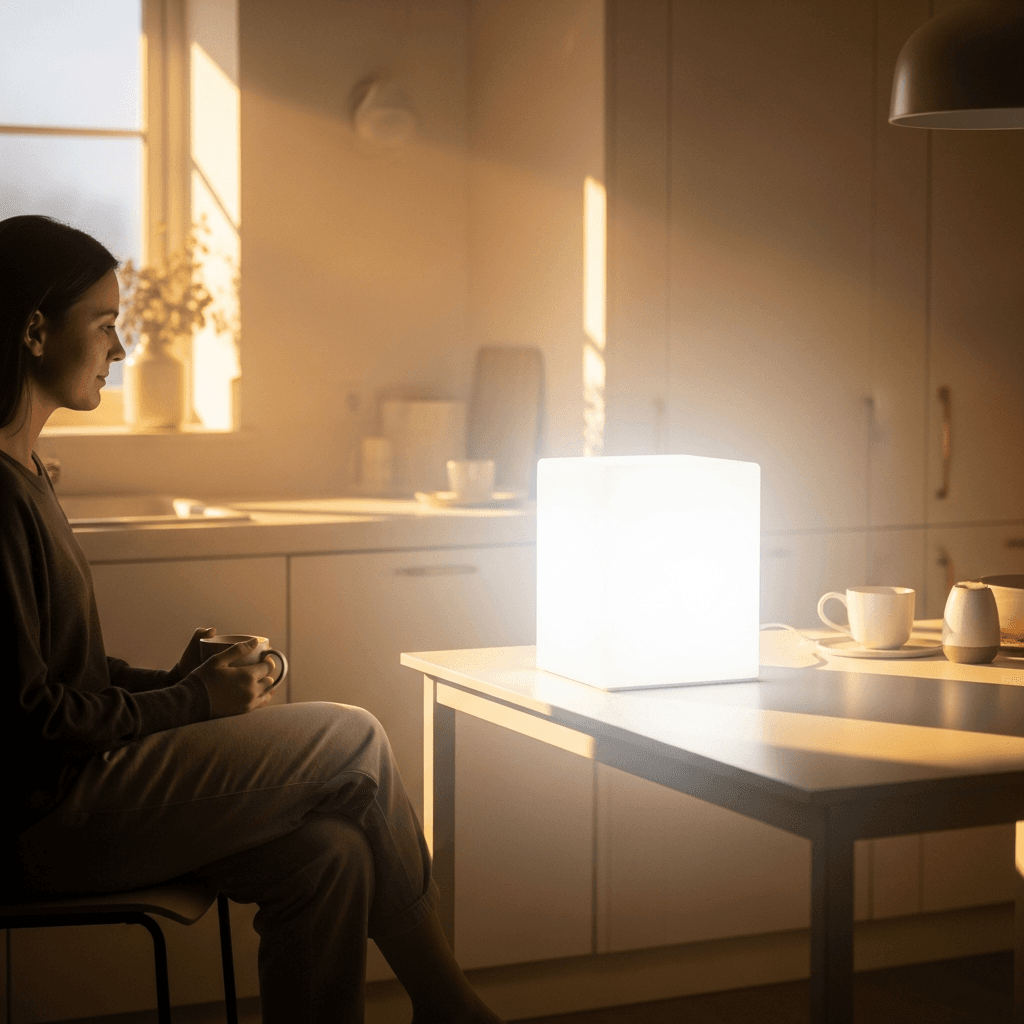
10,000 lux for 30 minutes after waking. Cochrane-supported for seasonal affective disorder and circadian shifting.
Why
Bright light delivered shortly after waking (typically a 10,000 lux therapy lamp at 30-60 cm for 20-30 minutes) entrains the circadian system. The 2019 Cochrane review supports use for preventing seasonal affective disorder, and the same protocol shifts circadian phase for shift workers and travellers.
The program
- 1
Place the lamp 30-60 cm from your face, slightly above eye level.
- 2
Within one hour of your usual wake time, switch on for 20-30 minutes.
- 3
Don't stare directly. Read, eat, work alongside it.
- 4
Skip evening exposure: it pushes sleep later.
- 5
If energising effects appear within 1-2 weeks, continue through the dark months.
Practical
Cadence
Daily within an hour of waking, October-March if SAD-prone
What you'll need
10,000 lux therapy lamp (e.g. Lumie, Beurer). Avoid in untreated bipolar disorder.
Ideal for
Northern-latitude residents in winter, shift workers, anyone with delayed sleep phase.
Markers this may influence
Evidence
Lam 2016 JAMA Psychiatry 8-week RCT (n=122, non-seasonal MDD): bright light alone (10,000 lux/30 min) and bright light + fluoxetine outperformed placebo and fluoxetine alone on depression scores. The 2019 Cochrane review of SAD prevention found a 36% incidence reduction but rated the evidence very low certainty (single trial, n=46).
 Program
CBT-i (cognitive behavioural therapy for insomnia)
First-line treatment for chronic insomnia per the AASM. More effective than sleeping pills long-term.
Why
CBT-i combines stimulus control, sleep restriction, and cognitive restructuring across 4-8 sessions. The American Academy of Sleep Medicine 2021 clinical practice guideline rates it a STRONG recommendation for chronic insomnia disorder in adults, stronger than any pharmacological treatment.
The program
- 1
Start a daily sleep diary: bedtime, wake time, awakenings.
- 2
Calculate your average sleep efficiency (sleep / time-in-bed × 100%).
- 3
Sleep restriction: shrink your time-in-bed to match average sleep, then grow as efficiency rises.
- 4
Stimulus control: bed = sleep only. Out of bed if not asleep within ~20 minutes.
- 5
Cognitive restructuring: address sleep-effort and catastrophising thoughts.
- 6
Maintenance phase: continue diary, expect occasional regressions.
Practical
Cadence
4-8 weekly sessions plus daily sleep diary
What you'll need
Insomnia ≥3 months. Find a CBT-i provider (BSM-trained psychologist) or digital programme (Sleepio, Somryst).
Ideal for
Anyone with insomnia lasting more than three months.
Markers this may influence
Evidence
Trauer 2015 Ann Intern Med meta-analysis (20 RCTs, n=1,162): CBT-i shortened sleep-onset latency by ~19 min, reduced wake-after-sleep-onset by ~26 min, and raised sleep efficiency by ~10 percentage points, with gains sustained at follow-up. AASM 2021 gives it a STRONG recommendation, stronger than any drug.
 Program
MBSR (8-week program)
Jon Kabat-Zinn's Mindfulness-Based Stress Reduction. Most-studied mind-body program in medicine.
Why
An 8-week structured program developed at UMass Medical Center. Combines body scan, sitting meditation, and gentle yoga. Over 100 RCTs show meaningful reductions in chronic pain, anxiety, and stress markers. Comparable to first-line pharmacological options for mild-to-moderate anxiety.
The program
- 1
Find a certified MBSR provider or follow a free programme (Palouse Mindfulness).
- 2
Week 1-2: body scan and breath awareness.
- 3
Week 3-4: gentle yoga and sitting meditation.
- 4
Week 5-6: working with difficulty, turning toward stress.
- 5
Week 7: integrating practice into daily life.
- 6
Week 8: silent retreat day + maintenance plan.
- 7
After: pick a daily core practice (typically 20-30 min).
Practical
Cadence
Weekly 2.5h class + daily home practice for 8 weeks
What you'll need
A certified MBSR instructor (in-person or online) or a free guided programme
Ideal for
People with chronic stress, anxiety, or chronic pain who want a structured entry point.
Markers this may influence
Evidence
Goyal 2014 JAMA Intern Med meta-analysis (47 RCTs, n=3,515): mindfulness-meditation programmes produced moderate improvements in anxiety (effect size 0.38 at 8 weeks), depression (0.30), and pain (0.33), comparable in magnitude to antidepressant trials. Khoury 2015 meta-analysis (29 MBSR studies, n=2,668) confirms parallel gains in stress and wellbeing in healthy adults.
 Program
Sleep apnea screening
Untreated obstructive sleep apnea drives cardiovascular and metabolic risk. Screen if you snore loudly, are tired despite enough hours, or have hypertension.
Why
Obstructive sleep apnea (OSA) is common (~10-15% of adults), often undiagnosed, and causally linked to hypertension, cardiovascular events, cognitive decline, and all-cause mortality. STOP-BANG is the most validated screening questionnaire. Diagnosis is by polysomnography or home sleep apnea testing. CPAP and other treatments substantially reduce risk in moderate-severe OSA.
The program
- 1
Take the STOP-BANG questionnaire (free online).
- 2
If 3+ positives, ask your GP for a sleep study referral.
- 3
Home sleep apnea testing or in-lab polysomnography confirms the diagnosis.
- 4
If moderate-severe, options include CPAP, mandibular advancement device, weight loss, positional therapy.
- 5
Re-screen if sleep quality degrades again after weight or lifestyle change.
Practical
Cadence
One-time screening; re-test if symptoms return
What you'll need
STOP-BANG questionnaire (online, 8 yes/no questions)
Ideal for
Loud snorers, witnessed apneas, daytime fatigue despite adequate sleep duration, hypertension, large neck circumference, BMI ≥35.
Markers this may influence
Evidence
AASM 2017 clinical practice guideline (Kapur et al., J Clin Sleep Med) recommends polysomnography or home sleep apnea testing for symptomatic adults; Wisconsin Sleep Cohort (Peppard 2013) estimates moderate-to-severe OSA prevalence at 10–17% of middle-aged adults and finds most cases undiagnosed.
 Program
Weekly VO₂ max intervals
One session/week of 4×4 minute intervals; raises VO₂ max, strongly correlated with longevity.
Why
VO₂ max (maximum oxygen uptake) is among the strongest single physiological correlates of all-cause mortality. The Norwegian 4×4 protocol (4 min hard, 3 min easy, ×4) is the most-studied intervention to raise it. One session per week is enough for meaningful improvement; more risks under-recovery.
The program
- 1
Warm up 10 minutes at easy pace.
- 2
4 minutes at ~90% max HR: very hard, can speak only short phrases.
- 3
3 minutes easy recovery.
- 4
Repeat the 4-minute hard / 3-minute easy block 4 times total.
- 5
Cool down 5-10 minutes.
- 6
Once per week; more risks under-recovery.
Practical
Cadence
Once per week
What you'll need
A solid Zone-2 base (12+ weeks of regular cardio)
Ideal for
People with a Zone 2 base who want to push their cardiovascular ceiling.
Markers this may influence
Evidence
Helgerud 2007 Med Sci Sports Exerc RCT (n=40 healthy men): 8 weeks of 4×4-minute intervals raised VO₂max by ~10%, significantly more than moderate continuous training matched for total volume. VO₂max is among the strongest single physiological correlates of all-cause mortality, with effects measurable within 6–8 weeks.
Acupuncture
Course-based needling for chronic pain. Better than nothing in trials; barely better than sham — read the evidence line before booking.
Why
Fine-needle stimulation at defined points, delivered as a weekly course. The most defensible indication is chronic pain: the Cochrane review in chronic non-specific low-back pain found acupuncture beats no treatment for short-term pain relief and function, while the margin over sham needling is small and likely below clinical importance. That pattern — real benefit vs nothing, thin benefit vs sham — repeats across the acupuncture literature.
The program
Licensed practitioner, single-use sterile needles. Typical course: weekly sessions for 6–12 weeks, then reassess against a written baseline (pain score, function).
Practical
Cadence
Weekly sessions, 6–12 week course
What you'll need
Licensed acupuncturist; caution with anticoagulants or bleeding disorders
Ideal for
Chronic low-back pain or tension-type headache where first-line options (exercise, sleep, load management) are already in place.
Evidence
Cochrane 2020, 33 trials (n=8,270) — acupuncture improved pain and function vs no treatment immediately after a course; vs sham needling the difference was small and probably not clinically important. If you book it, judge it against your own baseline at week 8.
Gut-directed hypnotherapy
Structured hypnotherapy protocol for IBS. In a 354-patient Lancet trial, ~half had adequate symptom relief at 12 months.
Why
Gut-directed hypnotherapy (the Manchester protocol) uses suggestion focused on gut function to recalibrate the brain–gut axis. It is the best-evidenced hypnotherapy application: the IMAGINE multicentre RCT (354 IBS patients) found hypnotherapy beat educational supportive care for adequate symptom relief, with effects holding at 12 months — and group delivery worked as well as individual, cutting the cost. UK NICE guidance lists it among psychological options for refractory IBS.
The program
Certified clinical hypnotherapist using a gut-directed protocol; typically 6–12 weekly sessions plus recorded home practice. Group formats are as effective and cheaper.
Practical
Cadence
6–12 weekly sessions + daily recorded home practice
What you'll need
Diagnosed IBS (red flags excluded by your doctor); certified clinical hypnotherapist
Ideal for
IBS that persists after first-line diet and fibre work; people whose flares track stress visibly.
Evidence
Flik 2019 IMAGINE RCT (n=354) — adequate relief in ~41% (individual) and ~33% (group) vs ~17% control at 3 months, holding at 12 months; group non-inferior to individual. The older Cochrane (2007) called the evidence inconclusive — IMAGINE is the trial that moved the needle.
Massage therapy
Course of soft-tissue treatment: short-term relief for low-back pain and a reliable acute relaxation response.
Why
Systematic soft-tissue manipulation by a qualified therapist. The Cochrane review in chronic low-back pain (25 trials) found short-term improvements in pain and function versus inactive controls — with low-certainty evidence and little sign of durable change once courses end. As a stress intervention the acute parasympathetic response is consistent, which is exactly what most people buy it for.
The program
60-minute sessions, weekly to biweekly for a defined course (4–8 weeks), then reassess honestly: better function, or just a pleasant hour?
Practical
Cadence
Weekly to biweekly, 60–90 min, as a 4–8 week course
What you'll need
Qualified massage therapist; physician first if pain is new, radiating, or post-injury
Ideal for
Chronic muscle tension, low-back pain flares, recovery blocks in heavy training phases.
Evidence
Cochrane 2015, 25 trials (n=3,096) — massage improved chronic low-back pain and function short-term vs inactive controls; low-certainty evidence, effects fade after treatment ends. Buy it as a course with an endpoint, not an open-ended subscription.
 CautionProgram
Weighted blanket
Deep-pressure stimulation. RCT: nearly 26× more likely to halve insomnia severity vs. control blanket.
Why
Weighted blankets, typically dosed around 10% of body weight (the dosing rule used in the Ekholm 2020 RCT below), deliver continuous deep-pressure stimulation, hypothesised to increase parasympathetic tone and reduce arousal. Ekholm 2020 J Clin Sleep Med RCT (n=120) in patients with insomnia plus a psychiatric disorder showed 60% achieved 50%+ Insomnia Severity Index reduction with the weighted blanket vs. 5% with the light control blanket.
The program
- 1
Pick a weight ~10% of your body weight (often 6-8kg for adults).
- 2
Use as the primary blanket. Allow 1-2 weeks to adapt to the weight.
- 3
Pair with the rest of your sleep hygiene: cool room, dim evening light.
- 4
If sleep doesn't improve in 4 weeks, reassess; it isn't for everyone.
Practical
Cadence
Use as your primary blanket through the night
What you'll need
Choose ~10% of body weight; not for OSA, claustrophobia, or young children
Ideal for
People with anxiety-driven insomnia or stress-related sleep difficulty.
Evidence
Ekholm 2020 J Clin Sleep Med RCT (n=120, insomnia plus psychiatric disorder): a ~10%-body-weight chain blanket vs light control over 4 weeks. 60% of the weighted-blanket group vs 5% of controls achieved ≥50% reduction in Insomnia Severity Index (Cohen's d 1.90, p<0.001).
Where this fits in your routine
Browse by what you're trying to improve: