Functional test
Comprehensive stool microbiome
Gut microbiome test · Stool microbiome sequencing · 16S / metagenomic stool test
Sequencing the bacteria in a stool sample to profile your gut ecosystem. Fascinating science, but not yet a validated clinical test, and commercial reports often overreach.
What it measures
These tests sequence microbial DNA in stool (16S rRNA or shotgun metagenomics) to estimate which bacteria are present and in what proportions, often summarised as a diversity score such as the Shannon index. Higher diversity is broadly associated with health at the population level, but there is no agreed definition of a 'healthy' or 'optimal' microbiome for an individual.
Reference context
1 guideline source
No regulator or gastroenterology society endorses direct-to-consumer microbiome testing for diagnosis. 'Good/bad bacteria' verdicts and personalised supplement recommendations in commercial reports outrun the evidence. Diversity metrics are research tools, not clinical thresholds.
Population context: consult guideline targets below
Mechanism
Why moving this marker matters
The gut microbiome ferments fibre into short-chain fatty acids, trains the immune system, and interacts with metabolism and the gut–brain axis. Low diversity is associated in cohorts with IBS, post-antibiotic dysbiosis and metabolic disease, but composition varies enormously between healthy people, shifts with diet within days, and rarely maps cleanly onto a diagnosis or a treatment.
Guideline targets
What major guidelines recommend
American Gut / large cohorts
Higher within-sample diversity (e.g. Shannon index) tracks with markers of health at population level, not an individual target
Associative cohort data; no validated personal cut-off exists.
How to measure
The test, where to get it, when to repeat
Method
Mail-in stool kit; results returned as a composition and diversity report. Sequencing method, reference database and bioinformatics differ between providers, so reports are not comparable across companies.
Where
Direct-to-consumer companies and some functional-medicine clinics; research-grade sequencing through academic studies.
Typical cost
€100–350 depending on depth (16S cheaper than shotgun metagenomics).
Fasting
Not required
When to test
Microbiome research literature
Not recommended for routine clinical use or self-diagnosis. If used at all, treat as an exploratory snapshot; composition changes with diet within days.
How to test
Doing this test
This is a self-test, no equipment needed. A timer or tape measure is usually enough. Your GP can confirm the protocol if you want validation.
Context
Reading the numbers
No regulator or gastroenterology society endorses direct-to-consumer microbiome testing for diagnosis. 'Good/bad bacteria' verdicts and personalised supplement recommendations in commercial reports outrun the evidence. Diversity metrics are research tools, not clinical thresholds.
Caveats
Results vary with the kit, the lab and even where in the stool the sample came from, and they shift within days of a diet change. An abnormal-looking report is not a diagnosis. Established stool tests for specific questions (calprotectin for inflammation, FIT for bleeding, pathogen PCR for infection) are far more actionable.
Practices
What's been shown to influence this marker
Dietary fibre is the most reliable lever on microbial diversity and short-chain fatty acid production; diversity responds to sustained dietary change more than to probiotic capsules.
 Habit
Habit30g fiber/day
Most adults eat half what they need. Strong dose-response with all-cause mortality.
Why
Fiber feeds gut microbiota, slows glucose absorption, supports cardiovascular health, and predicts mortality independent of other dietary factors. Most adults consume 12–15g/day; the target for cardiovascular benefit is 25–30g+. Whole foods (legumes, vegetables, oats, berries) are better sources than supplements.
Slot in your day
How to do it
How
Add a serving of beans/lentils most days. Berries with breakfast. Vegetables at lunch and dinner. Tracked once for a week, the gap to 30g becomes obvious.
Markers this may influence
Evidence
Reynolds 2019 Lancet meta-analysis (185 prospective studies and 58 RCTs, commissioned by WHO): highest vs lowest fibre consumers had 15–30% lower all-cause and cardiovascular mortality, with the steepest risk reduction at 25–29 g/day intake. Dose-response suggests further benefit above 30 g/day. Most adults consume 12–15 g.
 Habit
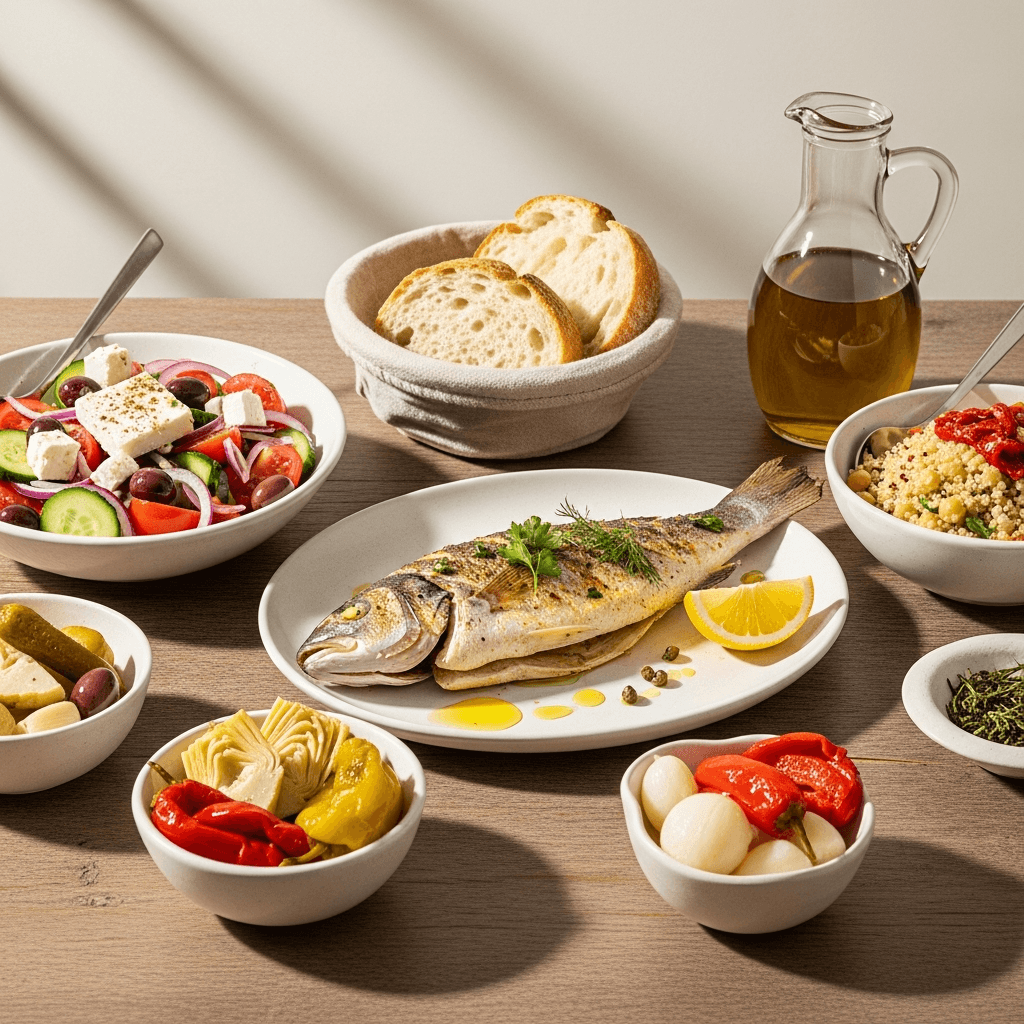
HabitMediterranean dietary pattern
Olive oil, fish, nuts, legumes, plants. The most-studied diet for cardiovascular and cognitive longevity.
Why
The Mediterranean pattern, heavy on plants, olive oil, fish, nuts, legumes; moderate fish and dairy; light on red meat, has the strongest evidence base of any specific diet for long-term cardiovascular and cognitive outcomes. PREDIMED, the largest trial, showed ~30% reduction in major cardiovascular events vs. low-fat control.
Slot in your day
How to do it
How
Olive oil as the primary fat. Plants at every meal. Fish 2–3× per week. Nuts daily (small handful). Red meat once a week or less. Wine optional, with food.
Sticking with it
Stock the kitchen for one week's pattern. Decisions live in the shopping list, not at mealtime.
Markers this may influence
Evidence
PREDIMED (Estruch 2018 NEJM, n=7,447, 4.8-y follow-up): a Mediterranean diet plus extra-virgin olive oil or mixed nuts vs. a low-fat control diet, ~30% reduction in major cardiovascular events (MI, stroke, CVD death). Sofi 2014 updated meta-analysis (n>4M) confirms a dose-response association with all-cause and cardiovascular mortality.
See also
Related markers
Take to your physician
Worth discussing
- Whether a specific, validated stool test (calprotectin, FIT, pathogen PCR) answers your actual question better.
- How much weight to put on a commercial microbiome report's recommendations.
- Whether persistent GI symptoms warrant proper gastroenterological assessment.
Sources
Cited literature
Last reviewed May 2026
Keep reading
← Previous
Functional test
Push-up capacity
How many push-ups you can do without resting, a free 60-second test with a strong prospective cardiovascular signal.
Next →
Wearable metric
Heart rate variability (HRV)
The natural variation in interval between heartbeats, a window into autonomic nervous-system balance, recovery, and stress.