Lab marker
Faecal calprotectin
Stool calprotectin · Fecal calprotectin · FCP
A stool test that flags inflammation in the gut wall, the cleanest way to separate inflammatory bowel disease from irritable bowel syndrome without a scope.
What it measures
Calprotectin is a calcium-binding protein released by neutrophils. When the intestinal wall is inflamed, neutrophils migrate into the gut and calprotectin leaks into stool in proportion to the inflammation. It does not localise or name a specific disease. It answers one question well: is there neutrophilic inflammation in the bowel?
Reference context
3 guideline sources
Cut-offs vary by assay and lab; 50 µg/g is the most common screening threshold. Calprotectin is sensitive but not specific: it cannot tell IBD from infection, diverticulitis or NSAID enteropathy.
Population context: consult guideline targets below
Mechanism
Why moving this marker matters
In inflammatory bowel disease (Crohn's, ulcerative colitis) neutrophil infiltration of the mucosa is the hallmark; calprotectin rises and falls with mucosal disease activity, making it useful both to triage new symptoms and to monitor known IBD. Functional disorders such as IBS, by contrast, leave calprotectin normal.
Guideline targets
What major guidelines recommend
NICE DG11 / common lab cut-off
<50 µg/g, normal
Common lab interpretation
50–150 µg/g, borderline; repeat or correlate clinically
Common lab interpretation
>150 µg/g, suggests active inflammation; warrants endoscopic assessment
How to measure
The test, where to get it, when to repeat
Method
Single stool sample, analysed by ELISA or rapid immunoassay. No bowel prep needed.
Where
GP-ordered in most health systems when IBD is on the differential; also available privately and as home kits.
Typical cost
€25–60 private; usually covered when clinically indicated.
Fasting
Not required
When to test
NICE DG11
Recommended to help distinguish IBD from IBS in adults with lower-GI symptoms where cancer is not suspected, to avoid unnecessary endoscopy.
Meta-analysis (van Rheenen 2010)
High sensitivity for IBD; a normal result makes IBD unlikely and supports a functional diagnosis.
Where to test
Independent labs offering this test
No direct-to-consumer lab currently in our directory for this marker. Your GP can request it on a standard panel.
Context
Reading the numbers
Cut-offs vary by assay and lab; 50 µg/g is the most common screening threshold. Calprotectin is sensitive but not specific: it cannot tell IBD from infection, diverticulitis or NSAID enteropathy.
Caveats
NSAIDs, proton-pump inhibitors, GI infections, older age and even menstruation can raise calprotectin. A single elevated result needs clinical correlation, not panic. Persistently raised values warrant gastroenterology referral.
Practices
What's been shown to influence this marker
 Habit
Habit30g fiber/day
Most adults eat half what they need. Strong dose-response with all-cause mortality.
Why
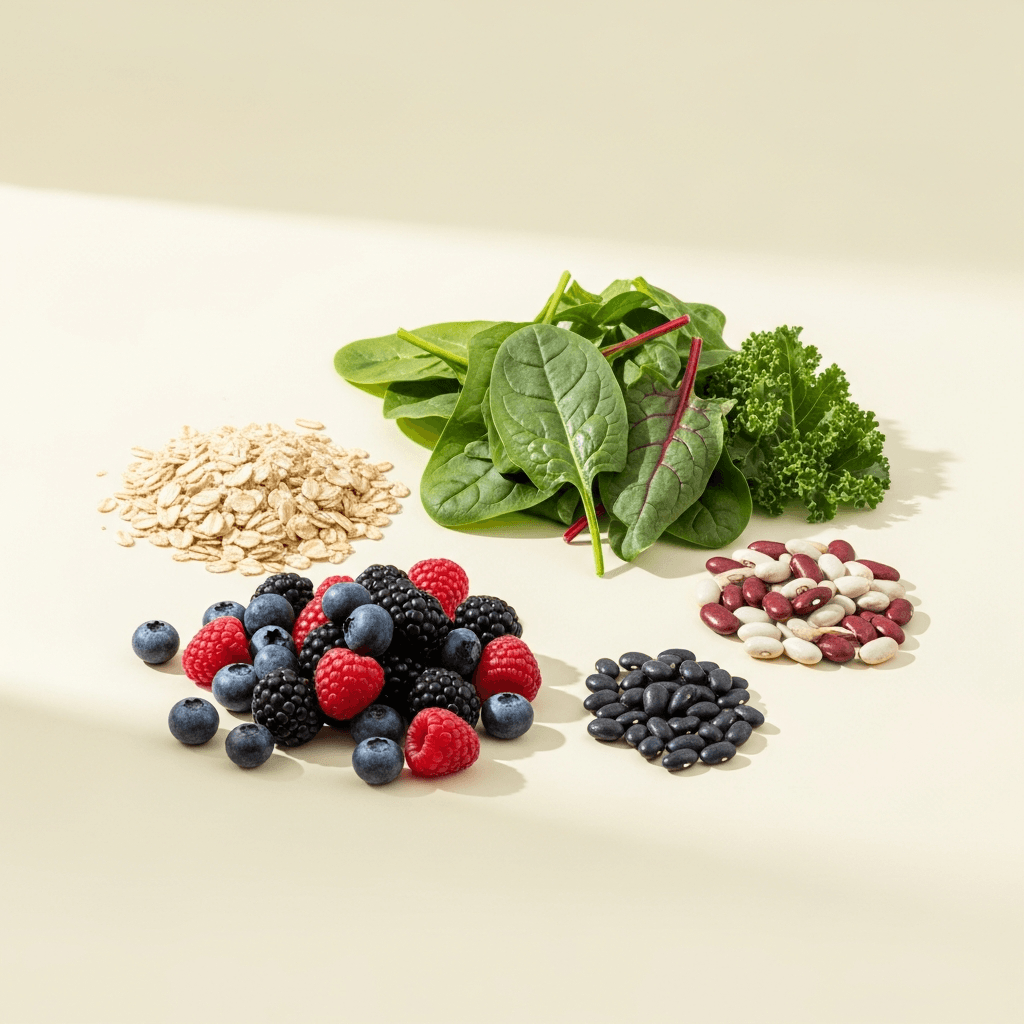
Fiber feeds gut microbiota, slows glucose absorption, supports cardiovascular health, and predicts mortality independent of other dietary factors. Most adults consume 12–15g/day; the target for cardiovascular benefit is 25–30g+. Whole foods (legumes, vegetables, oats, berries) are better sources than supplements.
Slot in your day
How to do it
How
Add a serving of beans/lentils most days. Berries with breakfast. Vegetables at lunch and dinner. Tracked once for a week, the gap to 30g becomes obvious.
Markers this may influence
Evidence
Reynolds 2019 Lancet meta-analysis (185 prospective studies and 58 RCTs, commissioned by WHO): highest vs lowest fibre consumers had 15–30% lower all-cause and cardiovascular mortality, with the steepest risk reduction at 25–29 g/day intake. Dose-response suggests further benefit above 30 g/day. Most adults consume 12–15 g.
See also
Related markers
Take to your physician
Worth discussing
- Whether your symptoms warrant calprotectin testing before, or instead of, endoscopy.
- If your result is raised, what could explain it besides IBD (recent NSAIDs, infection).
- How to interpret a borderline 50–150 µg/g result.
Sources
Cited literature
Last reviewed May 2026
Keep reading