Lab marker
RBC magnesium
Red blood cell magnesium · Erythrocyte magnesium · Intracellular magnesium
Magnesium measured inside red cells rather than in serum, pitched as a more sensitive read on body stores, though the evidence that it beats serum is thin.
What it measures
Roughly 99% of body magnesium sits inside cells and bone; under 1% circulates in serum. Because the body defends serum magnesium tightly, it can read normal while tissue stores are depleted. RBC magnesium measures the magnesium held inside erythrocytes, which some argue tracks intracellular status better, but no biomarker has been validated as a true measure of total-body magnesium.
Reference context
1 guideline source
Reference intervals vary by lab and assay. Critically, a normal RBC magnesium does not exclude functional deficiency, and an oral magnesium loading/retention test remains the closest thing to a reference method, impractical outside research.
Population context: consult guideline targets below
Mechanism
Why moving this marker matters
Magnesium is a cofactor for more than 300 enzymes, including those of ATP metabolism, and is required for normal neuromuscular and cardiac function. Subclinical deficiency is plausibly common given typical intakes below reference levels, and has been associated in observational data with hypertension, insulin resistance and arrhythmia, but both causality and the right way to measure status remain open.
Guideline targets
What major guidelines recommend
Typical laboratory interval
≈1.65–2.65 mmol/L (4.2–6.8 mg/dL)
A 'normal' RBC magnesium does not rule out functional deficiency.
How to measure
The test, where to get it, when to repeat
Method
Blood draw processed for the red-cell fraction. Serum magnesium is the routine, cheaper test; RBC magnesium is a send-out at many labs.
Where
Private labs and some functional-medicine providers; less commonly stocked than serum.
Typical cost
€20–45.
Fasting
Not required
When to test
No screening guideline
No body recommends population magnesium screening. Testing is reserved for symptoms, malabsorption, diuretic or PPI use, or refractory hypokalaemia/hypocalcaemia.
Where to test
Independent labs offering this test
No direct-to-consumer lab currently in our directory for this marker. Your GP can request it on a standard panel.
Context
Reading the numbers
Reference intervals vary by lab and assay. Critically, a normal RBC magnesium does not exclude functional deficiency, and an oral magnesium loading/retention test remains the closest thing to a reference method, impractical outside research.
Caveats
Haemolysis during the draw falsely elevates the result, because red cells are magnesium-rich. Serum magnesium remains the test guidelines actually reference.
Practices
What's been shown to influence this marker
Oral magnesium supplementation raises serum and, less reliably, intracellular magnesium in deficient individuals; the effect in already-replete people is minimal.
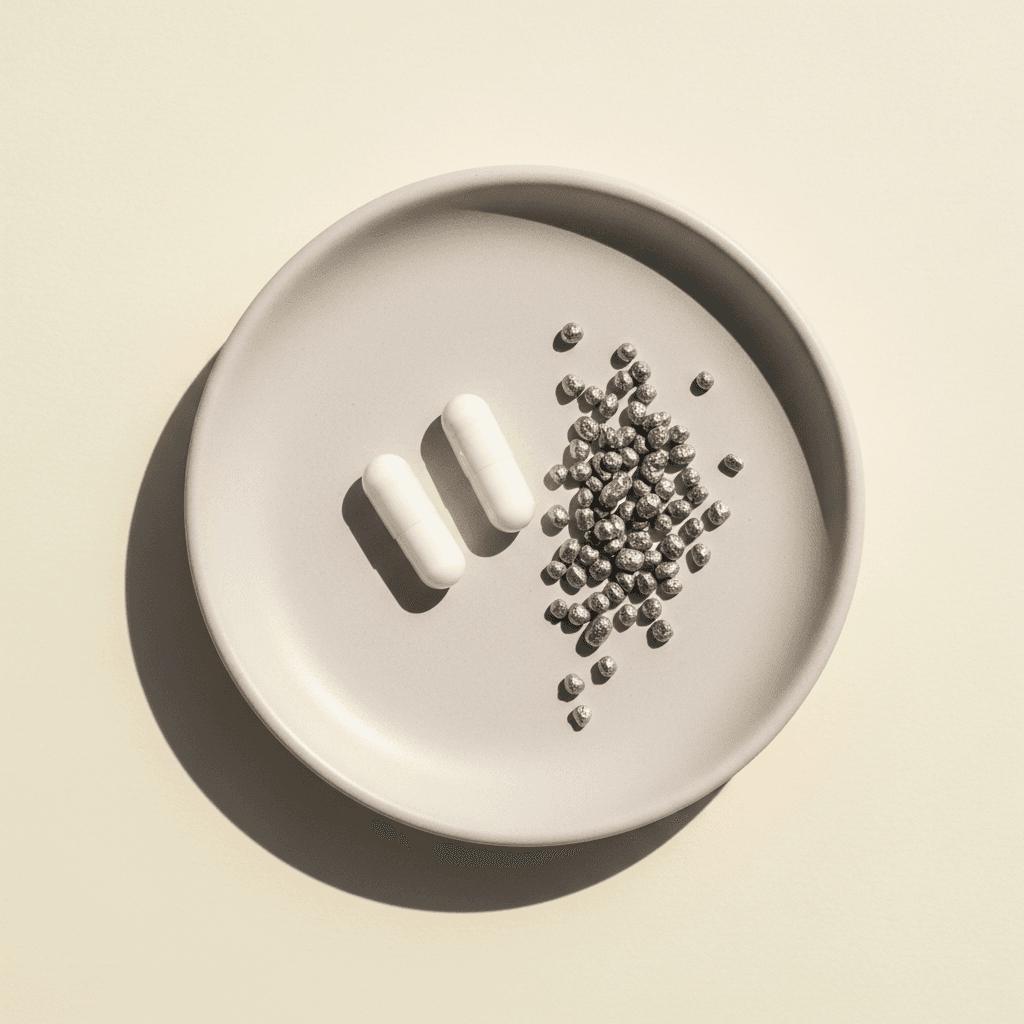 Supplement
Magnesium glycinate
Bioavailable form often used for relaxation and sleep onset; modest evidence for both.
Why
Magnesium is a cofactor in hundreds of enzymatic reactions, including ones that modulate the GABA system. Glycinate (chelated to glycine) is well absorbed and gentler on the gut than oxide or citrate forms. Trials in older adults with insomnia show modest improvements in sleep onset and quality at 200–500 mg per night.
How it works
Modulates GABA-A receptor activity; cofactor for melatonin synthesis. Glycine itself binds inhibitory receptors that promote sleep onset.
Expected onset · Often noticeable within 1–2 weeks
How to take
Dosage
200–400 mg elemental magnesium 30–60 minutes before bed.
Timing
Evening, 30–60 min before bed
On the label
Look for 'magnesium glycinate' or 'magnesium bisglycinate' on the label, not oxide.
Ideal for
People with stress-related sleep difficulty or chronic mild magnesium deficiency.
Safety
Markers this may influence
Evidence
Abbasi 2012 J Res Med Sci RCT (n=46 older adults with insomnia): 500 mg/day elemental magnesium for 8 weeks vs placebo: significantly shorter sleep-onset latency (p=0.02), more total sleep time (p=0.002), and improved sleep efficiency (p=0.03). Small trial; effect is modest but consistent with the Cochrane signal of ~12 min faster sleep onset.
Where to get it
Shop Magnesium glycinate on AmazonSponsored · As an Amazon Associate, Healicus earns from qualifying purchases.
See also
Related markers
Take to your physician
Worth discussing
- Whether serum magnesium answers your question before paying for the RBC test.
- If you take diuretics or PPIs or have GI malabsorption, whether magnesium should be monitored.
- Whether symptoms attributed to 'low magnesium' have other explanations.
Sources
Cited literature
Last reviewed May 2026
Keep reading
← Previous
Lab marker
Morning cortisol
The body's master stress hormone, read at its daily peak. A precise clinical tool for adrenal disease, and a contested research window onto chronic stress.
Next →
Lab marker
Zinc (RBC)
Zinc measured inside red cells, pitched as a steadier read on status than plasma, which swings with meals and inflammation.