Imaging
Home sleep apnea test
HSAT · Home polygraphy
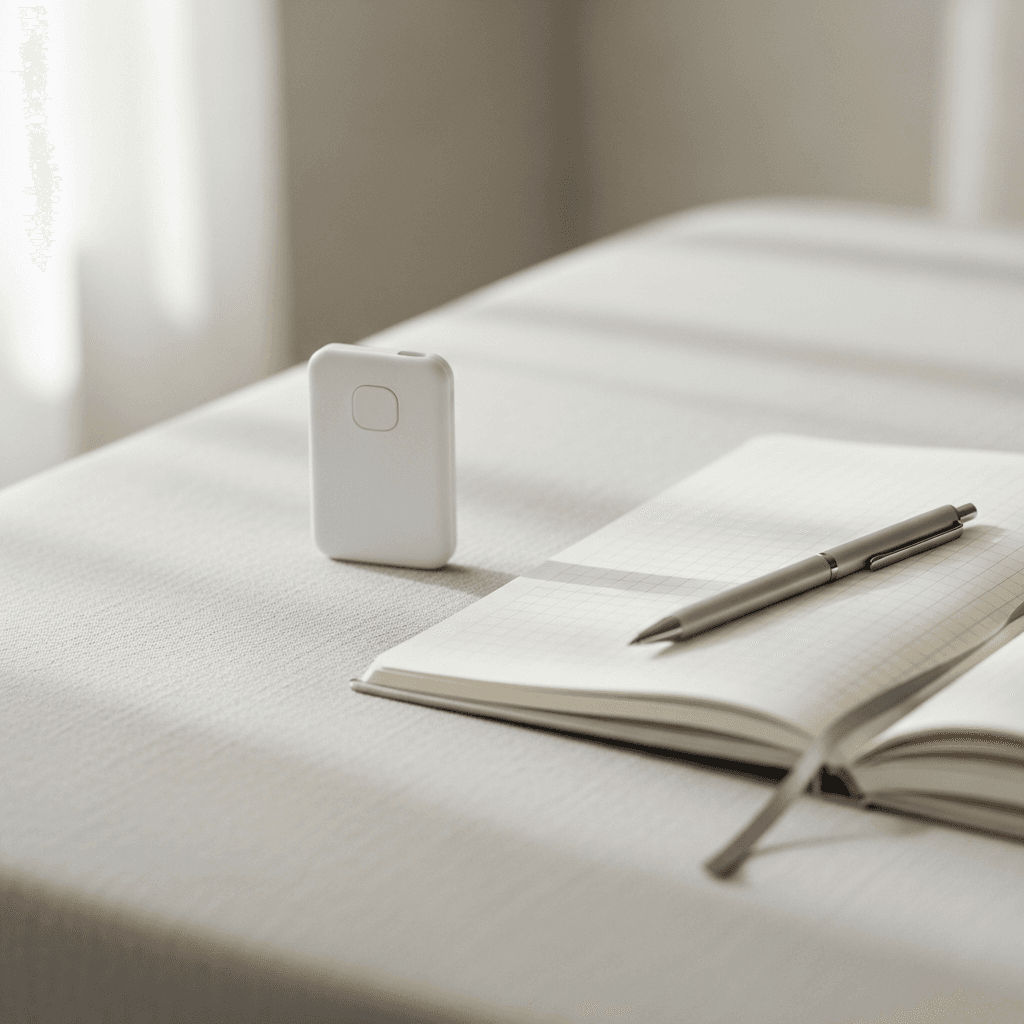
An at-home recording device that captures airflow, oximetry, and effort overnight, the workhorse confirmation for uncomplicated suspected OSA.
What it measures
Apnea-Hypopnea Index (AHI), oxygen desaturation index, and basic respiratory pattern measured at home over one or two nights. AHI = number of apneic + hypopneic events per hour of recording.
Reference context
1 guideline source
HSAT-derived AHI tends to underestimate true PSG AHI because home devices count only recorded events without simultaneous sleep staging. A negative HSAT in a symptomatic patient warrants escalation to PSG.
Population context: consult guideline targets below
Mechanism
Why moving this marker matters
HSAT covers the major airflow and oxygen signals needed to confirm or rule out moderate-severe OSA. Less sensitive than full PSG (especially for mild cases) but adequate for the bulk of suspected uncomplicated OSA.
Guideline targets
What major guidelines recommend
AASM (AHI thresholds, adults)
<5 normal; 5–14 mild; 15–29 moderate; ≥30 severe OSA
How to measure
The test, where to get it, when to repeat
Method
Pick up the device from a sleep clinic, wear at home overnight, return the next morning. Setup typically 5–10 minutes. Some devices stream to the clinic.
Where
Sleep clinics; increasingly via primary care referral. Some direct-to-consumer providers exist but interpretation should still be by a sleep physician.
Typical cost
€150–400 private; covered by most public systems on appropriate referral.
Fasting
Not required
When to test
AASM 2017
Appropriate confirmatory study for uncomplicated suspected moderate-severe OSA. Not suitable for cases with significant comorbidity, suspected central apnea, or pediatric.
Where to scan
Providers offering this imaging study
These providers offer the scan directly to consumers. You book and pay with them; the imaging report lives on their platform. Healicus is not in the clinical chain.
WatchPAT (Itamar Medical)
US · EU · INTLFDA-cleared single-use home sleep test — finger-worn sensor, validated against full polysomnography.
Visit WatchPAT (Itamar Medical)
Lofta
USEnd-to-end home sleep apnea pathway — WatchPAT One test kit, board-certified sleep-physician read, CPAP if indicated.
Visit Lofta
Healicus is not the provider. Your contract for the service is with whoever you choose. Links labelled Sponsored are paid affiliate relationships; unlabelled links are editorial reference only. See our disclosure for the full policy.
Context
Reading the numbers
HSAT-derived AHI tends to underestimate true PSG AHI because home devices count only recorded events without simultaneous sleep staging. A negative HSAT in a symptomatic patient warrants escalation to PSG.
Caveats
Single-night variability is real. Devices vary in sensor quality and event-detection algorithm.
Practices
What's been shown to influence this marker
 Program
Sleep apnea screening
Untreated obstructive sleep apnea drives cardiovascular and metabolic risk. Screen if you snore loudly, are tired despite enough hours, or have hypertension.
Why
Obstructive sleep apnea (OSA) is common (~10-15% of adults), often undiagnosed, and causally linked to hypertension, cardiovascular events, cognitive decline, and all-cause mortality. STOP-BANG is the most validated screening questionnaire. Diagnosis is by polysomnography or home sleep apnea testing. CPAP and other treatments substantially reduce risk in moderate-severe OSA.
The program
- 1
Take the STOP-BANG questionnaire (free online).
- 2
If 3+ positives, ask your GP for a sleep study referral.
- 3
Home sleep apnea testing or in-lab polysomnography confirms the diagnosis.
- 4
If moderate-severe, options include CPAP, mandibular advancement device, weight loss, positional therapy.
- 5
Re-screen if sleep quality degrades again after weight or lifestyle change.
Practical
Cadence
One-time screening; re-test if symptoms return
What you'll need
STOP-BANG questionnaire (online, 8 yes/no questions)
Ideal for
Loud snorers, witnessed apneas, daytime fatigue despite adequate sleep duration, hypertension, large neck circumference, BMI ≥35.
Markers this may influence
Evidence
AASM 2017 clinical practice guideline (Kapur et al., J Clin Sleep Med) recommends polysomnography or home sleep apnea testing for symptomatic adults; Wisconsin Sleep Cohort (Peppard 2013) estimates moderate-to-severe OSA prevalence at 10–17% of middle-aged adults and finds most cases undiagnosed.
See also
Related markers
Take to your physician
Worth discussing
- Whether HSAT or in-lab PSG is the right study for you given your symptoms and comorbidities.
- If your HSAT is negative but symptoms persist, the case for escalating to PSG.
- Treatment options based on AHI severity.
Sources
Cited literature
Last reviewed May 2026
Keep reading
← Previous
Imaging
Dermatological skin check
Annual full-body skin check by a dermatologist, with dermatoscopy where lesions warrant, the standard for melanoma and non-melanoma skin cancer detection.
Next →
Imaging
Polysomnography
The gold-standard sleep study: full electroencephalography, breathing, oxygen, leg movement, and video over one night in a sleep lab.