Wearable metric
Sleep-onset latency
SOL · Time to fall asleep
How long it takes you to fall asleep. Consistently over 30 minutes is a defining feature of insomnia, and the endpoint most sleep trials measure.
What it measures
Sleep-onset latency is the time from intending to sleep to actually falling asleep. Around 10–20 minutes is typical; falling asleep the instant your head hits the pillow can itself signal sleep debt, while routinely taking more than 30 minutes is one of the quantitative criteria used to define insomnia.
Reference context
2 guideline sources
Latency naturally varies night to night; judge the weekly pattern. Very short latency (<5 min) repeatedly can indicate insufficient sleep rather than good sleep. Wearable latency estimates are less accurate than they appear. Use the trend.
Population context: consult guideline targets below
Mechanism
Why moving this marker matters
Falling asleep requires both sufficient sleep pressure (built by time awake) and a wound-down arousal system. Long latency usually reflects hyperarousal (a racing mind, late caffeine, light exposure, or too much time in bed) rather than a lack of tiredness. This is why stimulus-control and CBT-I target latency directly.
Guideline targets
What major guidelines recommend
Quantitative insomnia criteria (Lichstein 2003)
SOL >30 min, ≥3 nights/week for ≥6 months defines clinically significant insomnia
Typical healthy range
≈10–20 min to fall asleep
How to measure
The test, where to get it, when to repeat
Method
Estimated by sleep-tracking wearables (imperfectly) or a simple sleep diary; measured precisely only by polysomnography. A diary kept for 1–2 weeks is the practical standard.
Where
Free with a wearable or a paper sleep diary.
Typical cost
Free.
Fasting
Not required
When to test
European insomnia guideline 2023
Track latency alongside other symptoms over at least 2 weeks; insomnia is a clinical pattern over time, not one bad night.
How to track
Devices and apps that measure this
Most consumer wearables do not report this metric reliably yet. A clinician or sports-medicine lab can measure it directly.
Context
Reading the numbers
Latency naturally varies night to night; judge the weekly pattern. Very short latency (<5 min) repeatedly can indicate insufficient sleep rather than good sleep. Wearable latency estimates are less accurate than they appear. Use the trend.
Caveats
Persistent long latency with daytime impairment warrants assessment for insomnia; first-line treatment is CBT-I, not sedatives. Wearables systematically misjudge the exact moment of sleep onset.
Practices
What's been shown to influence this marker
Cognitive behavioural therapy for insomnia is the guideline first-line treatment and reliably shortens sleep-onset latency.
 Program
CBT-i (cognitive behavioural therapy for insomnia)
First-line treatment for chronic insomnia per the AASM. More effective than sleeping pills long-term.
Why
CBT-i combines stimulus control, sleep restriction, and cognitive restructuring across 4-8 sessions. The American Academy of Sleep Medicine 2021 clinical practice guideline rates it a STRONG recommendation for chronic insomnia disorder in adults, stronger than any pharmacological treatment.
The program
- 1
Start a daily sleep diary: bedtime, wake time, awakenings.
- 2
Calculate your average sleep efficiency (sleep / time-in-bed × 100%).
- 3
Sleep restriction: shrink your time-in-bed to match average sleep, then grow as efficiency rises.
- 4
Stimulus control: bed = sleep only. Out of bed if not asleep within ~20 minutes.
- 5
Cognitive restructuring: address sleep-effort and catastrophising thoughts.
- 6
Maintenance phase: continue diary, expect occasional regressions.
Practical
Cadence
4-8 weekly sessions plus daily sleep diary
What you'll need
Insomnia ≥3 months. Find a CBT-i provider (BSM-trained psychologist) or digital programme (Sleepio, Somryst).
Ideal for
Anyone with insomnia lasting more than three months.
Markers this may influence
Evidence
Trauer 2015 Ann Intern Med meta-analysis (20 RCTs, n=1,162): CBT-i shortened sleep-onset latency by ~19 min, reduced wake-after-sleep-onset by ~26 min, and raised sleep efficiency by ~10 percentage points, with gains sustained at follow-up. AASM 2021 gives it a STRONG recommendation, stronger than any drug.
 Habit
HabitAfternoon caffeine cutoff
No caffeine after 2pm: half-life is 5–7 hours, longer in slow metabolisers.
Why
Caffeine blocks adenosine receptors that signal sleep pressure. With a half-life of 5–7 hours (longer in some genotypes), an afternoon coffee can leave a quarter of the dose still active at bedtime. Effect on sleep architecture (less deep sleep) is measurable even when subjective sleep feels fine.
Slot in your day
How to do it
How
Last caffeine by 2pm if you sleep around 11pm. Adjust earlier if you metabolise slowly (genetic variation in CYP1A2). Switch to decaf or herbal alternatives in the afternoon.
Sticking with it
Pre-stage a tasty afternoon non-caffeine drink. Removing without replacing fails.
Markers this may influence
Evidence
Drake 2013 J Clin Sleep Med (within-subject lab study): 400 mg caffeine taken 6 hours before bed still measurably disrupted polysomnography-assessed sleep: total sleep time fell by ~1 hour vs placebo, even when taken hours before bedtime. The 5–7 hour half-life puts a meaningful fraction of an afternoon dose into the sleep window.
 Supplement
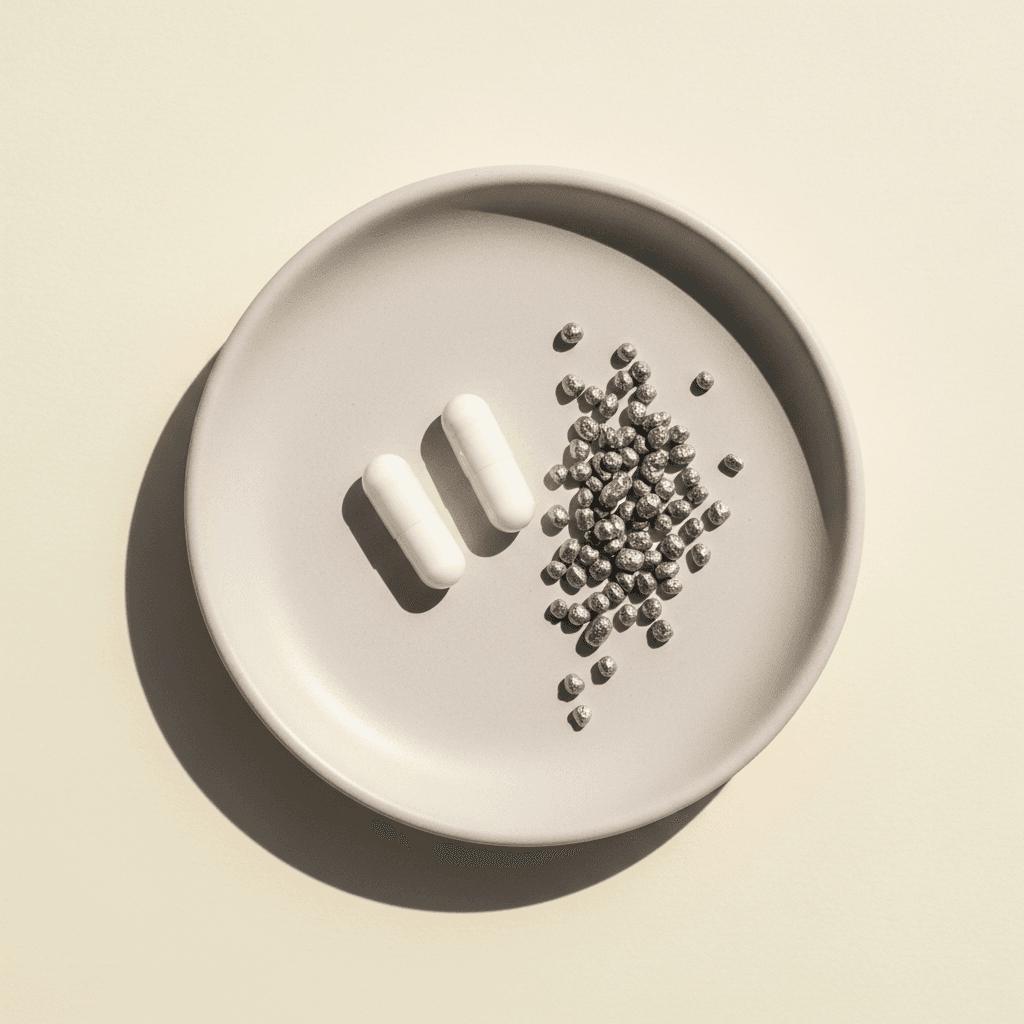
Magnesium glycinate
Bioavailable form often used for relaxation and sleep onset; modest evidence for both.
Why
Magnesium is a cofactor in hundreds of enzymatic reactions, including ones that modulate the GABA system. Glycinate (chelated to glycine) is well absorbed and gentler on the gut than oxide or citrate forms. Trials in older adults with insomnia show modest improvements in sleep onset and quality at 200–500 mg per night.
How it works
Modulates GABA-A receptor activity; cofactor for melatonin synthesis. Glycine itself binds inhibitory receptors that promote sleep onset.
Expected onset · Often noticeable within 1–2 weeks
How to take
Dosage
200–400 mg elemental magnesium 30–60 minutes before bed.
Timing
Evening, 30–60 min before bed
On the label
Look for 'magnesium glycinate' or 'magnesium bisglycinate' on the label, not oxide.
Ideal for
People with stress-related sleep difficulty or chronic mild magnesium deficiency.
Safety
Markers this may influence
Evidence
Abbasi 2012 J Res Med Sci RCT (n=46 older adults with insomnia): 500 mg/day elemental magnesium for 8 weeks vs placebo: significantly shorter sleep-onset latency (p=0.02), more total sleep time (p=0.002), and improved sleep efficiency (p=0.03). Small trial; effect is modest but consistent with the Cochrane signal of ~12 min faster sleep onset.
Where to get it
Shop Magnesium glycinate on AmazonSponsored · As an Amazon Associate, Healicus earns from qualifying purchases.
 Technique
4-7-8 breathing
Inhale 4, hold 7, exhale 8: extends the exhale to activate parasympathetic recovery.
Why
A breathing pattern derived from pranayama and popularised by Dr. Andrew Weil. Long exhales relative to inhales bias the autonomic nervous system toward parasympathetic dominance. RCT evidence shows acute effects on heart-rate variability and blood pressure, plus improved post-surgical anxiety scores in a 2023 trial.
The technique
- 1
Sit or lie comfortably. Tongue tip lightly behind the upper teeth.
- 2
Exhale fully through the mouth.
- 3
Inhale through the nose for a count of 4.
- 4
Hold the breath for a count of 7.
- 5
Exhale through the mouth for a count of 8.
- 6
Repeat the cycle 4 times. That's one round.
When to use it
Lying in bed when sleep won't come, or in any acute-stress moment.
Markers this may influence
Evidence
Laborde 2022 Neurosci Biobehav Rev meta-analysis (223 studies) confirms slow-paced breathing reliably raises vagally-mediated HRV during and immediately after practice. The 4-7-8 protocol specifically has only small acute trials (Vierra 2022 Physiol Rep), so the effect on sleep is mechanistically plausible but not anchored to a large RCT.
See also
Related markers
Take to your physician
Worth discussing
- Whether a persistent latency problem is insomnia, and whether CBT-I is accessible to you.
- Whether evening habits (caffeine, alcohol, screens, late exercise) are extending your latency.
- Whether daytime sleepiness points to a different problem, such as sleep apnoea.
Sources
Cited literature
- [1]Lichstein et al., Quantitative criteria for insomnia (Behaviour Research and Therapy)(2003)
- [2]Riemann et al., The European Insomnia Guideline, update 2023 (Journal of Sleep Research)(2023)
- [3]Riemann et al., European guideline for the diagnosis and treatment of insomnia (Journal of Sleep Research)(2017)
Last reviewed May 2026
Keep reading
← Previous
Wearable metric
Sleep regularity index
How consistent your sleep–wake timing is from day to day. In a 60,000-person UK Biobank study it predicted mortality better than how long you slept.
Next →
Questionnaire
STOP-Bang
Eight yes/no items, the most-validated screening questionnaire for obstructive sleep apnea.